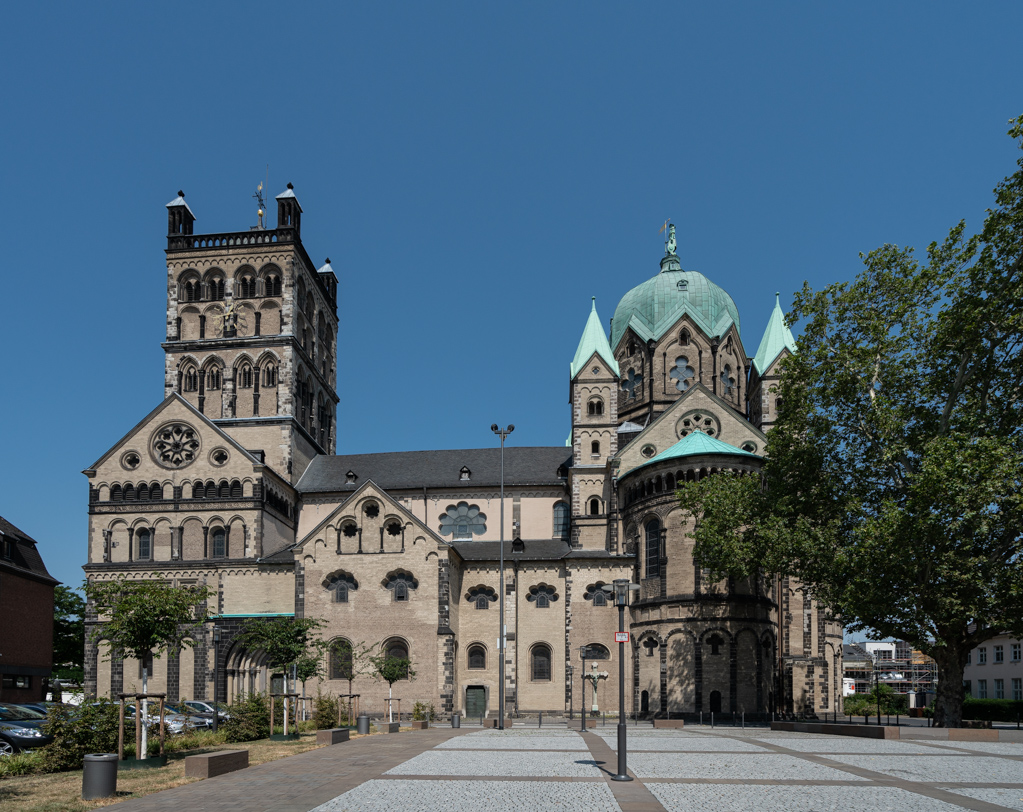
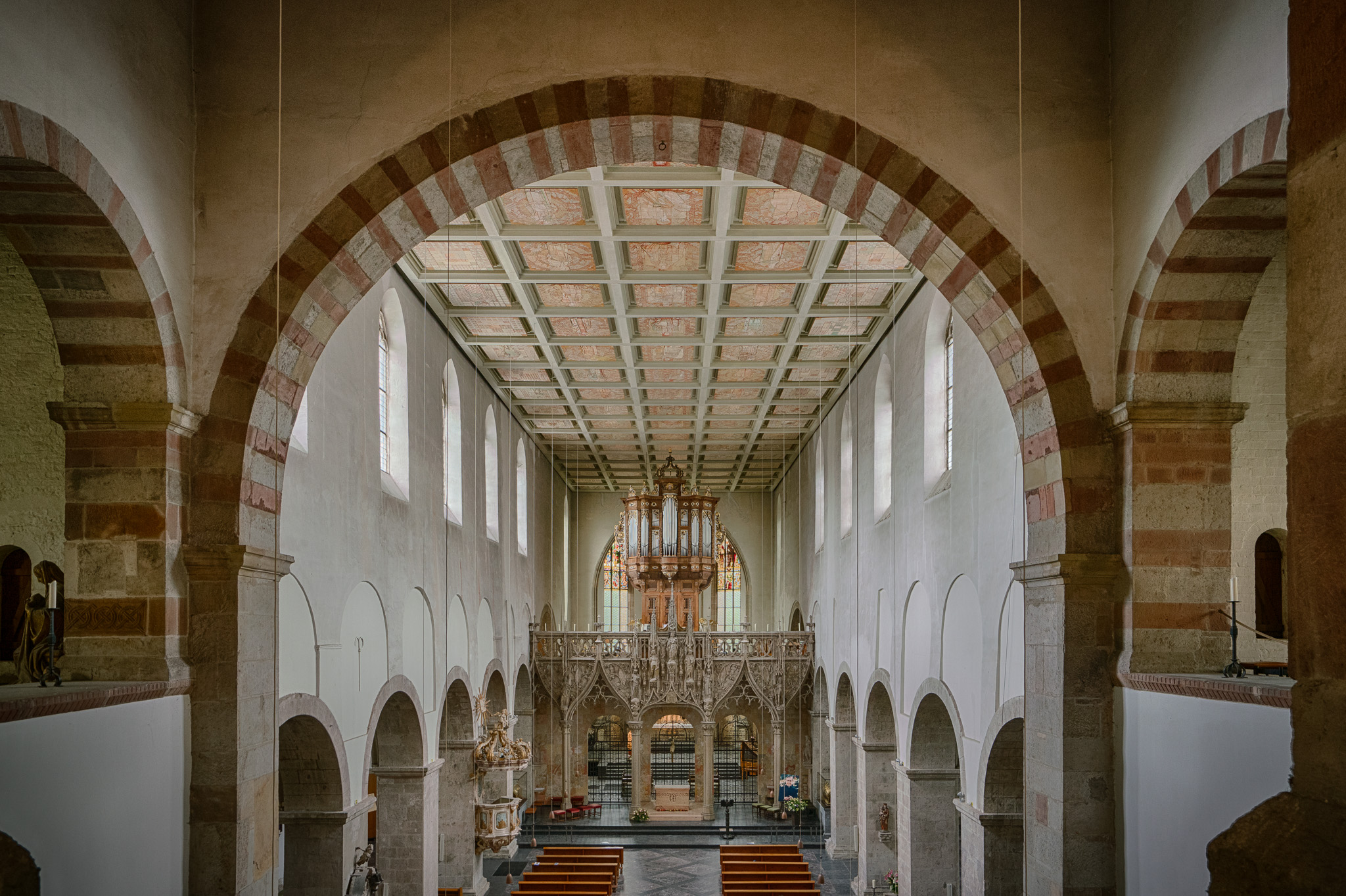
Across the Rhine from bustling Düsseldorf is the relatively quiet town of Neuss. A military camp was established near here in 16 B.C. by the Romans. The site of this church was originally a cemetery with a small chapel. Successive church buildings appeared on the site as the camp grew into a town. In time an abbey was established adjacent to the church. By the early 13th century, the church had acquired essentially its current form, though roof and towers have been damaged and restored multiple times.

Quirinus was reportedly a tribune who was martyred in A.D. 116 and interred in Rome. In 1050, his bones were brought to Neuss by the Abbess, Gepa, who may have been a sister to Pope Leo IX. I’m always fascinated by the variety of roman martyrs to whom churches in medieval Germany were dedicated. There was a definite interest connecting with early Roman christianity through relics of early martyrs, even though details of their lives were often sketchy and of late date.
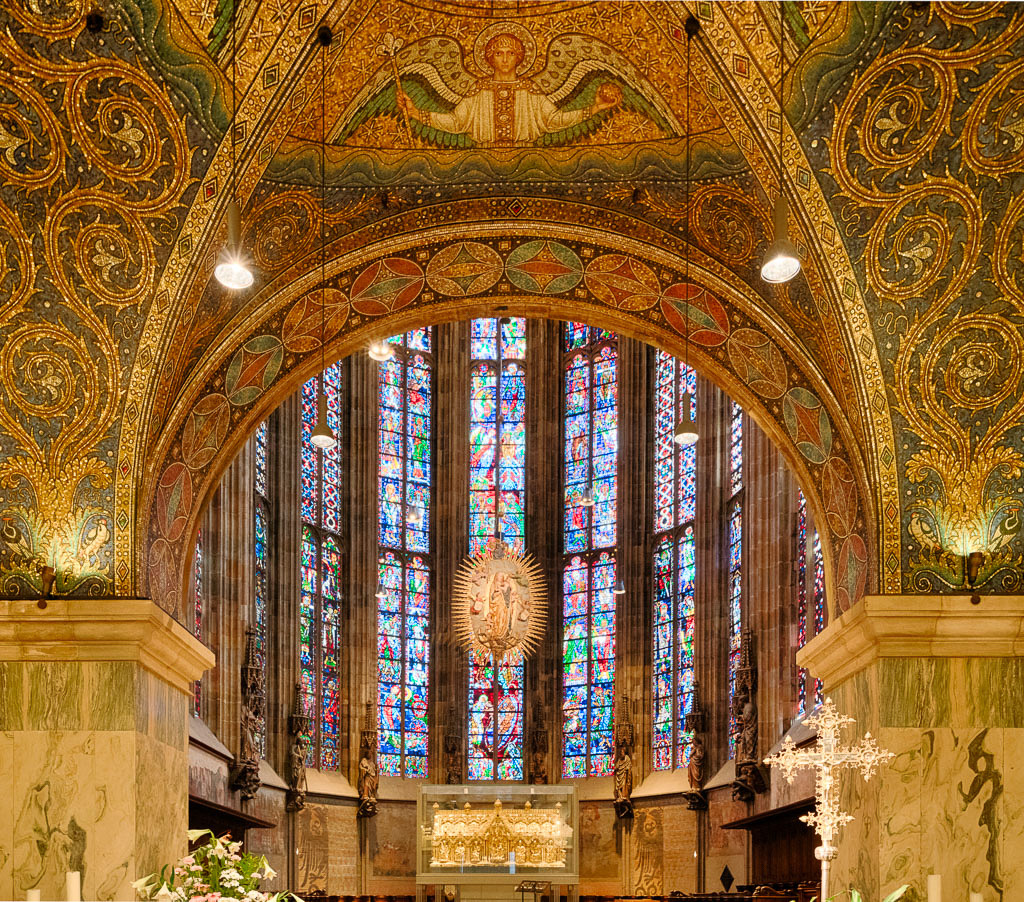
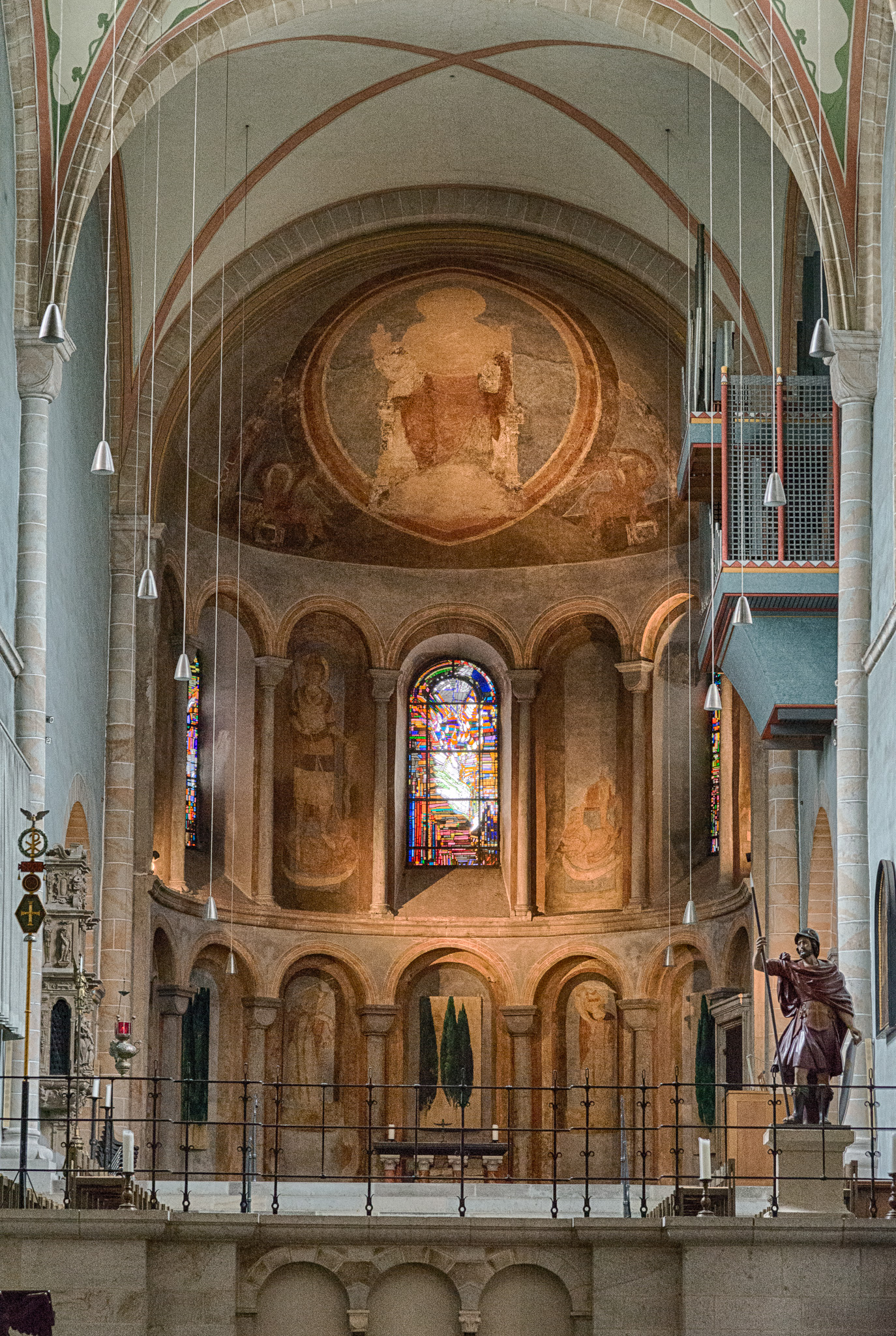
In 1794 French occupiers of the area used the church for fruit storage and later as a horse stable. Subsequently the adjacent abbey buildings were destroyed. After the region was incorporated into the Prussian State in the late 19th century, the church was restored. A new gold shrine was constructed to hold the bones of Quirinus and is now displayed in the apse.
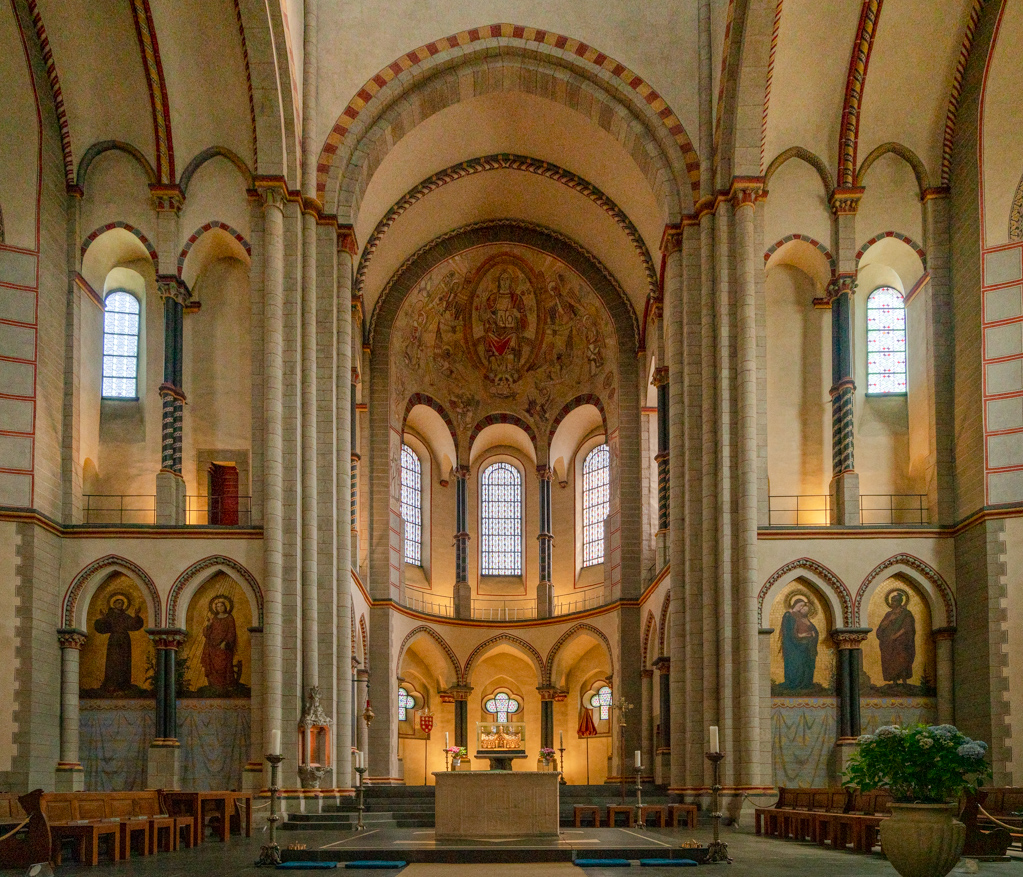
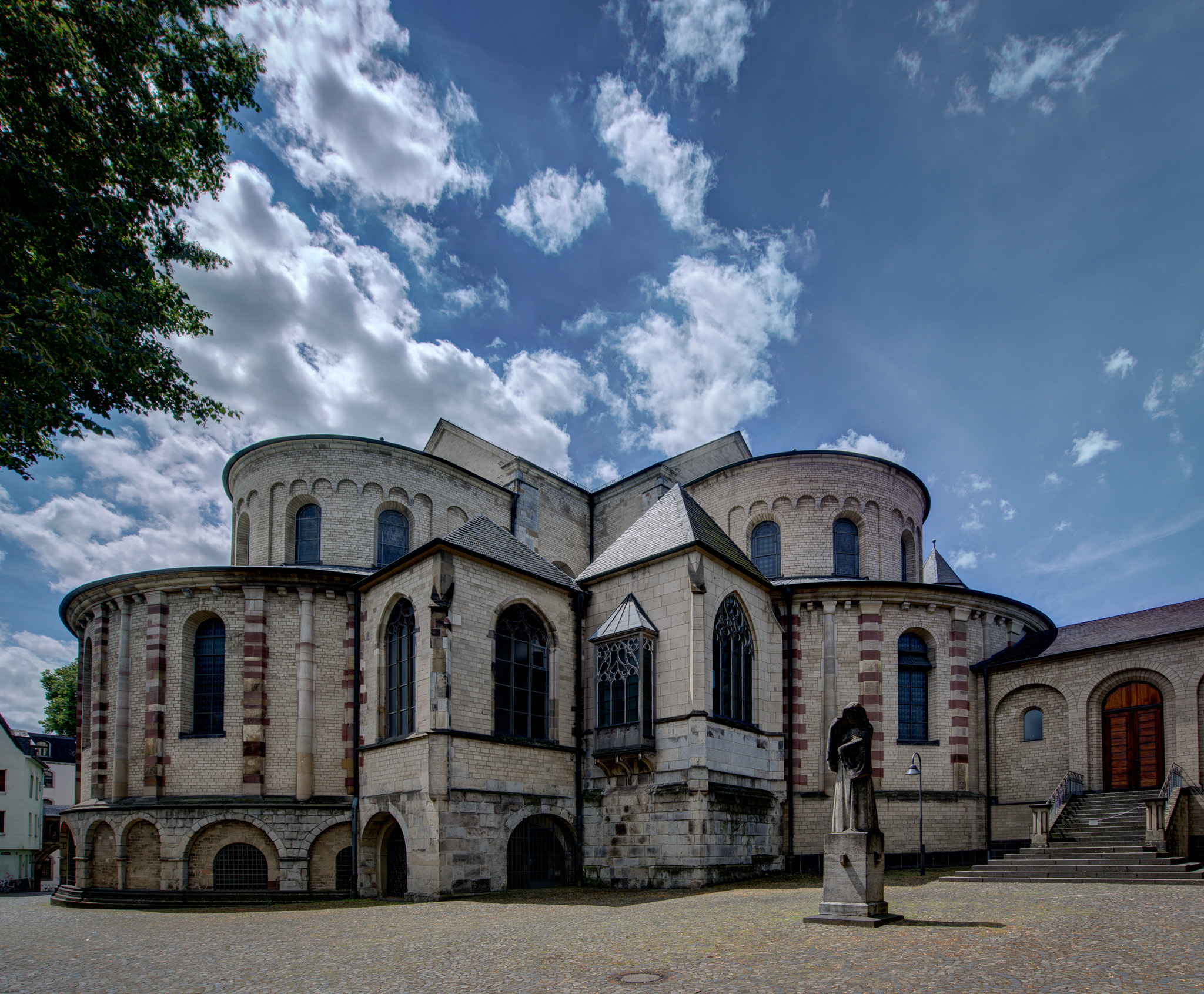
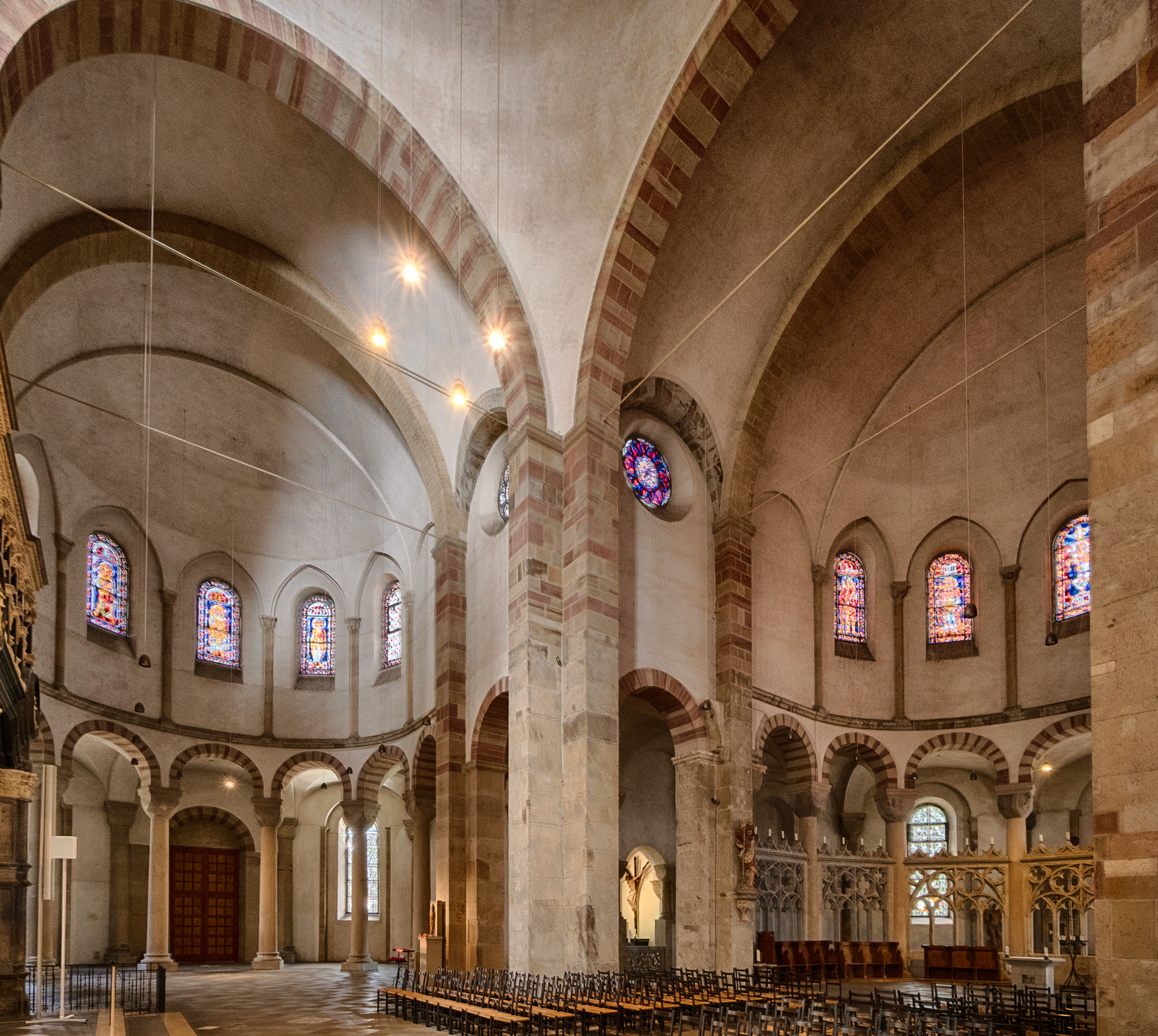
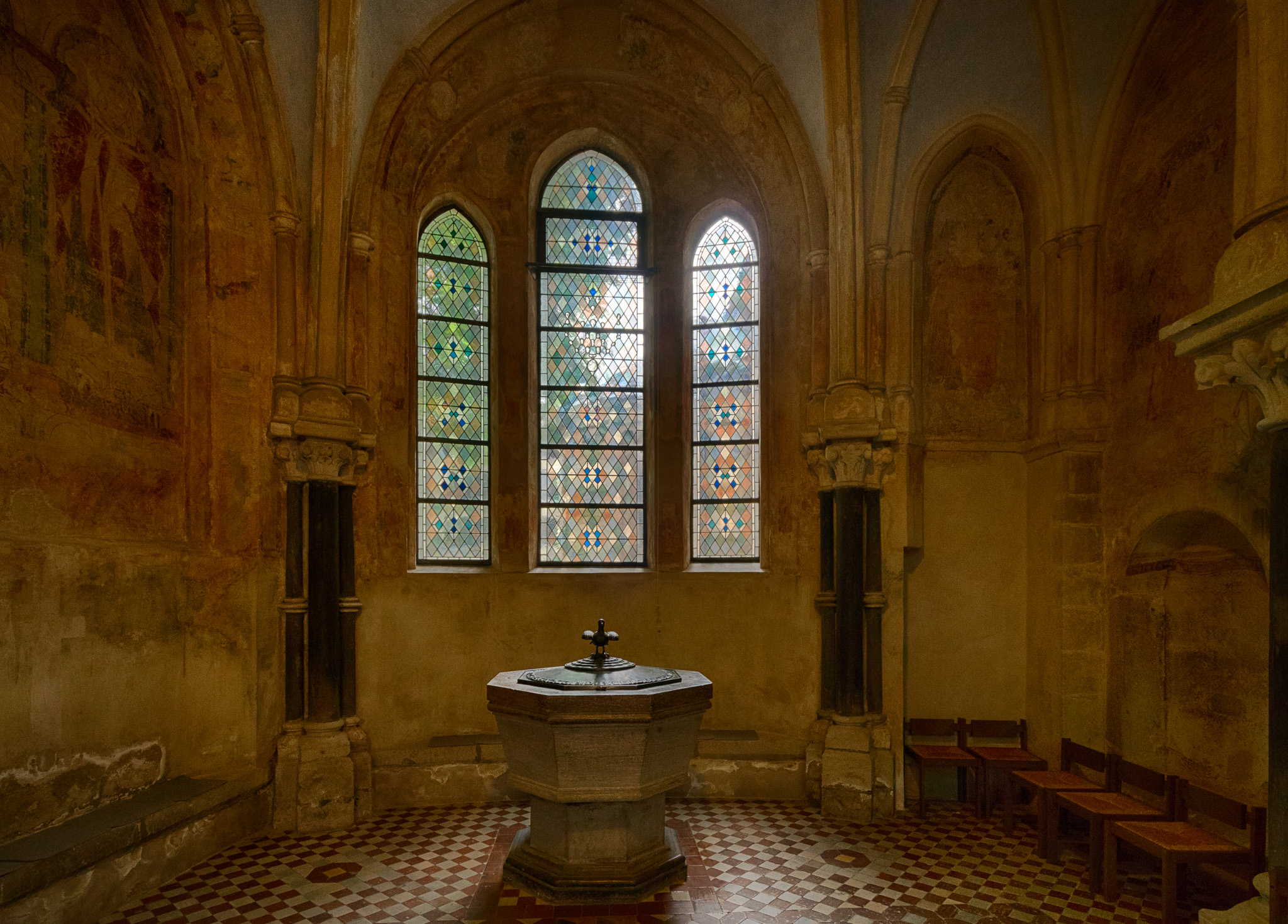
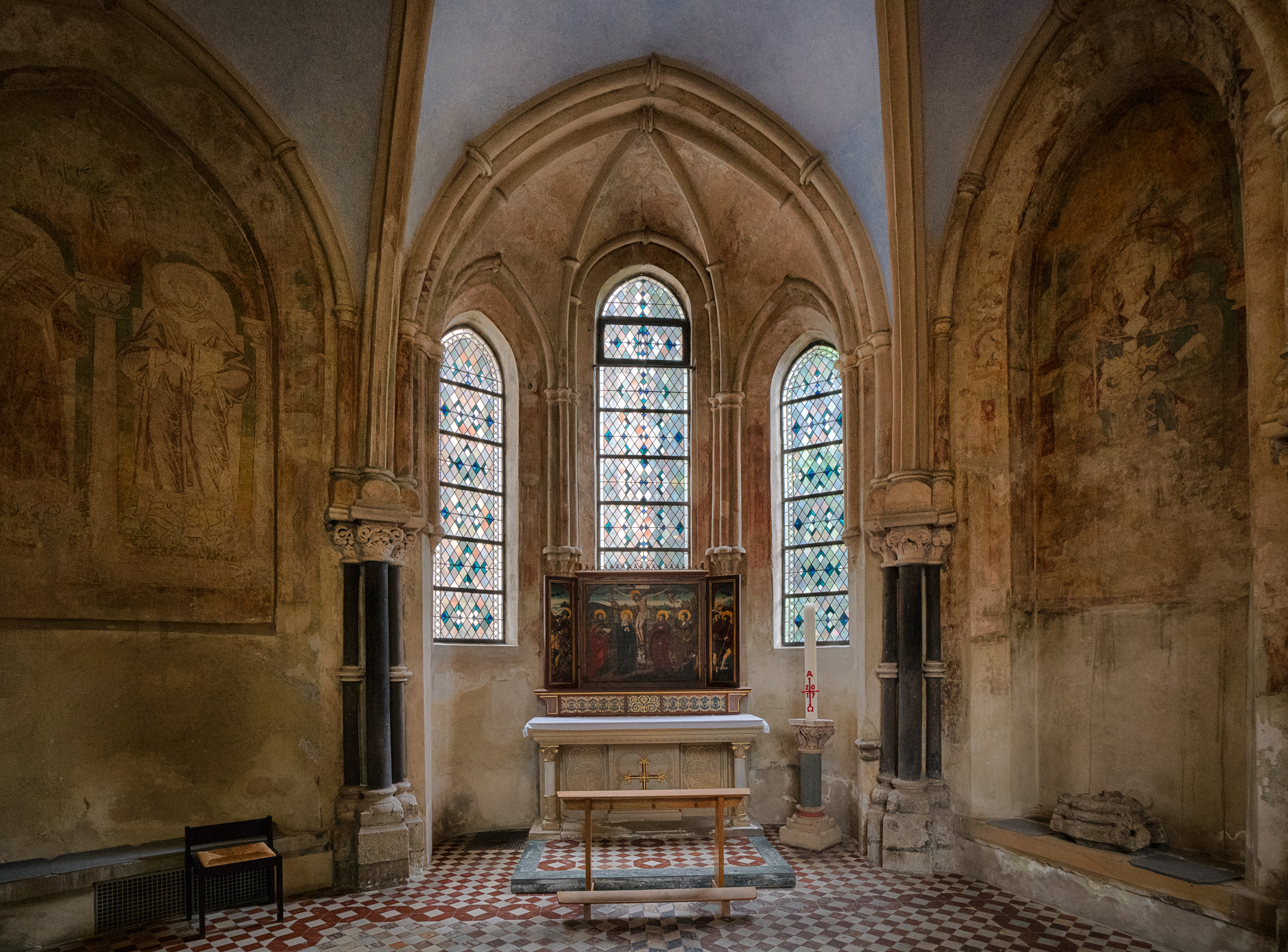
A distinctive feature of the church is the design of the east end. Two semicircular apses flank the eastern apse, rather than a typical transept. The design is similar to contemporary structures along the Rhine, e.g. St. Maria im Kapitol and Great St. Martin’s in Cologne. The image below is of the north “transept”.
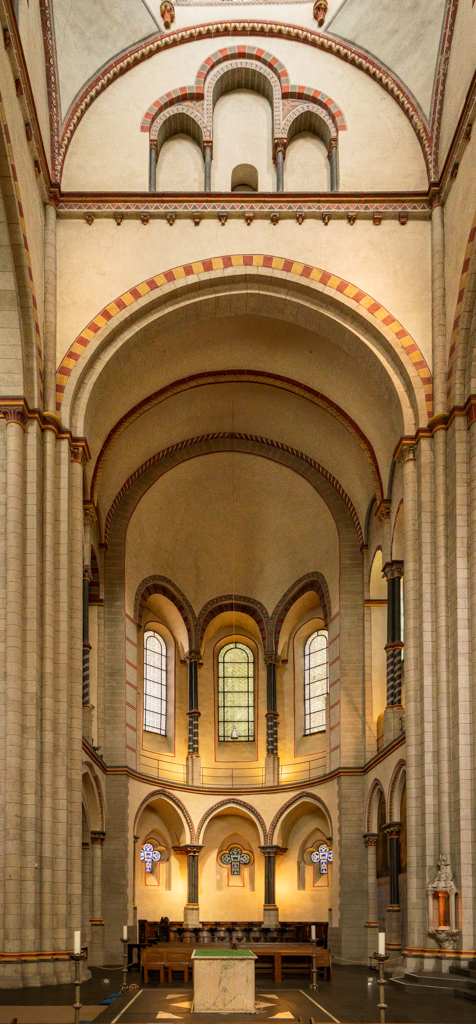
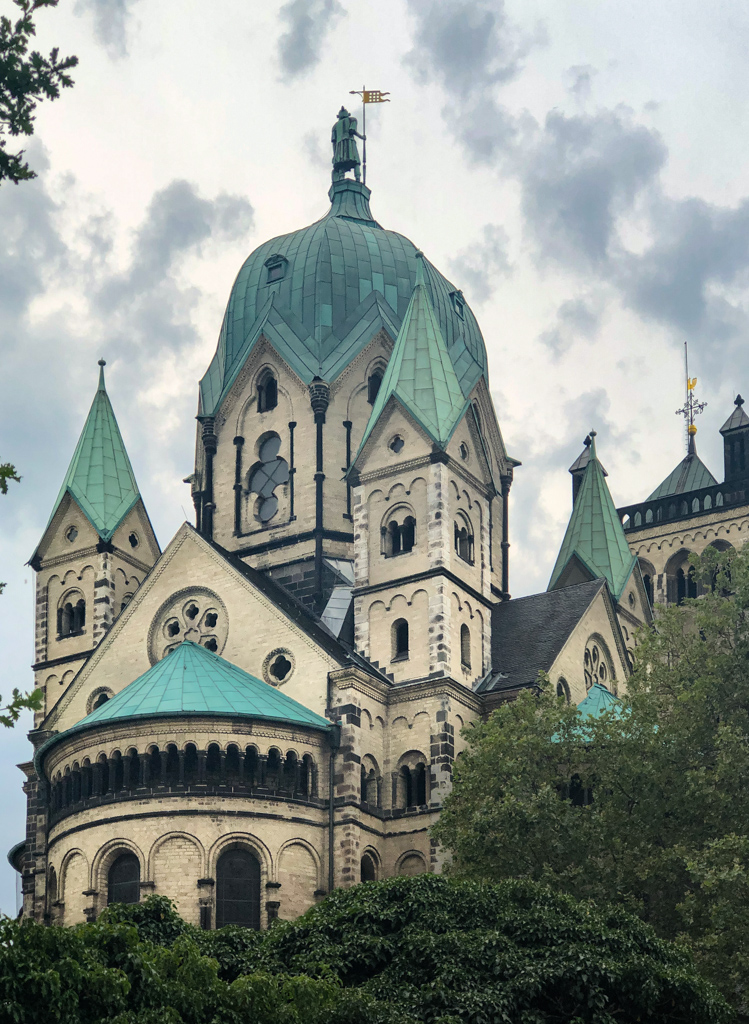
The copper sheathing on the baroque style Central tower unifies it with the much older romanesque main structure. A statue of Quirinus caps the tower.

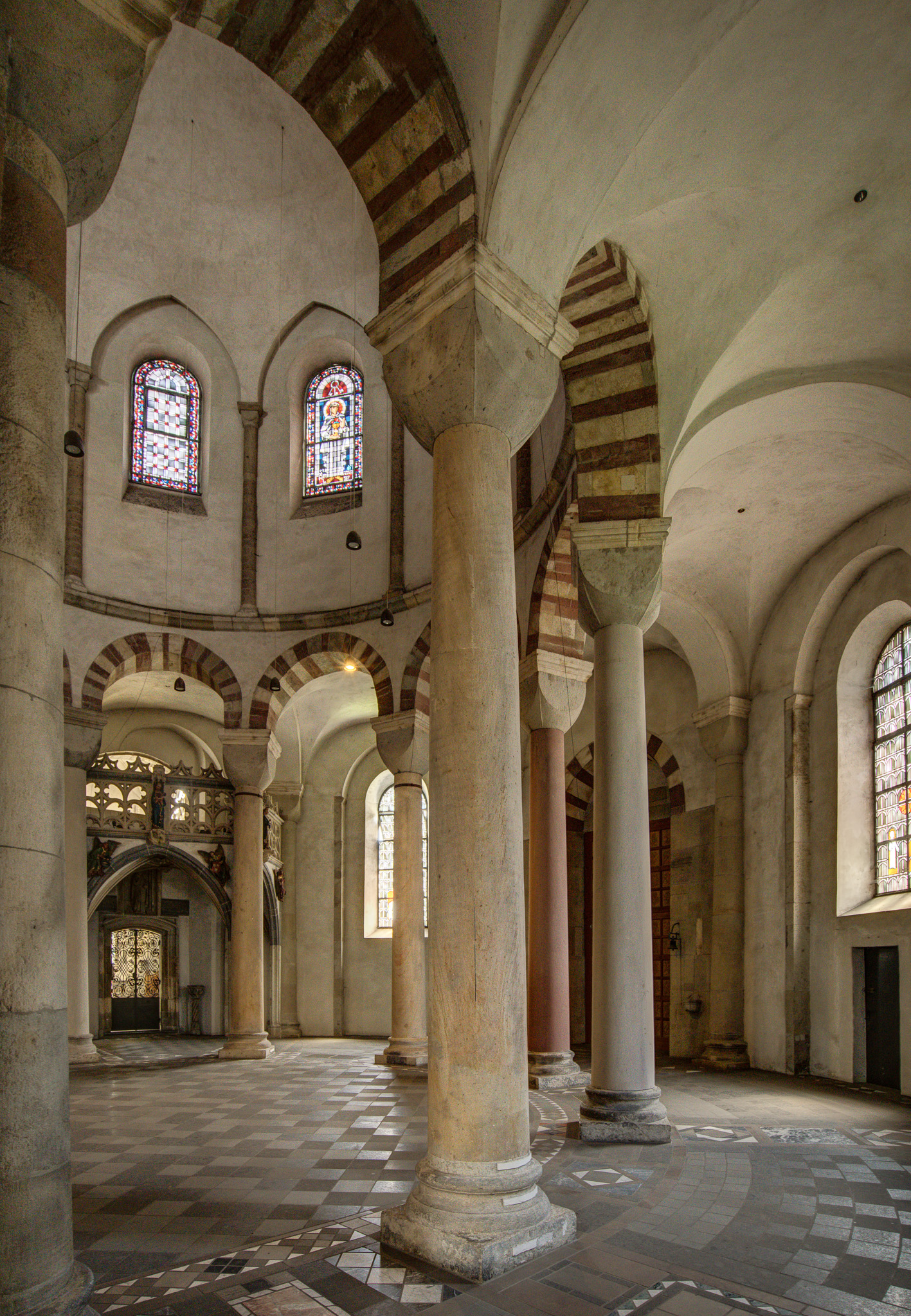
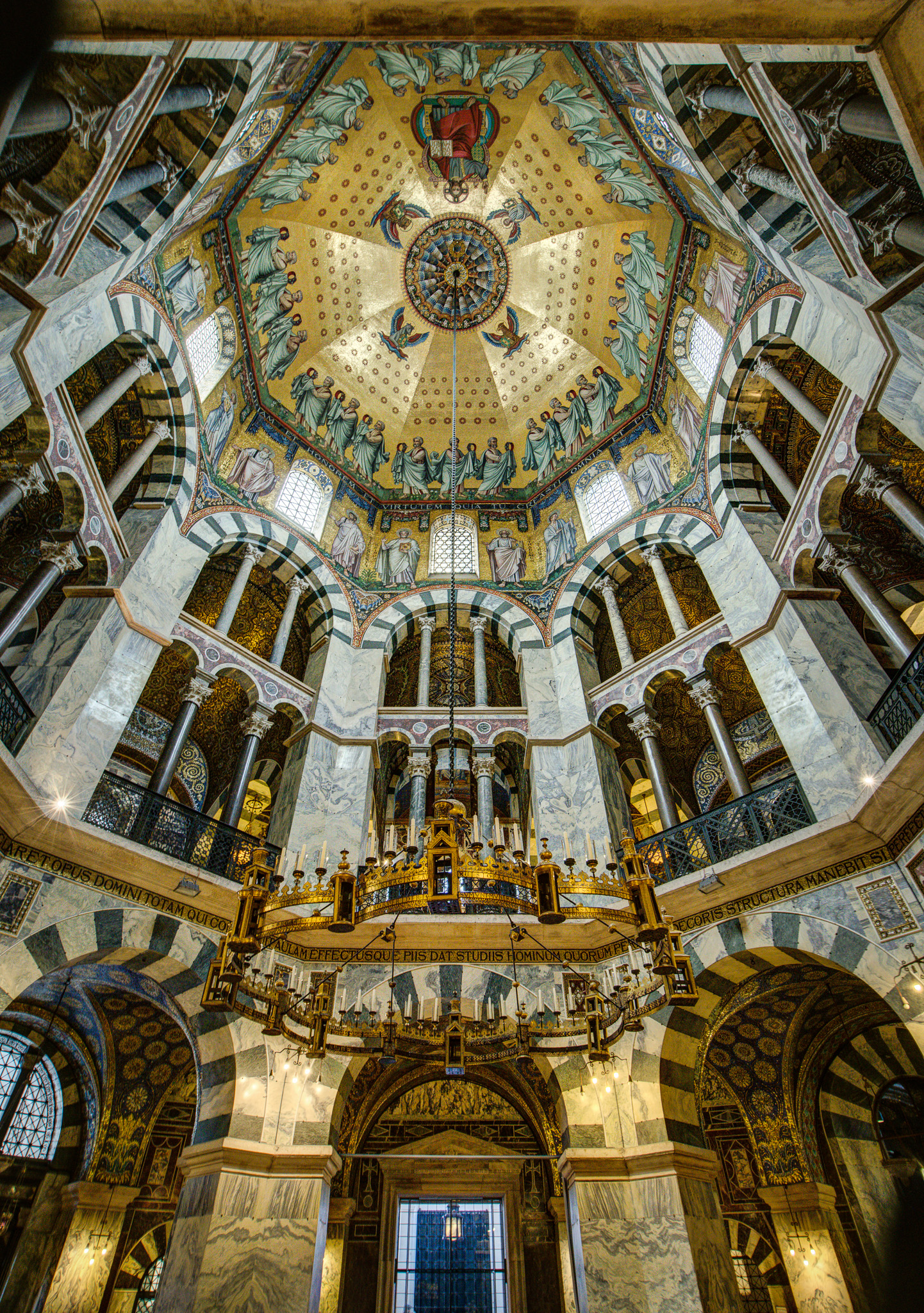
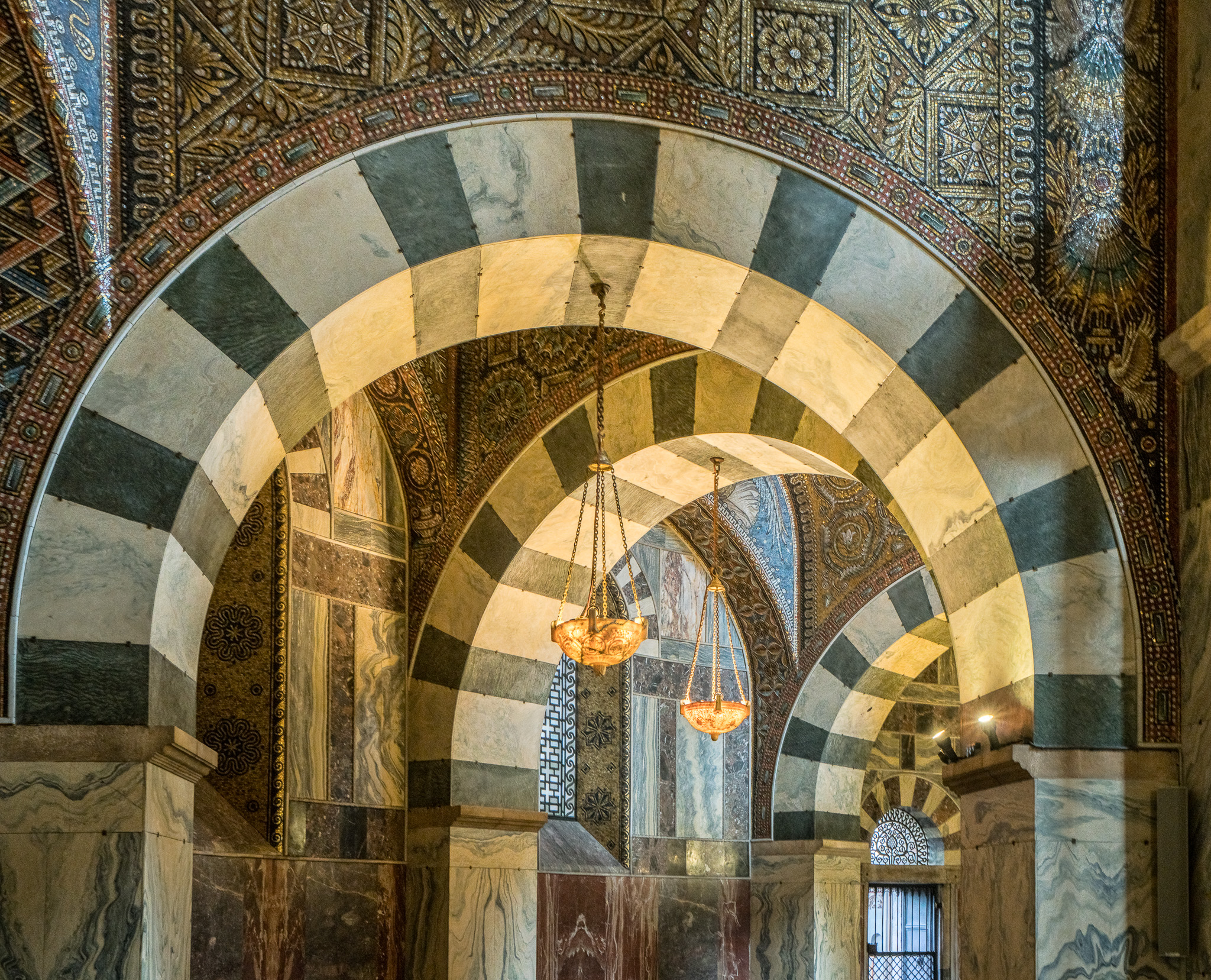

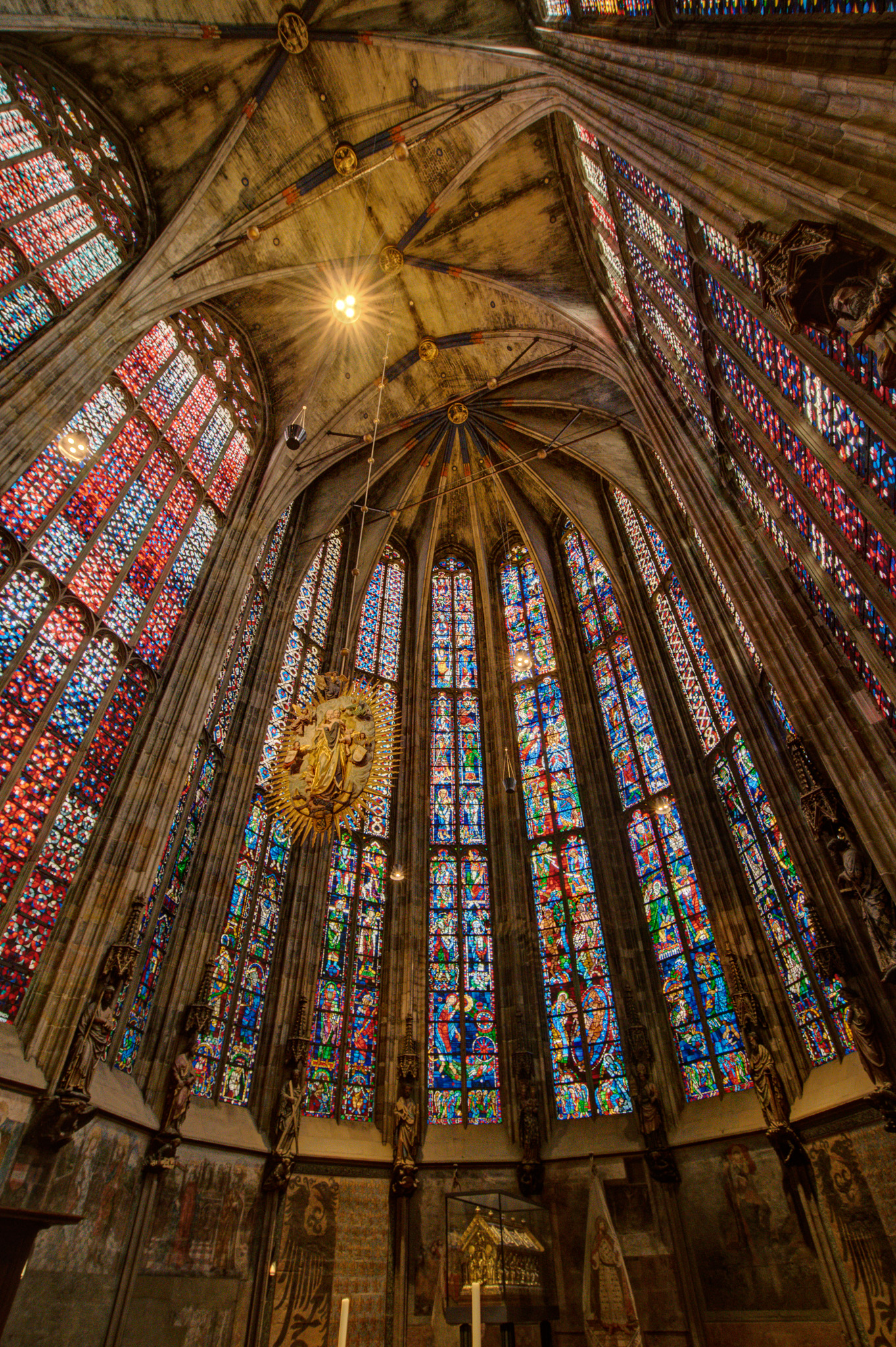
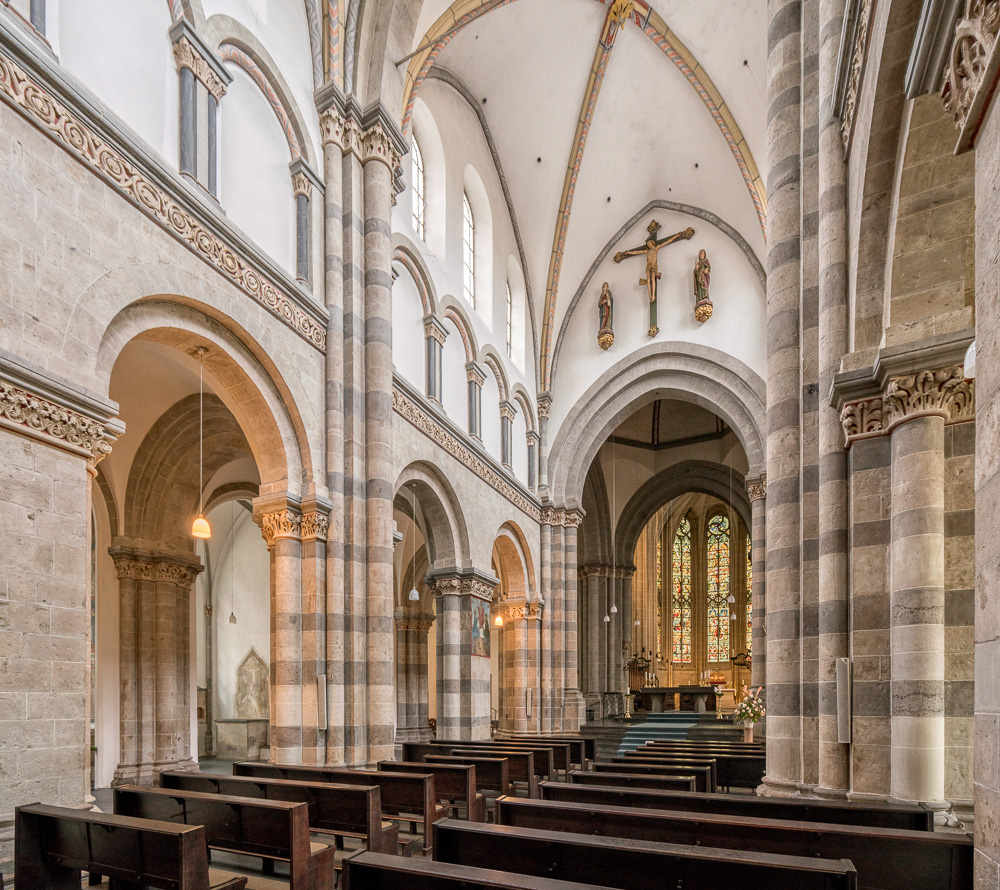
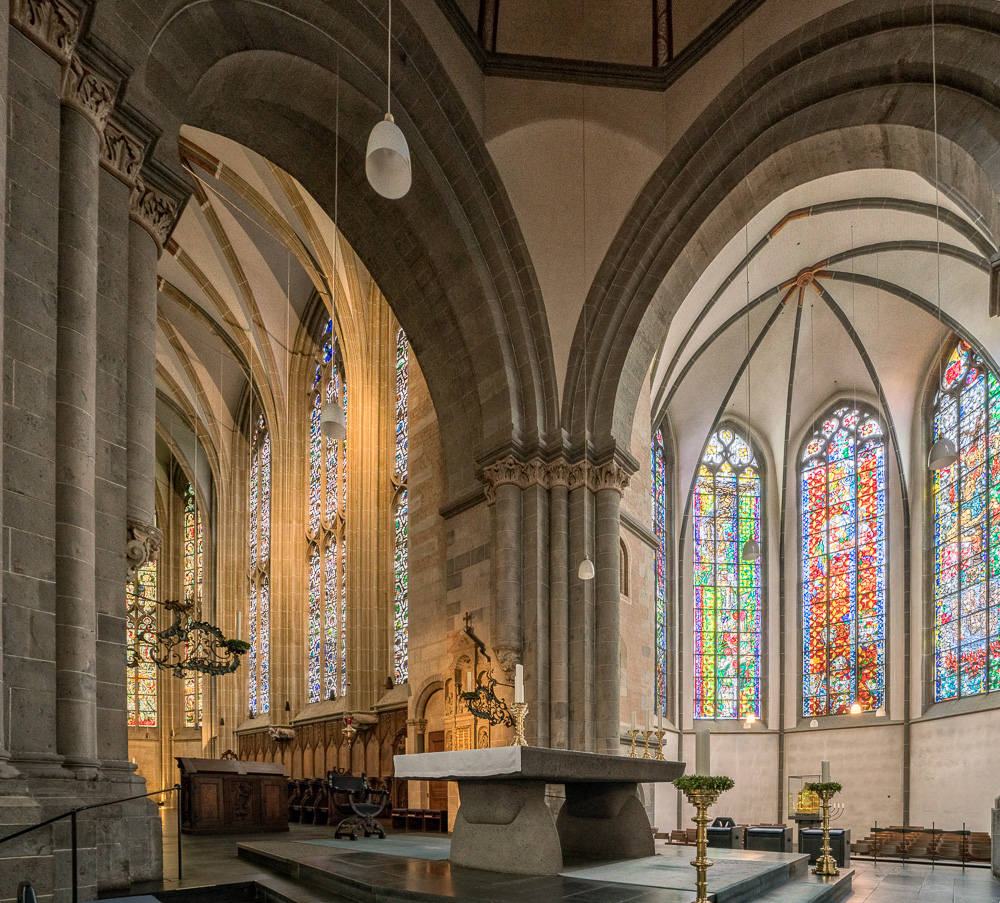
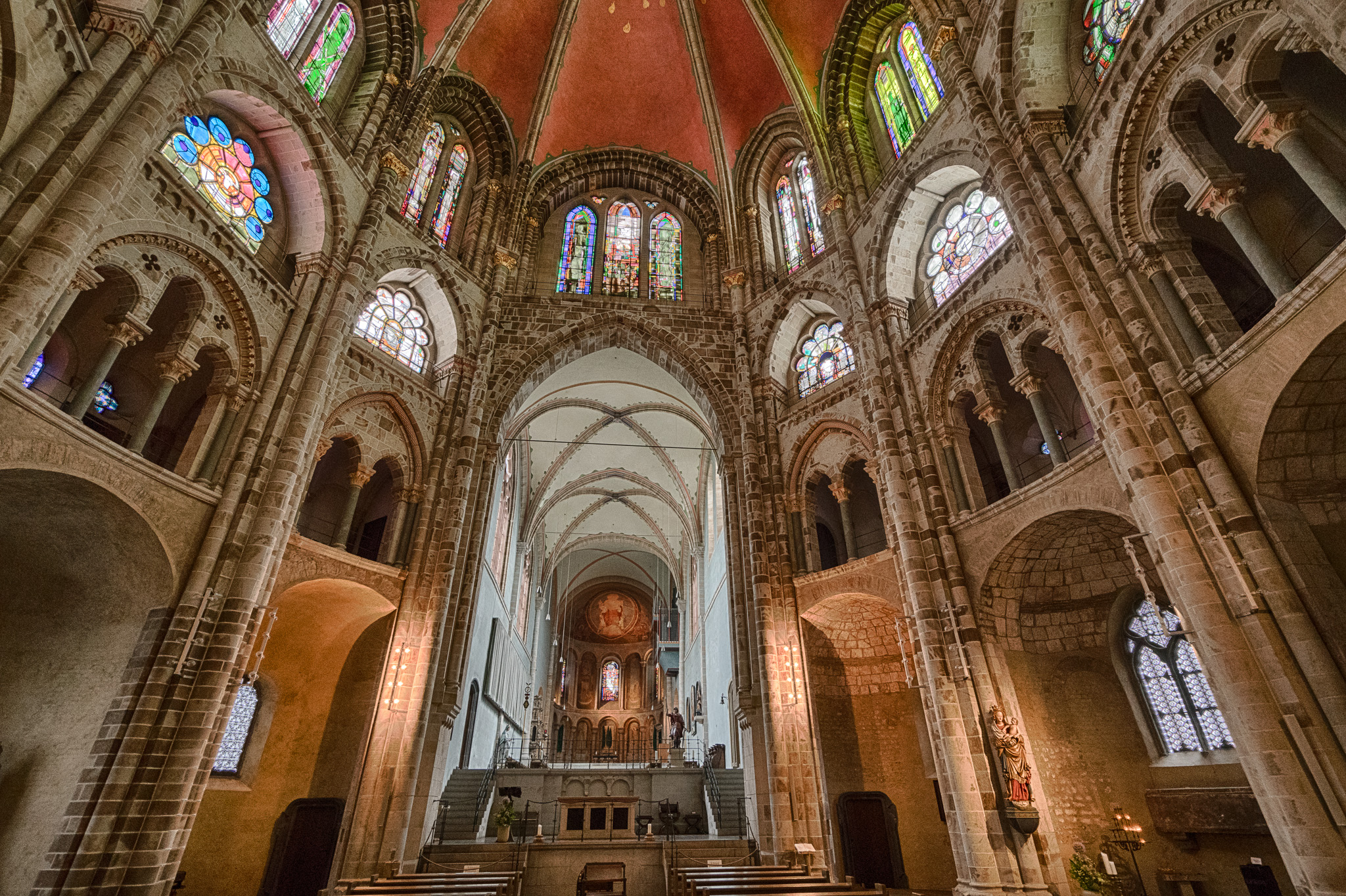

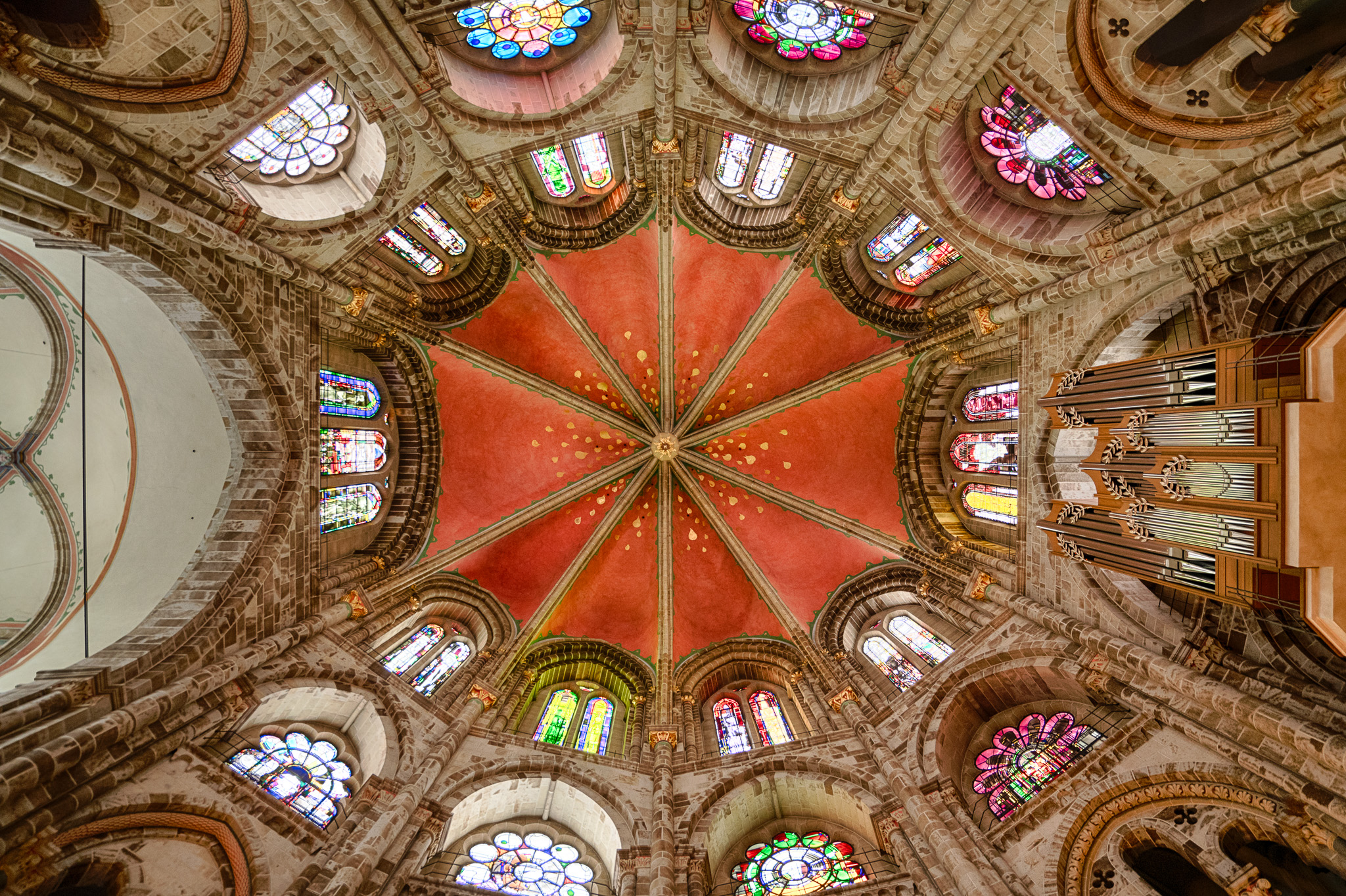
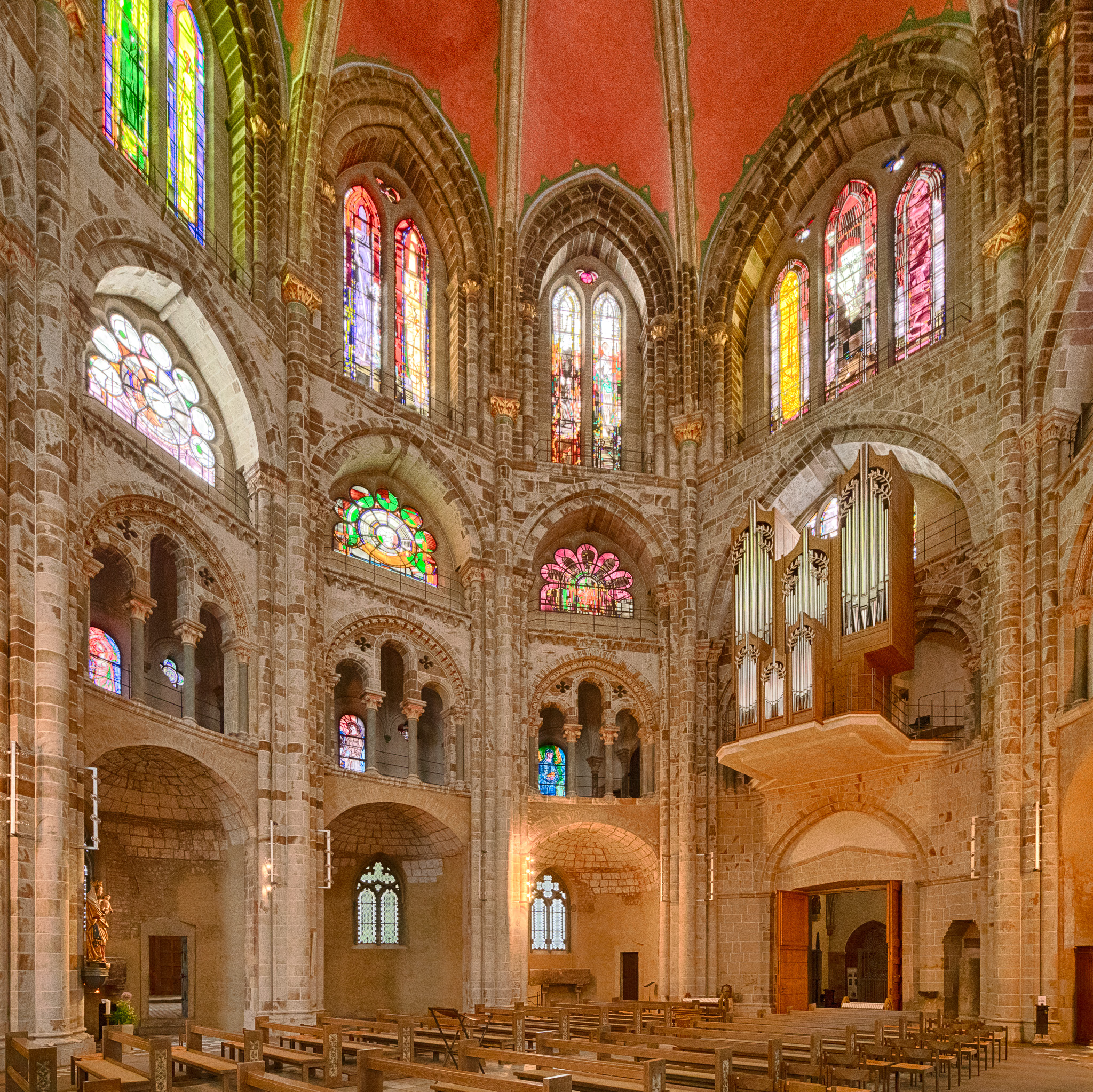 St. Gereon Kirche is unique north of the Alps. The lower levels date to about 350-65. The central structure is oval with semicircular niches that may have once held memorials to early noble families. Some of the stone in the vaults of these niches was recycled from Roman structures. The upper portions of this structure were renovated and extended several times during the past millennium. The visual splendor can only be approximated in photos, but this view of the ceiling gives some idea of what it is like to stand in the center of this remarkable church.


 Holy Roman Emperor Otto I, who is entombed at