In A.D. 744, St. Sturmius founded a monastery in Fulda and built a church on the site of the current cathedral. A cemetery for the monks was established on the hill overlooking the church. In 822 St. Michaels church was built at the direction of the Abbot Aegil as a burial chapel for the cemetery. It began as a small circular chapel built over a crypt. Over the years a nave, a second tower, and transepts were added. Except for periods of renovation and repair it has been in continuous use for 1200 years.
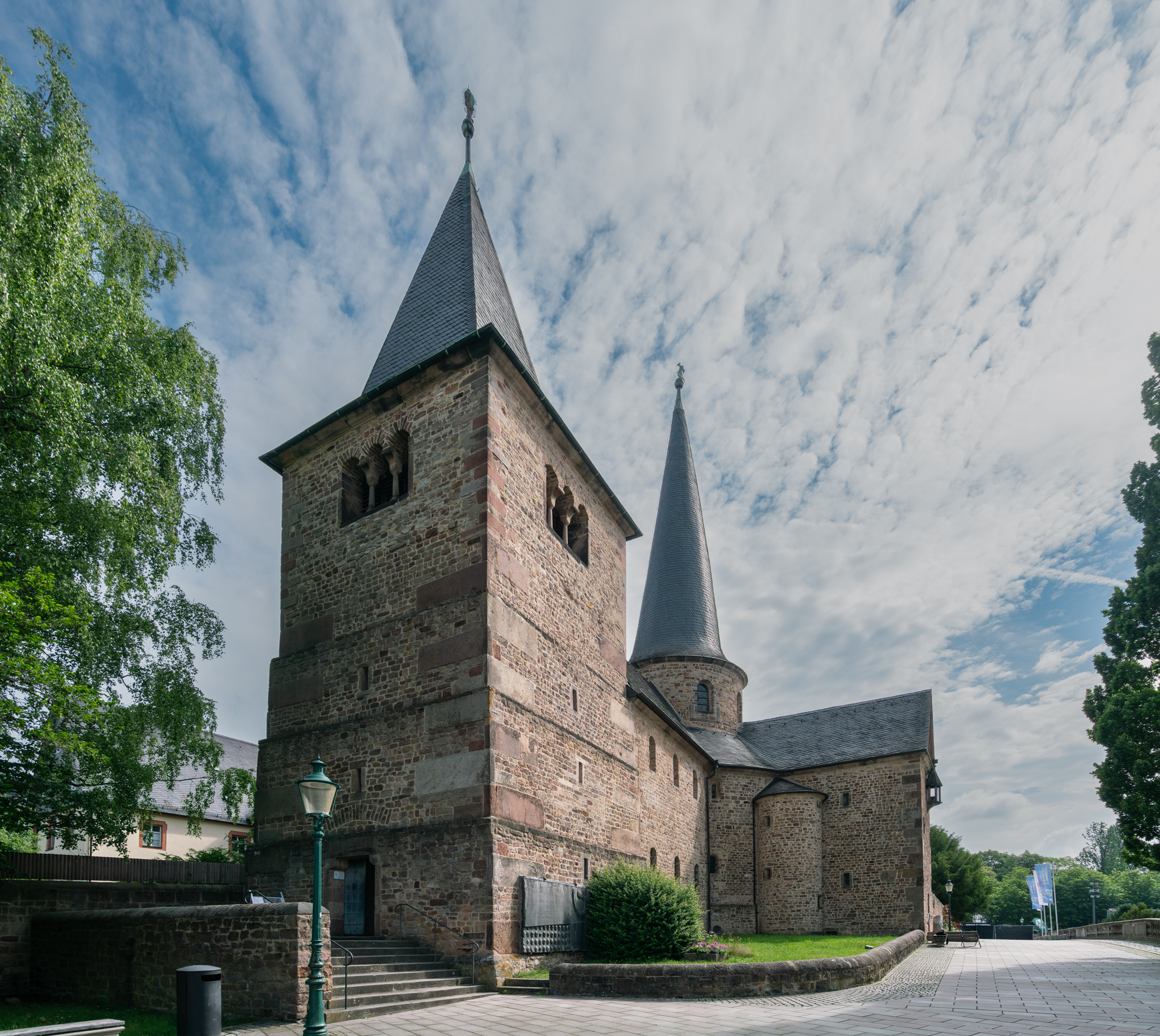
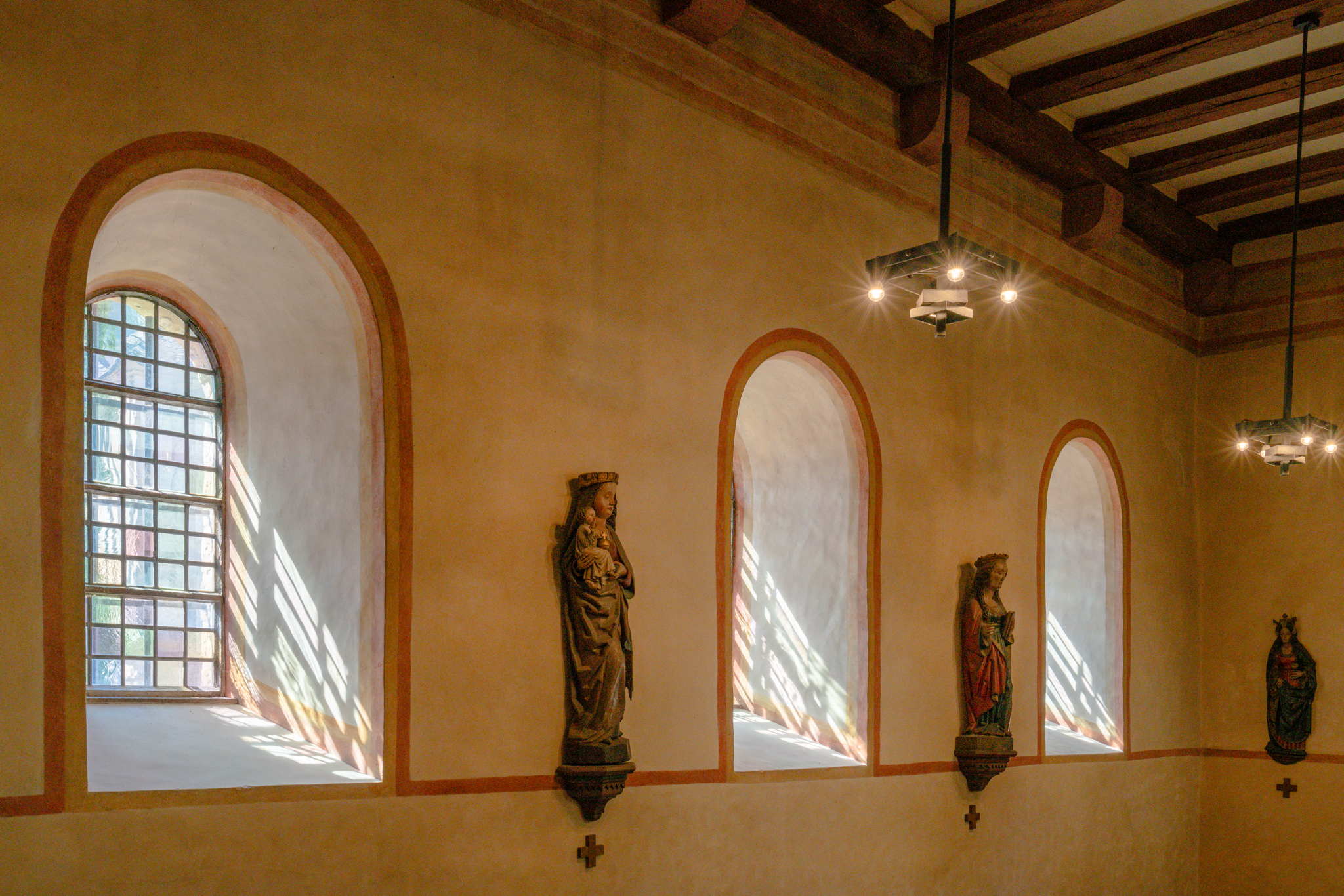
The entrance is through the square west tower into a welcome area with some literature. Then you pass through the narrow 11th century nave with some seating and gothic figures on the walls before reaching the rotunda.
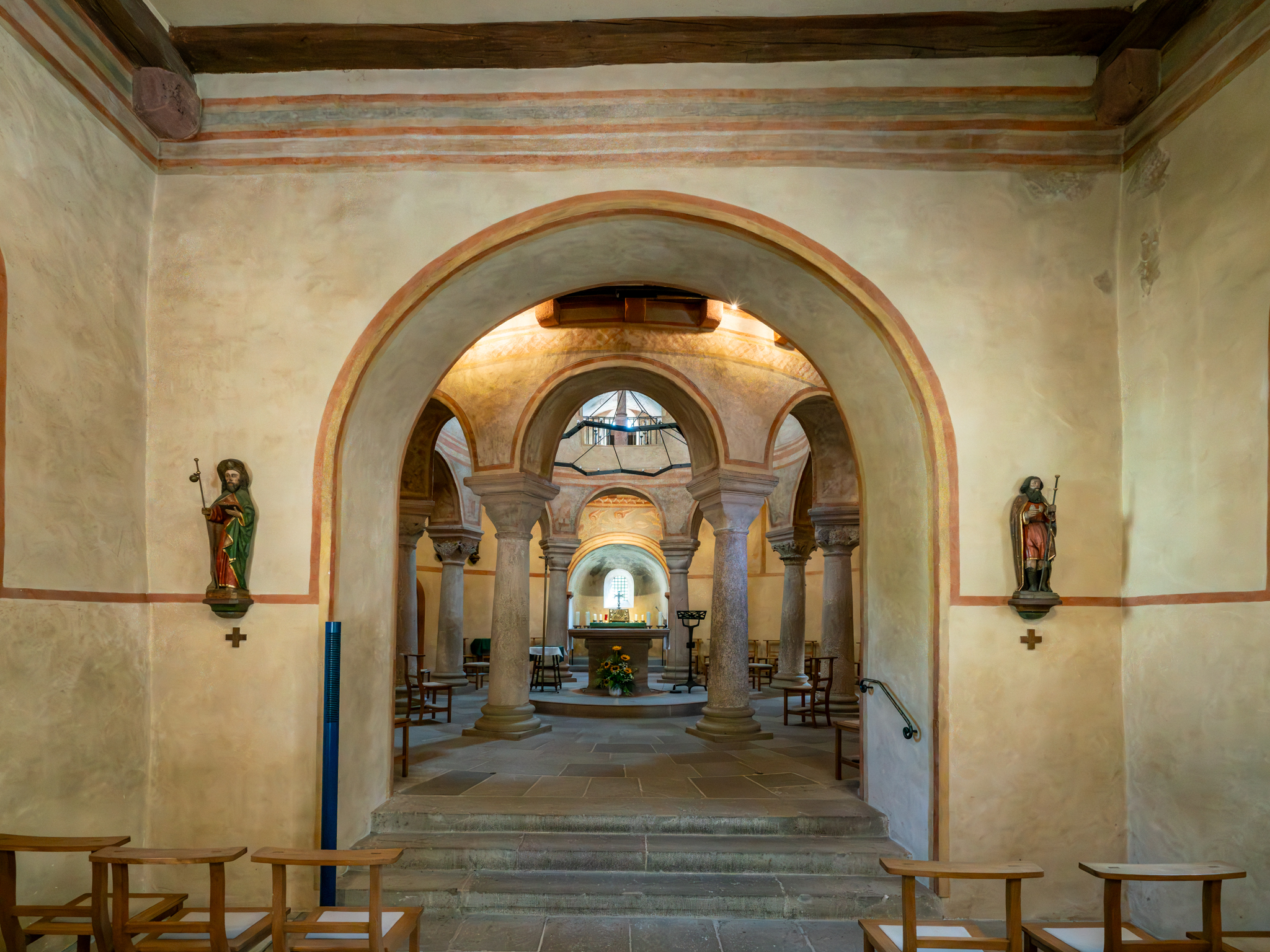
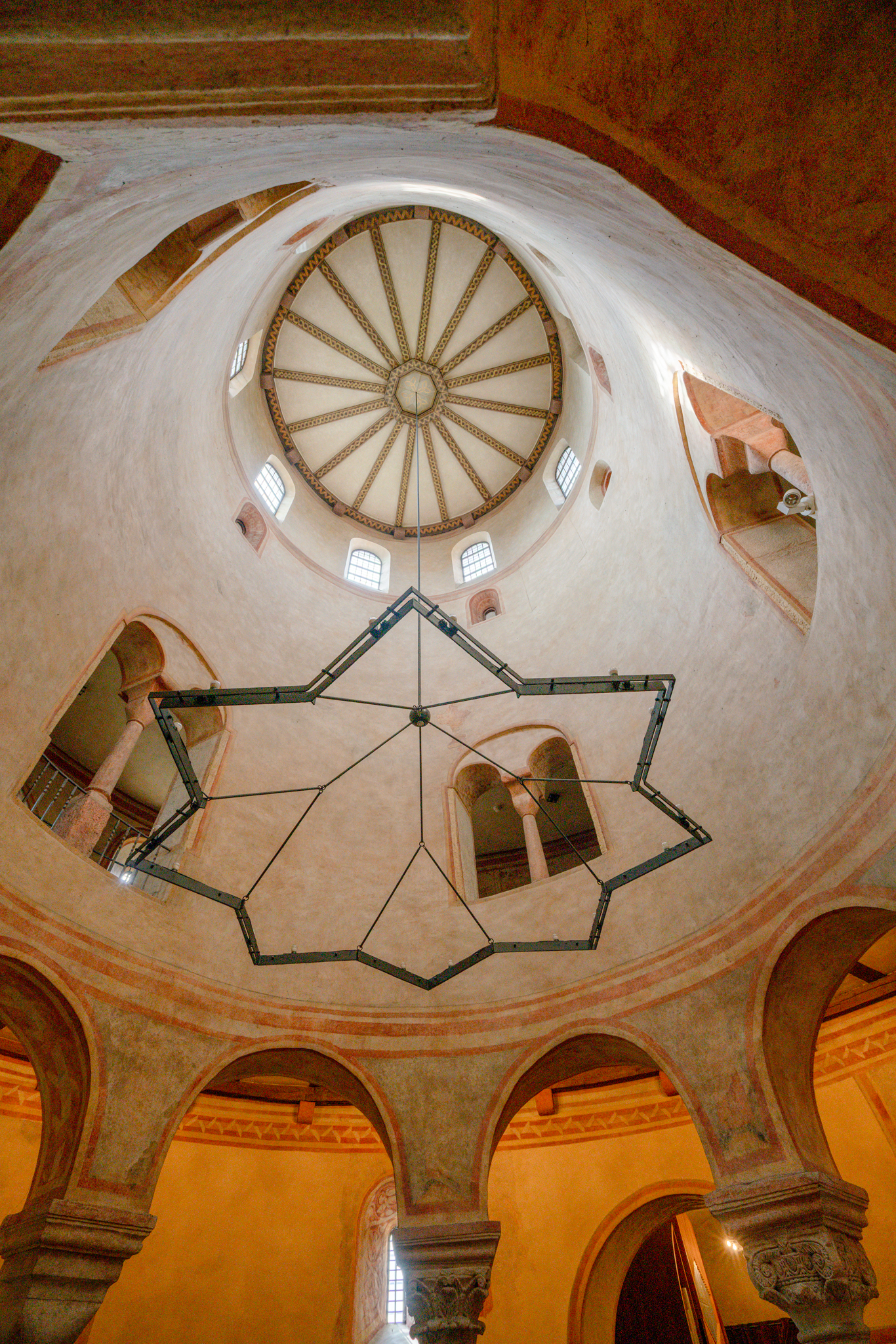
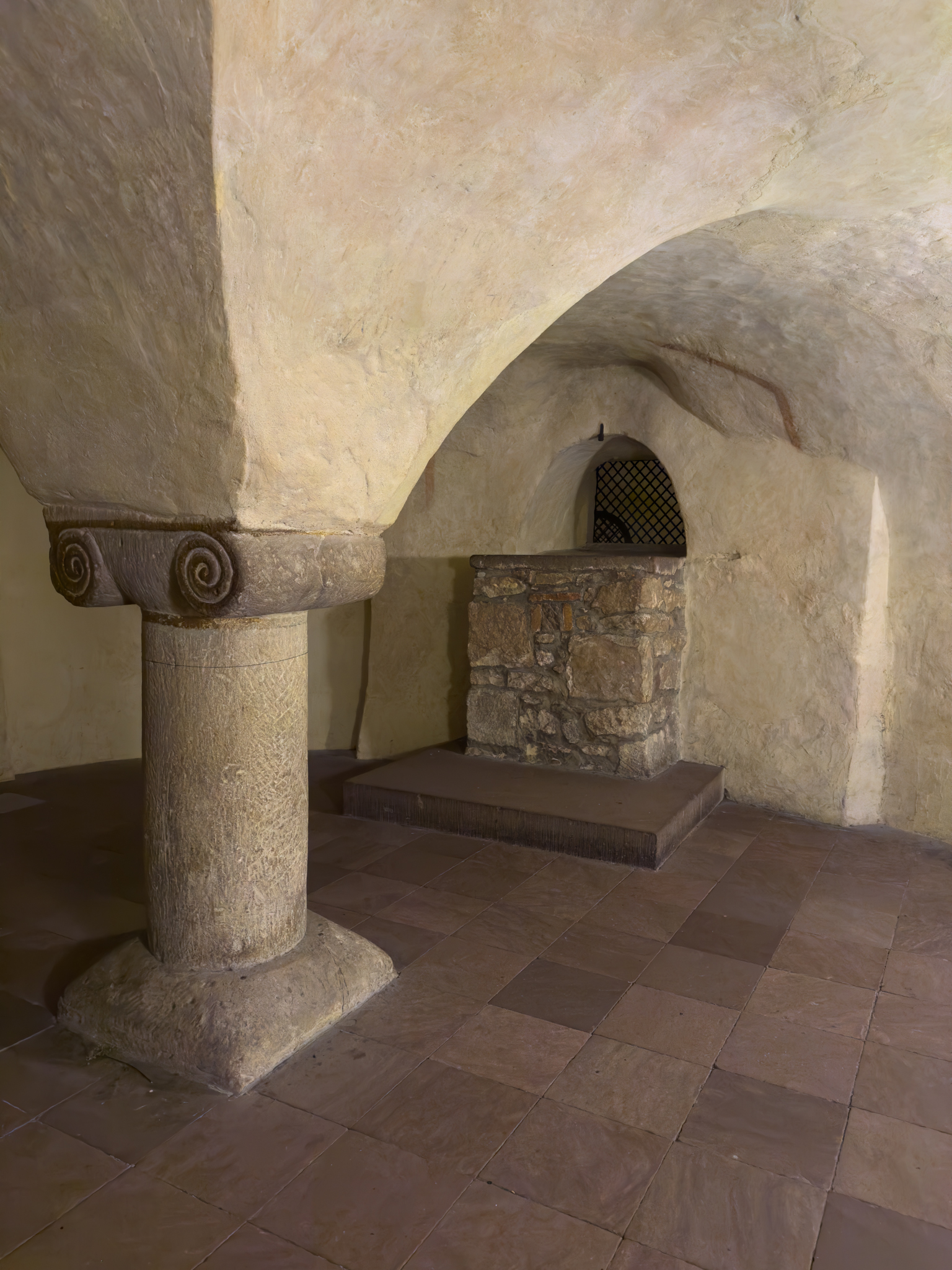
The original circular chapel with its eight columns stands over a crypt built around a single central column. The biographer of Abbot Aegil, a monk named Candidus Bruun, described this design. The column in the crypt signifies Christ, the foundation of the church, the columns represent the beatitudes by which we order our lives. See the end of this post for a longer quote from the biography.
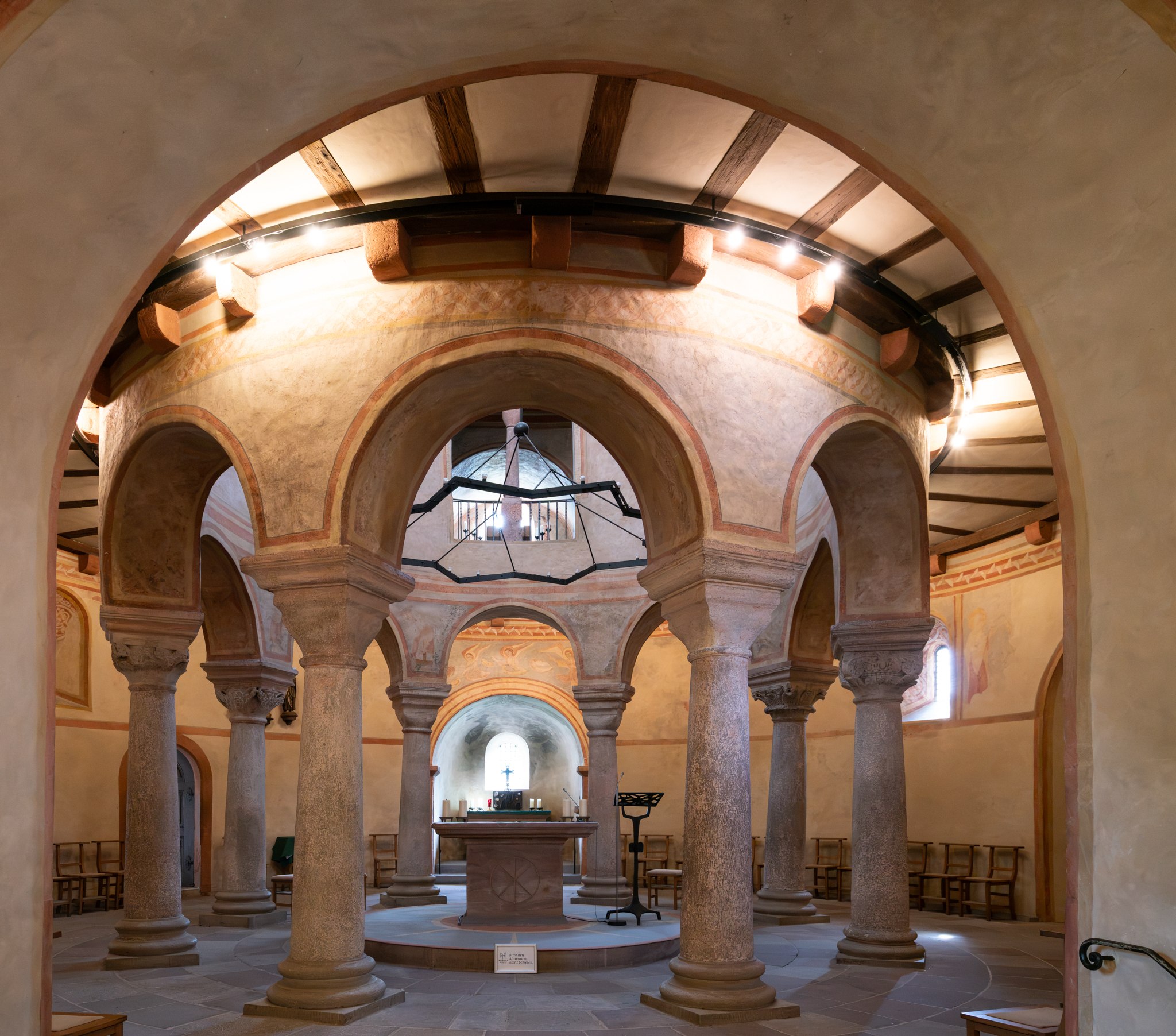
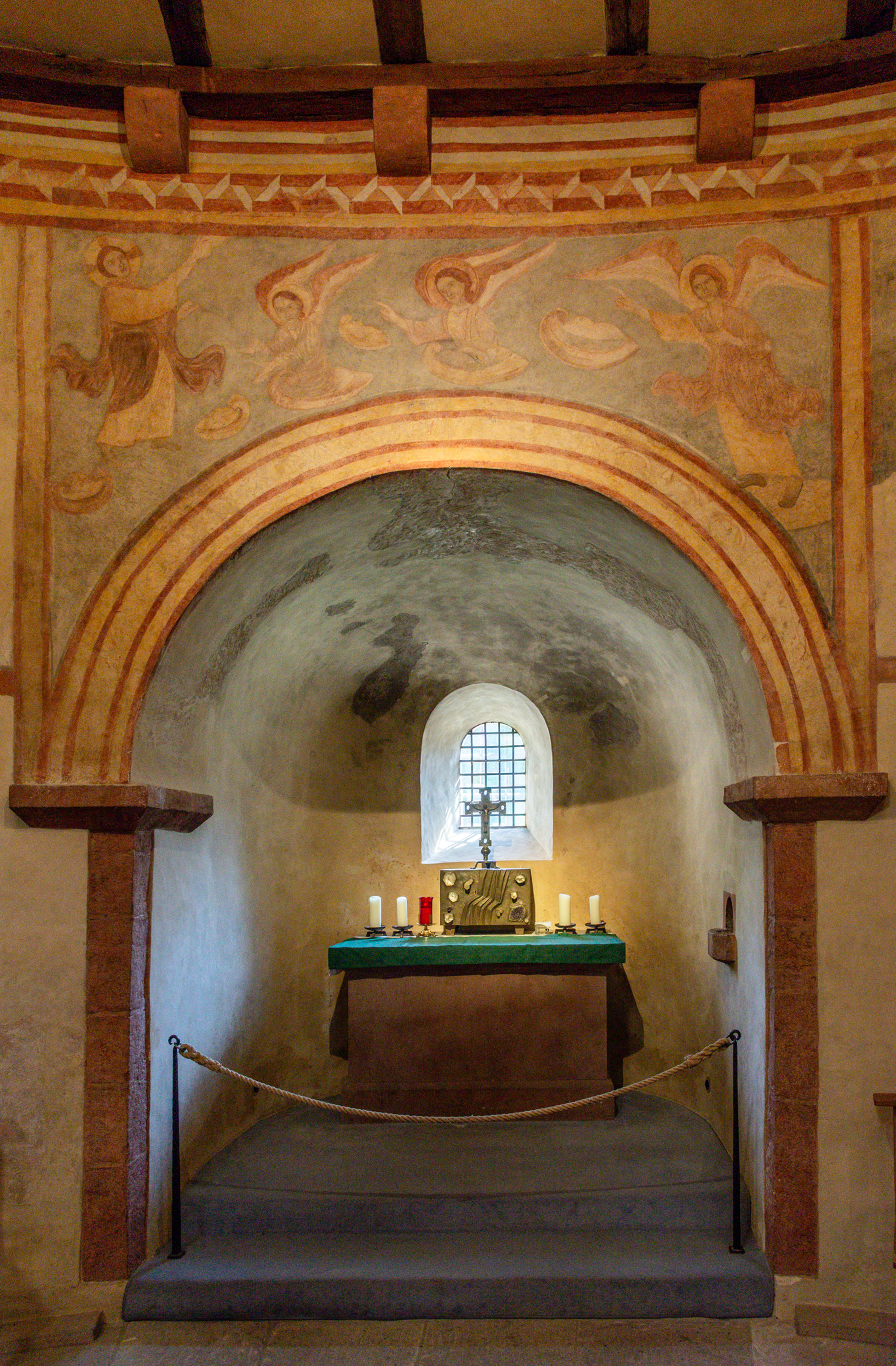
The circular tower over the main altar was apparently originally a single story stone dome. It was raised several times to its current height. This small east apse is framed by an 11th century depiction of the archangel Michael and others.
The crypt with the single pillar is accessed through the south transept via a circular stairway.
When I first visited this church in 2022, my main sources of information were literature available at the church and a few sparse internet pages. The advent of AI has opened up new paths of discovery.
I was intrigued by the mention of a biography of Aegil in a booklet at the church. The Claude chatbot located the original medieval latin text of both the prose and verse versions. I could never have found the text with traditional search methods. I used Google Translate to translate the passage related to the construction of St. Michael’s church. There are a couple odd phrases, but overall the english is very natural. The text takes a mere architectural relic and brings to life the people who first worshiped there.
Here’s the translation:
The father of the monastery, diligently learning the joys of common life, with the advice and consent of the brethren, built a small round church, where the deceased bodies of the brethren, given up for burial, rest, which they call a cemetery, which is called χοιμητηςιοη in Greek, but in Latin it is interpreted as dormitory. The structure of this building, also, under the ground, where the passage goes around the cave, rises strongly from a single stone column placed in the middle, with arches here and there joined to it; but above it is supported by eight columns and at the top of the work is closed with a single stone. This building, indeed, was designed by this venerable father and the above-mentioned master with his companions, who were learned by divine teaching, and which, however, I think, can be foreshadowed by the figure of Christ and the church, while preserving the faith of Christ and the church. For the apostle Paul, who himself is called a vessel of election by the Lord, speaking clearly to his hearers about the church of Christ, built of living stones, that is, holy men, that it is the dwelling place of God, says: For the temple of God is holy, which you are; the chief builder and builder of whose roof is Christ Jesus, the foundation and pillar, which remains forever immovable by the power of perpetual majesty; in whom every building, when constructed, grows into a holy temple in the Lord. What this signifies, that in the top one stone the perfection of this building is completed, is suggested by the same teacher, who teaches us to pray with an intent mind, that ‘he who began a good work in us may complete it until the day of Christ Jesus, so that all our work may always begin with God and be finished through him, having begun. Therefore, the eight pillars standing in this temple of the Lord are fittingly adapted to the eight beatitudes, which the Lord himself includes in the gospel, so that whoever completes these four times two times with Jesus may deserve to be held in this church as the support of Christ. But the circle of the church, which has no end, having within it the summaries of life, that is, the divine sacraments, the kingdom of perpetual majesty and the hope of eternal life and the lasting rewards, with which the just are deservedly crowned for ever, does not seem to signify incongruously.

