Interior Variations

The structure and symbols of church interiors convey messages and ideas that are sometimes intentional and sometimes accidental.

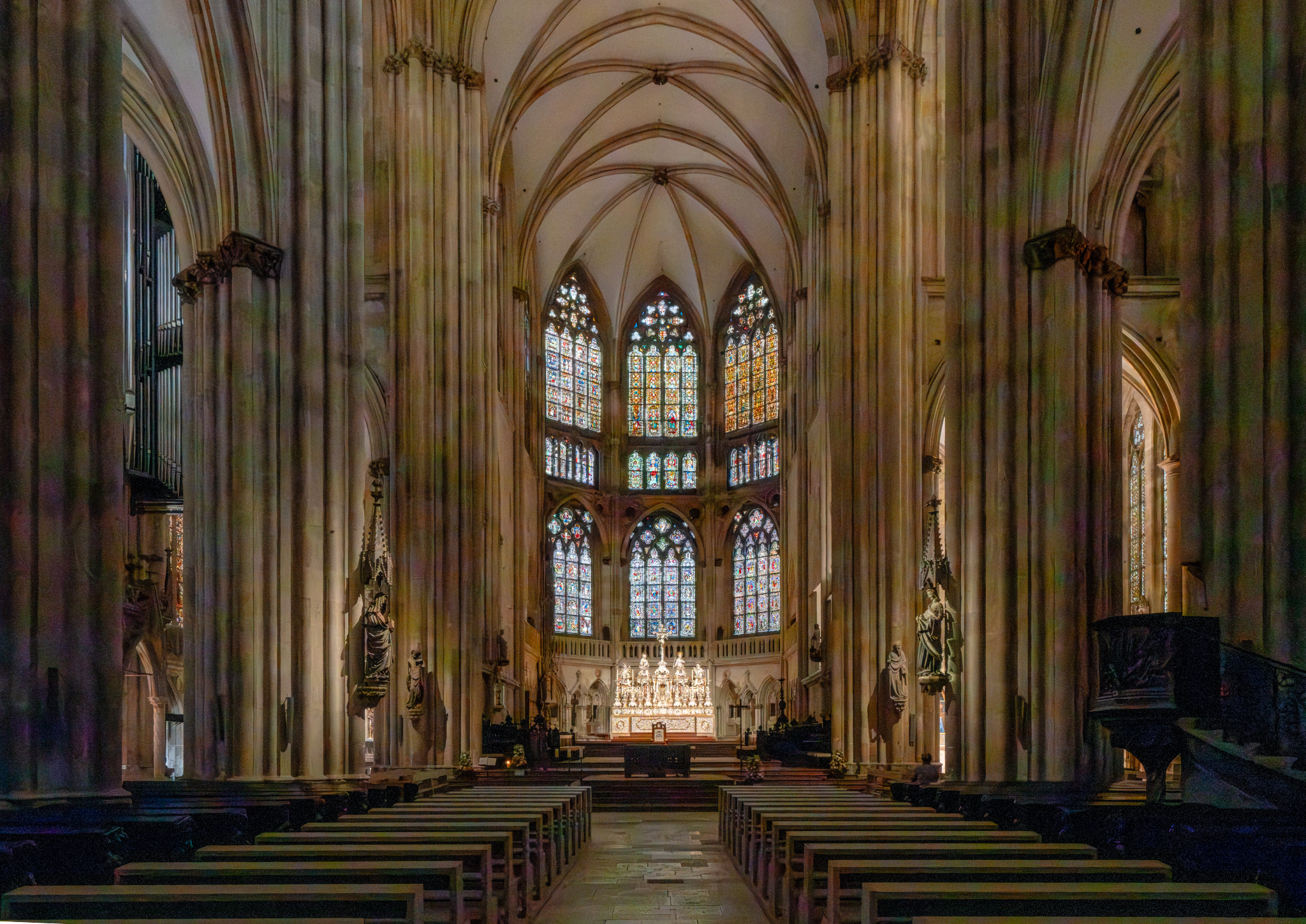
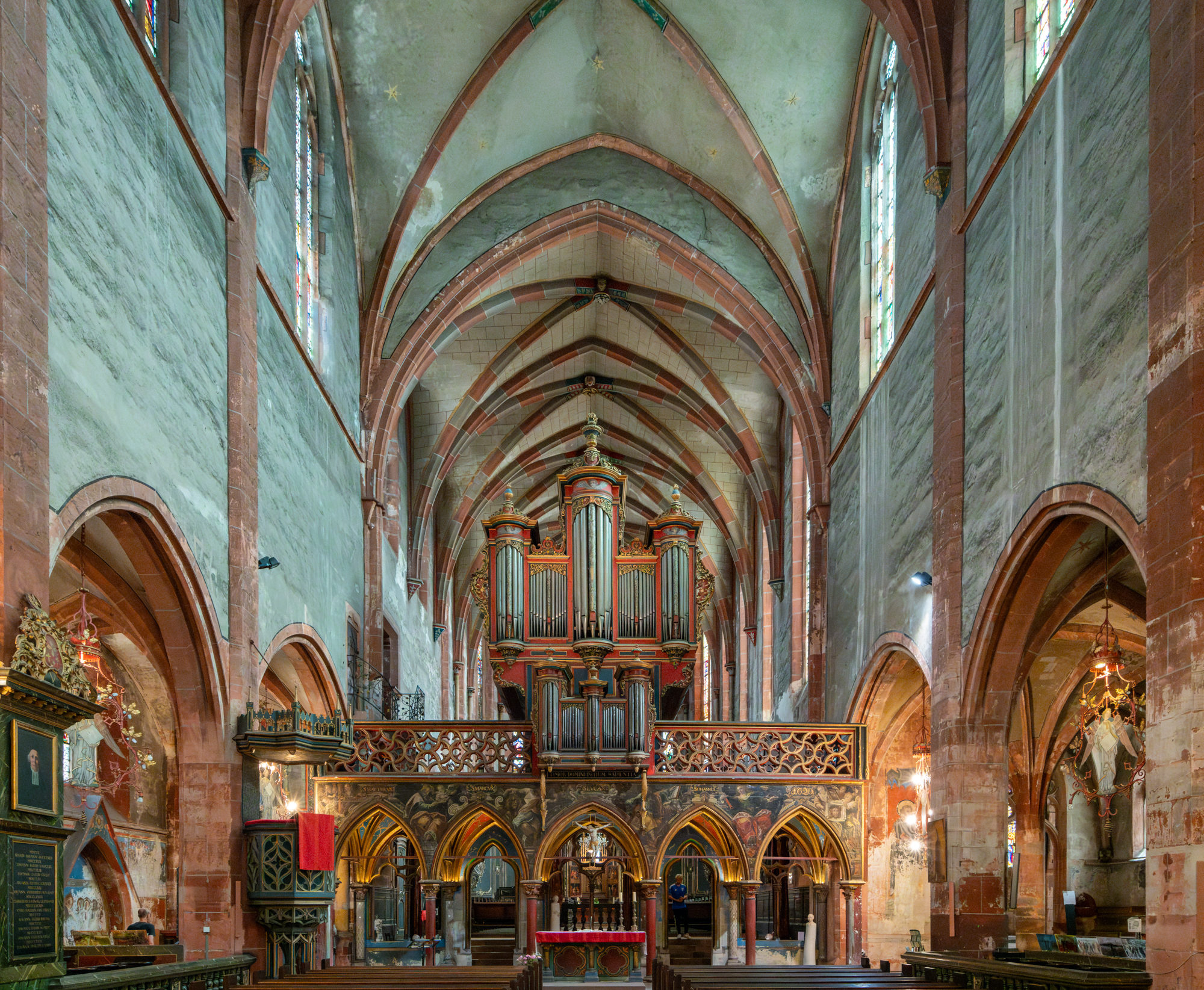
Since about A.D. 700 churches have existed on the site of St. Emmeram in Regensburg, Bavaria. The current building includes chapels and crypts dating as far back as the 8th century. It has gone through the usual series of fires, reconstructions and modifications until the 18th century renovation of the nave and chancel in the Rococo style with further restoration from the 1950s and beyond.

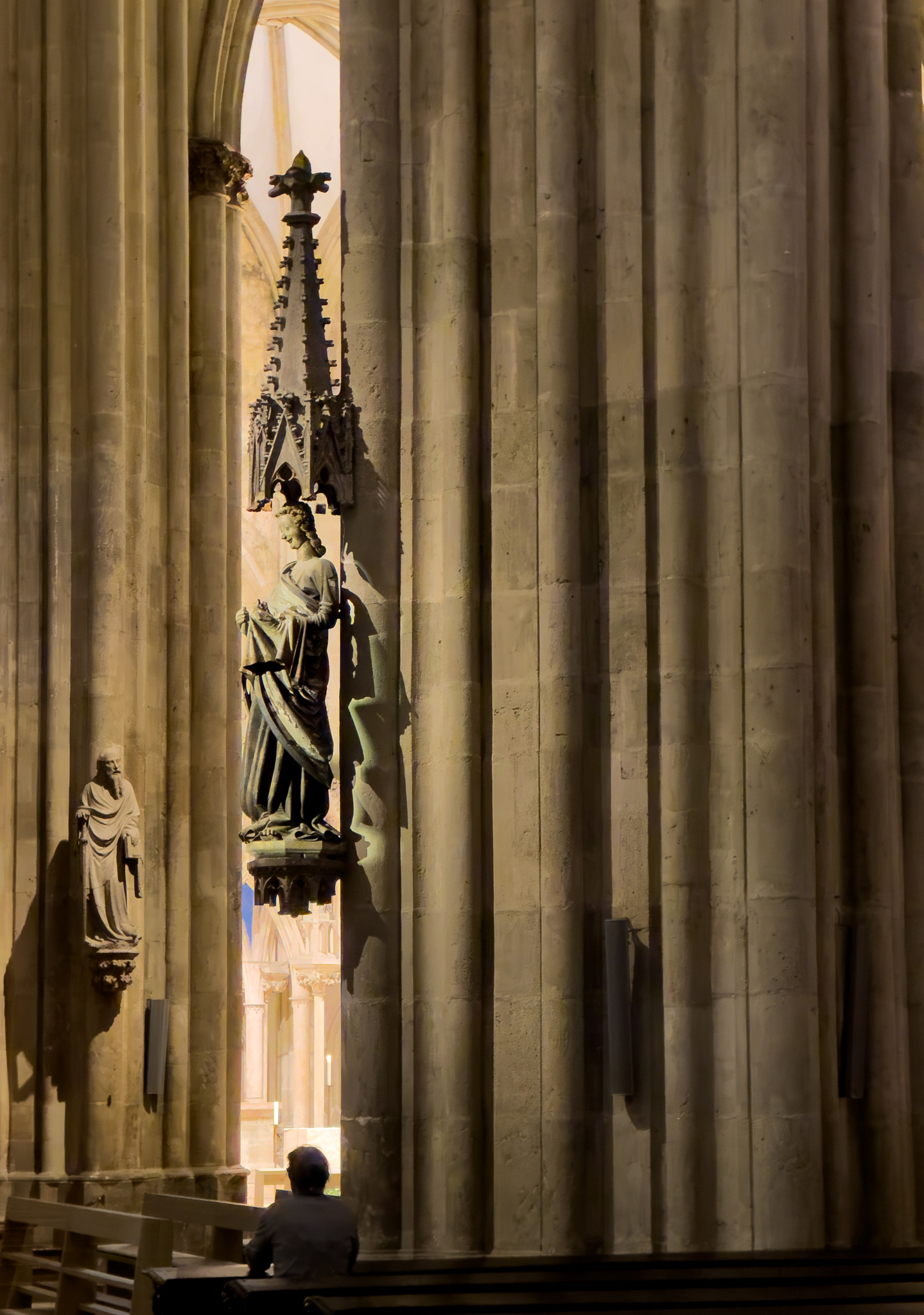
I’ve always found the dense sculptures, paintings and adornment in Baroque and Rococo churches a bit overwhelming. Perhaps it is not so for everyone. While we were there, a priest sat in a back pew, focused not on the decoration but apparently in meditation or prayer. Some people respond differently. An American walking down the center aisle loudly exclaimed to his companion, “There’s a lot of money hanging on these walls.” The priest promptly looked up and shushed him. Thankfully the man was embarrassed and apologetic.

In Augsburg we visited two churches that took the opportunity this summer of 2025 to communicate their message non-traditionally and emphatically.

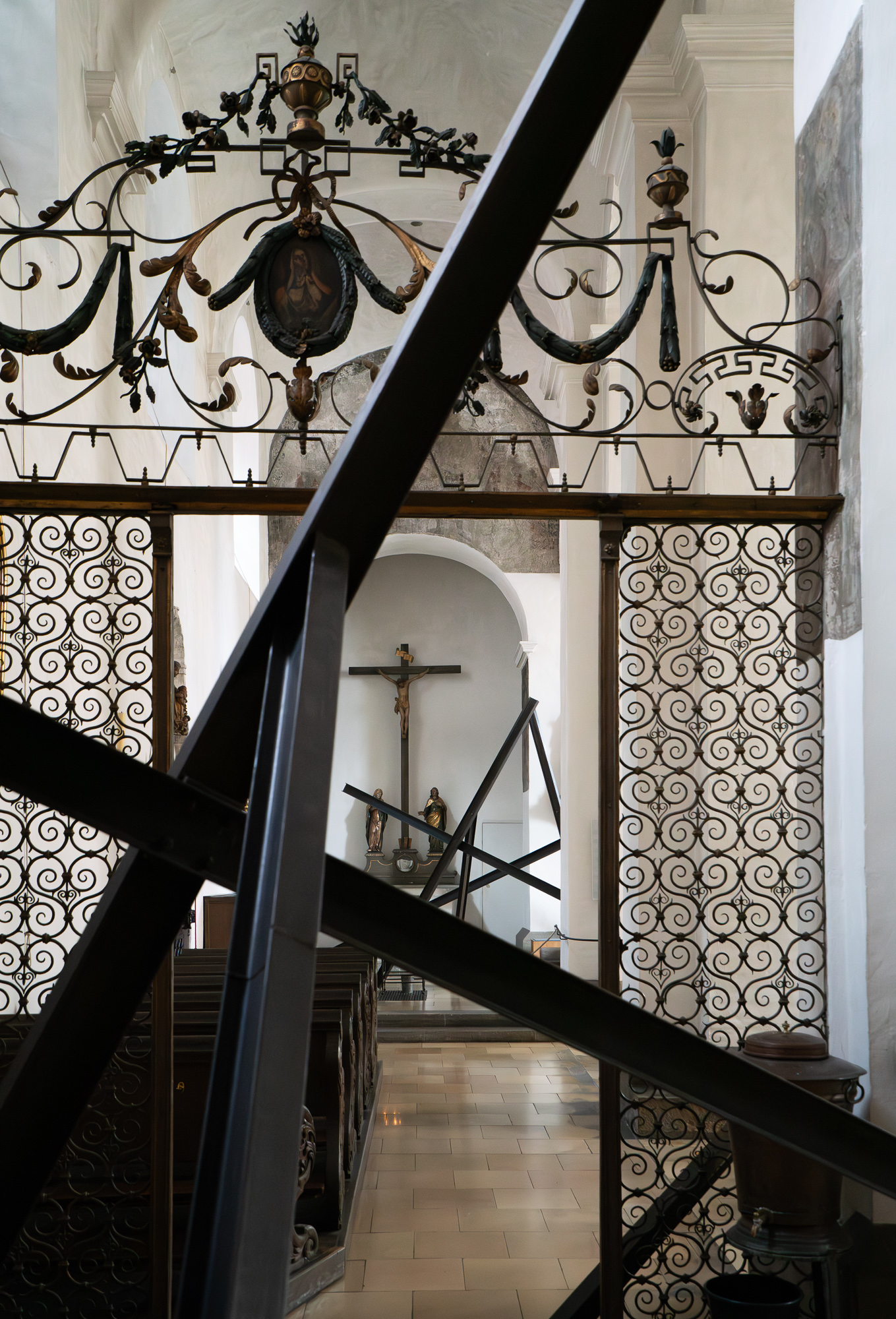
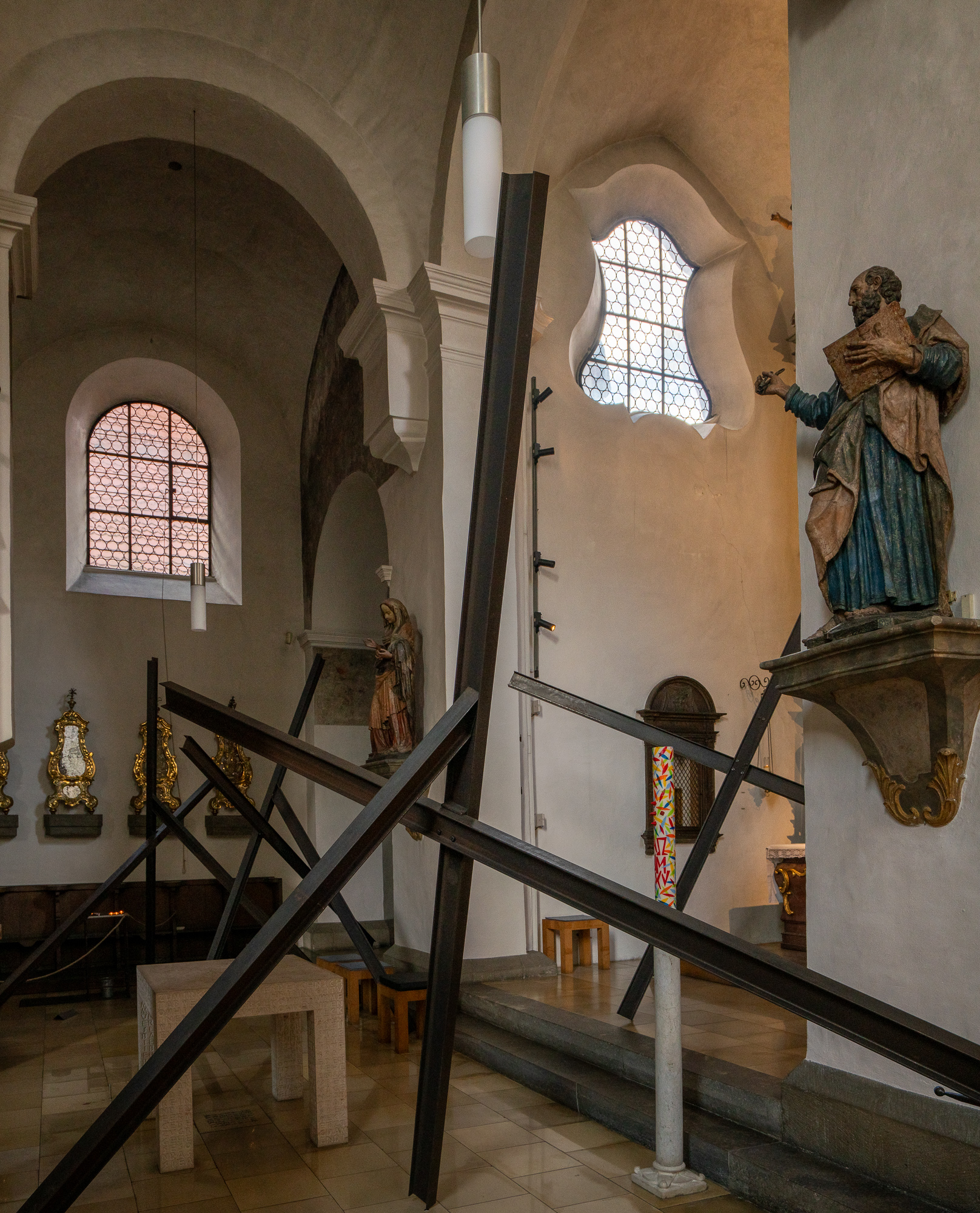
St. Peter am Perlach, Augsburg, aside from its notable bell tower currently covered in scaffolding, is a rather small church. Entering through a side door, this is the scene that confronted us.

My first confused thought was why the “anti-tank obstacles, aka Spanish Riders?” Fortunately there was a booklet to explain the installation. The ominous pieces are an artwork by Jannis Kounellis. Each obstacle is made of two steel I-beams that form a roman cross with a third welded at an angle as a support.

The arrangement of the pieces is intended to impede the progress of the priest, congregants and visitors and focus their attention on the cross as the central and preeminent message of the church.

The industrial, coarse construction so like implements of war is intended to link the suffering of Christ with the suffering of victims of warfare in the viewers mind, especially with respect to the war in Ukraine that is on the threshold of Western Europe.

The rector concludes his introduction to the booklet with this:

The Cross and Spanish Riders awaken us to the fact that
salvation is promised over all suffering.

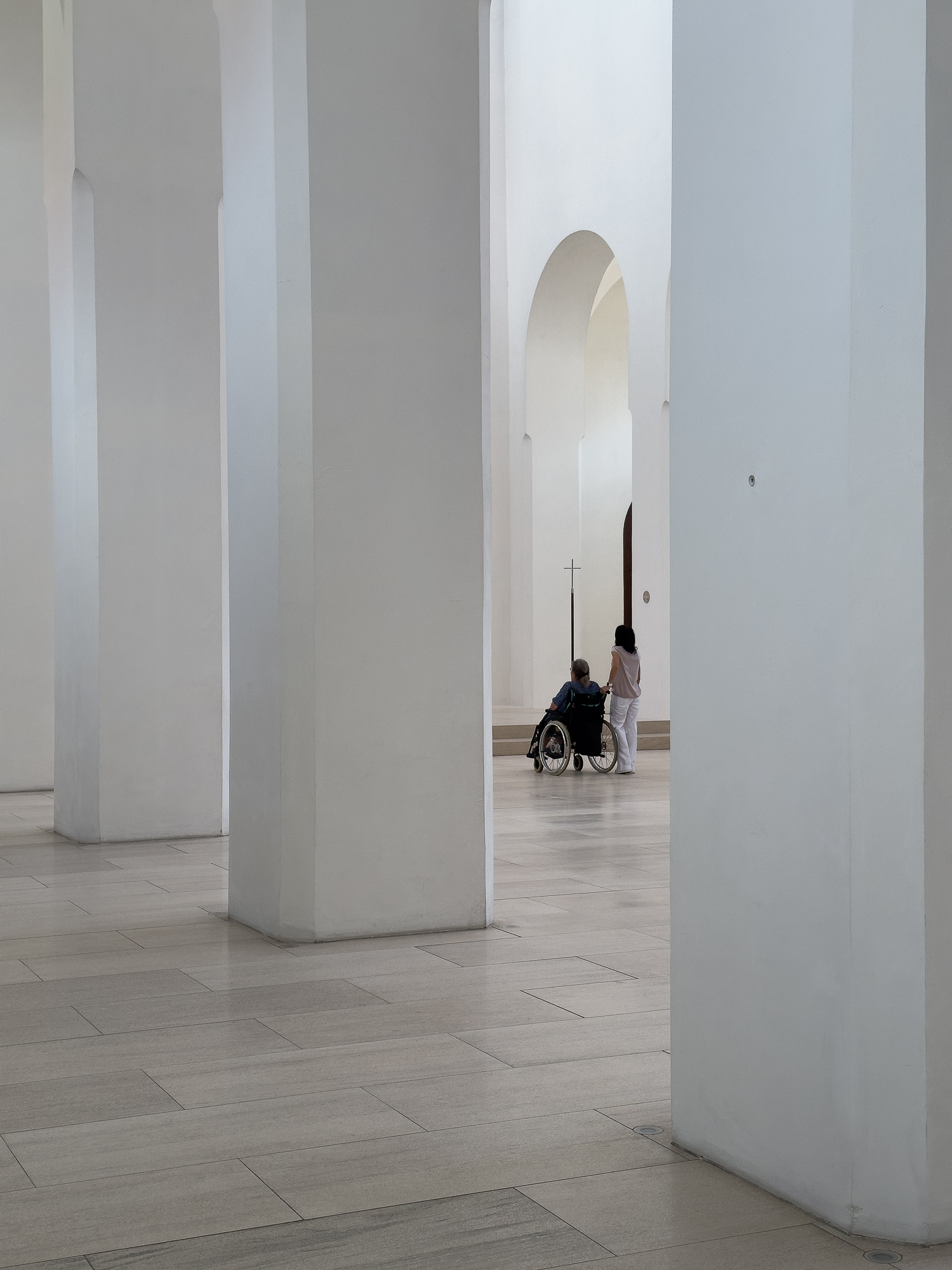
The second unusual church arrangement was just a block down the street at St. Moritz. The interior is minimalist to an extreme. There is no ornamentation, no color, no seating. One is drawn only to the central figure of Christ in a welcoming posture.

Fortunately a docent was waiting near the entrance to greet us and explain what we were seeing. Allied bombing in 1944 nearly completely destroyed the historical church on this site. The church was replaced with simpler structure by 1951. A complete renovation from 2010 to 2013 resulted in the current appearance. For this summer, the pews were removed with the idea of further eliminating distractions.

A banner in the foyer with the title “Nicht Nichts” (Not Nothing) extends an invitation to set aside the flood of sounds, words and images of the outside world and engage with the peace this empty building provides.
Bamberger Dom

As similar as medieval churches may seem at first glance, there is wide variation when one takes a closer look. Each church has unique stories to tell.

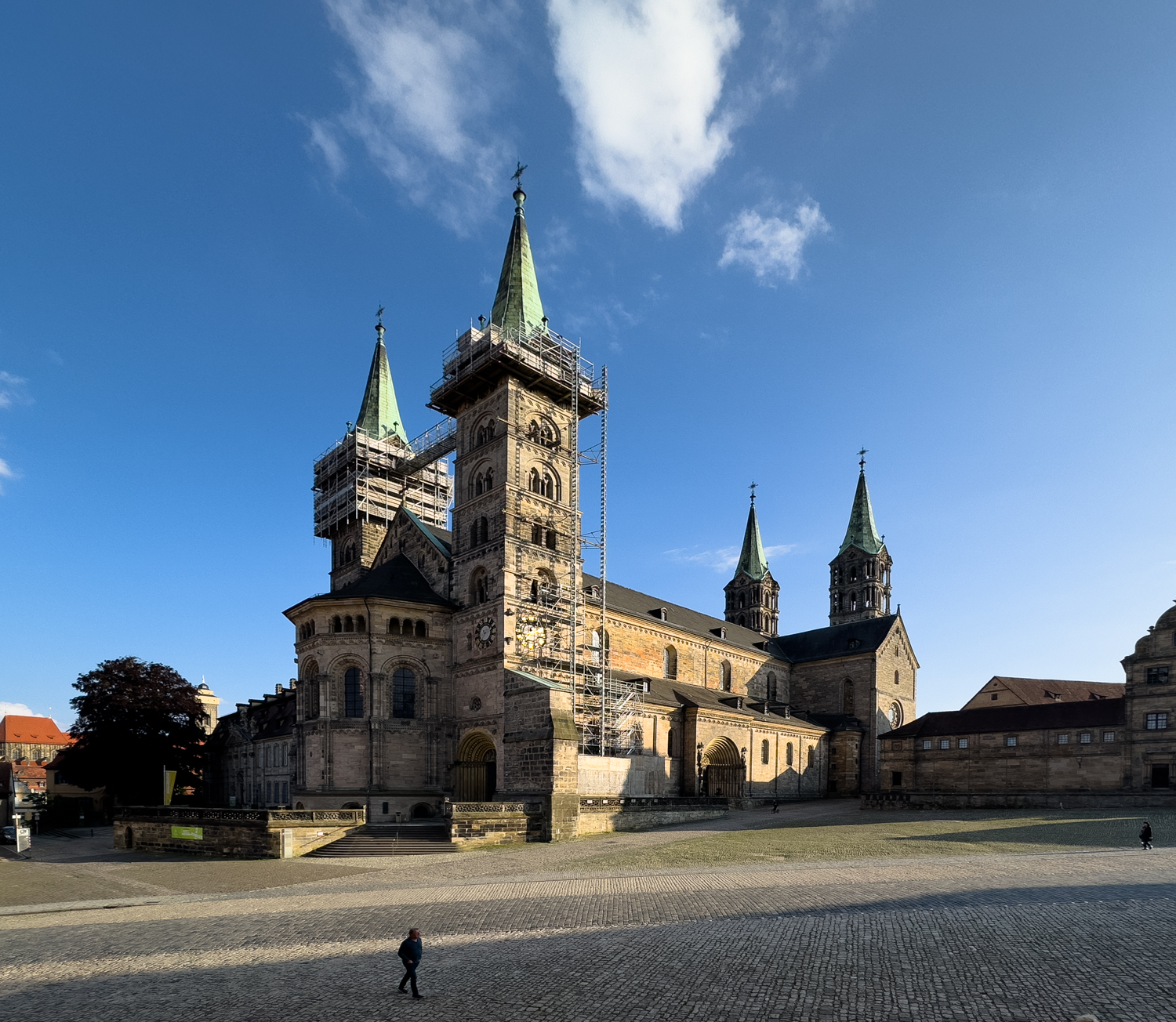
The diocese of  Bamberg was founded in A.D. 1007 under the patronage of Heinrich II and his wife Kunigunde. The first cathedral was consecrated in 1012. After two fires, the present building was constructed from about 1215 to 1237. In Germany, this was a time of transition from the Romanesque style to the Gothic. 

Thick walls, rounded arches and relatively small windows mark the main body of the church as Romanesque. The upper stories of the four towers with their copper clad spires display the lighter structure and pointed arches of the Gothic period.

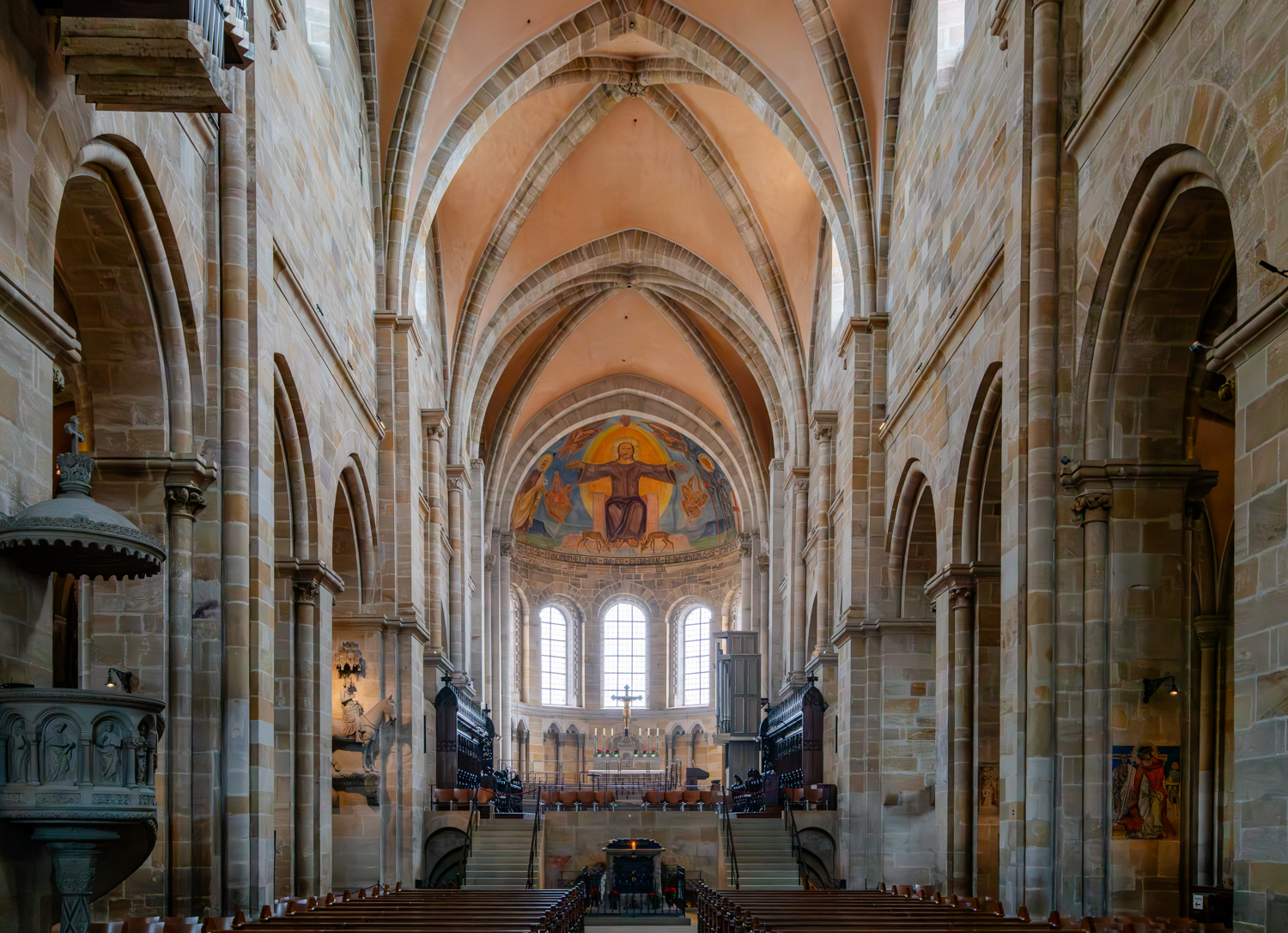
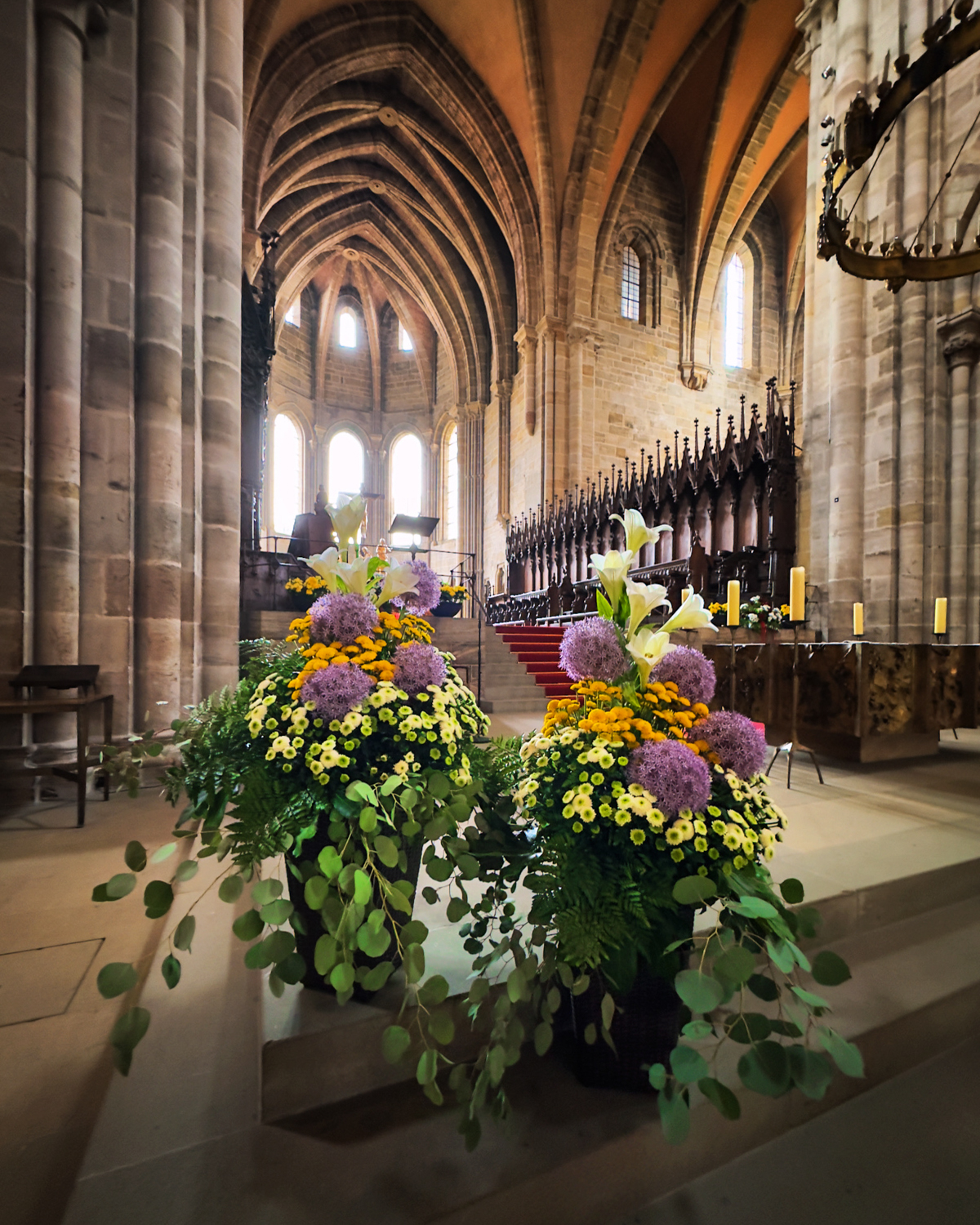
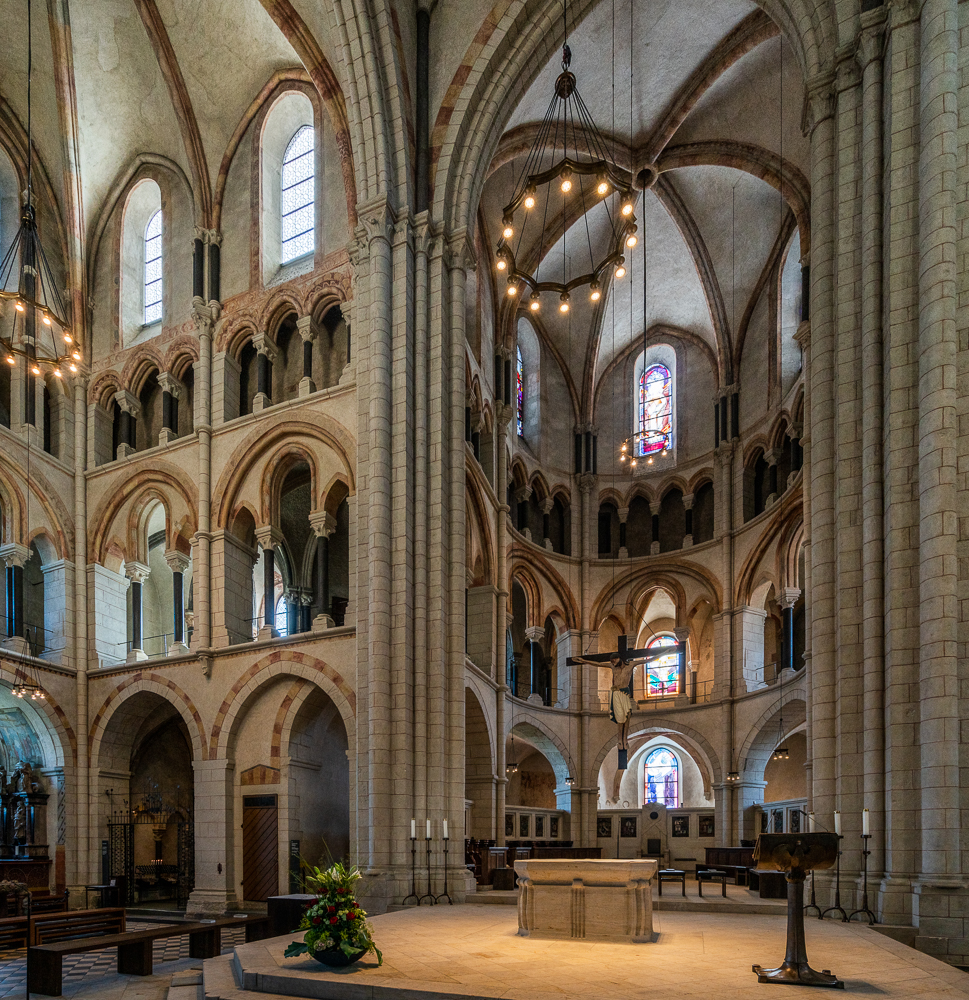
The view of the interior below shows the east choir, the oldest section of the church, and the nave. The choir is very traditional Romanesque. Along the nave, note the heavy piers and very shallow points of the arches. The ribs of the vaulted roof are among the heaviest I have seen. Perhaps these are indications that German architects, or their patrons, were only cautiously adopting the new Gothic technology. See my post about the cathedral in Magdeburg, for comparison.
The interior has undergone several significant “redecorations.” Most notably, the 17th century saw a renovation in the elaborate Baroque style. In the 19th century the church was restored to the plainer style that would have prevailed in the 13th century. The fresco of Christ returning in judgement was completed in 1928 in that style. 

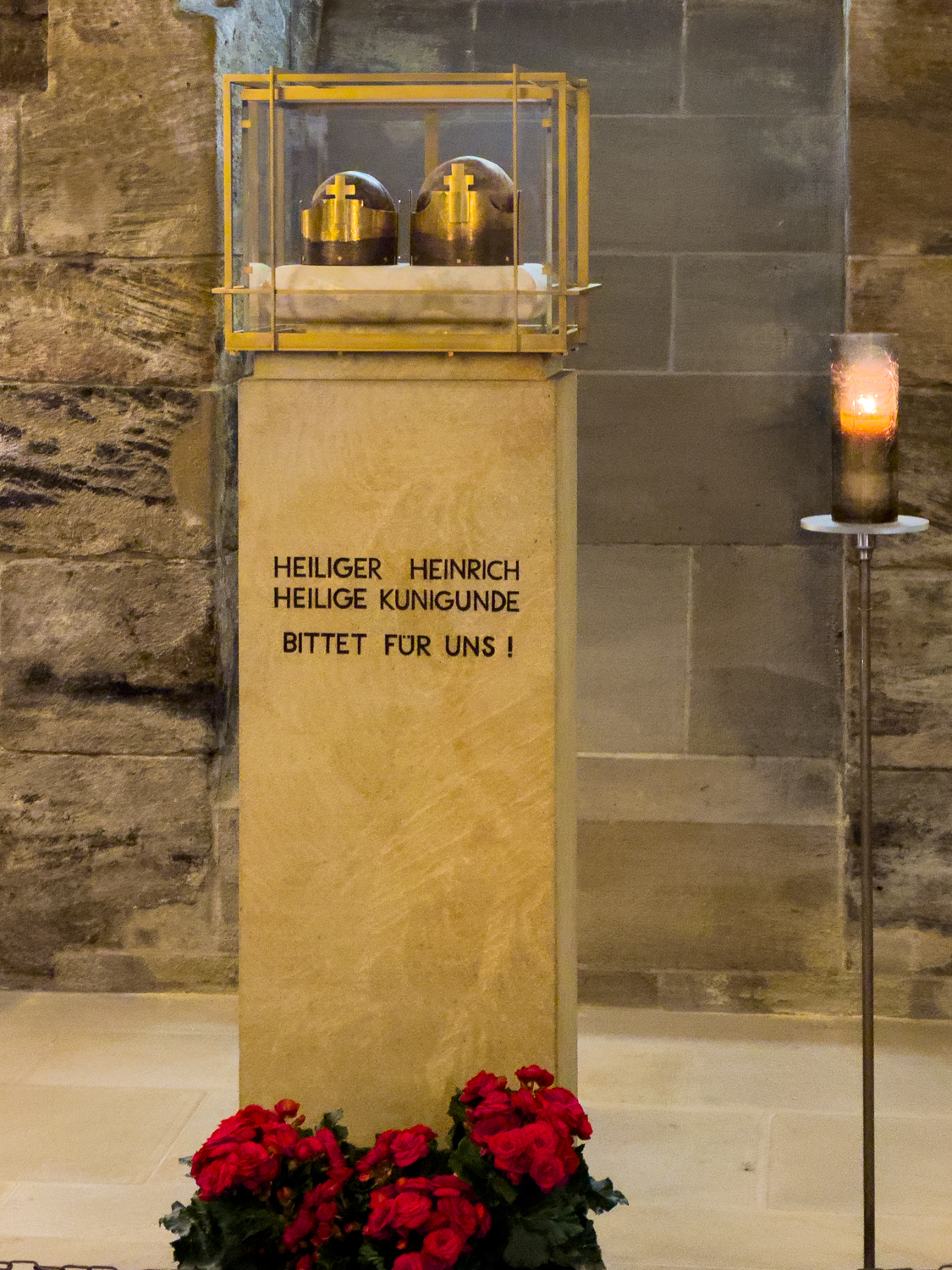
At the bottom center of the image above, between the stairs, is the tomb of the sainted, imperial couple who founded the bishopric and first cathedral. I was sure that I stood on the steps and photographed the top where their images are carved in relief, but I somehow didn’t. At the other end of the church, In the west crypt there is a shrine where their two crowned heads are displayed in a glass case on a stele.

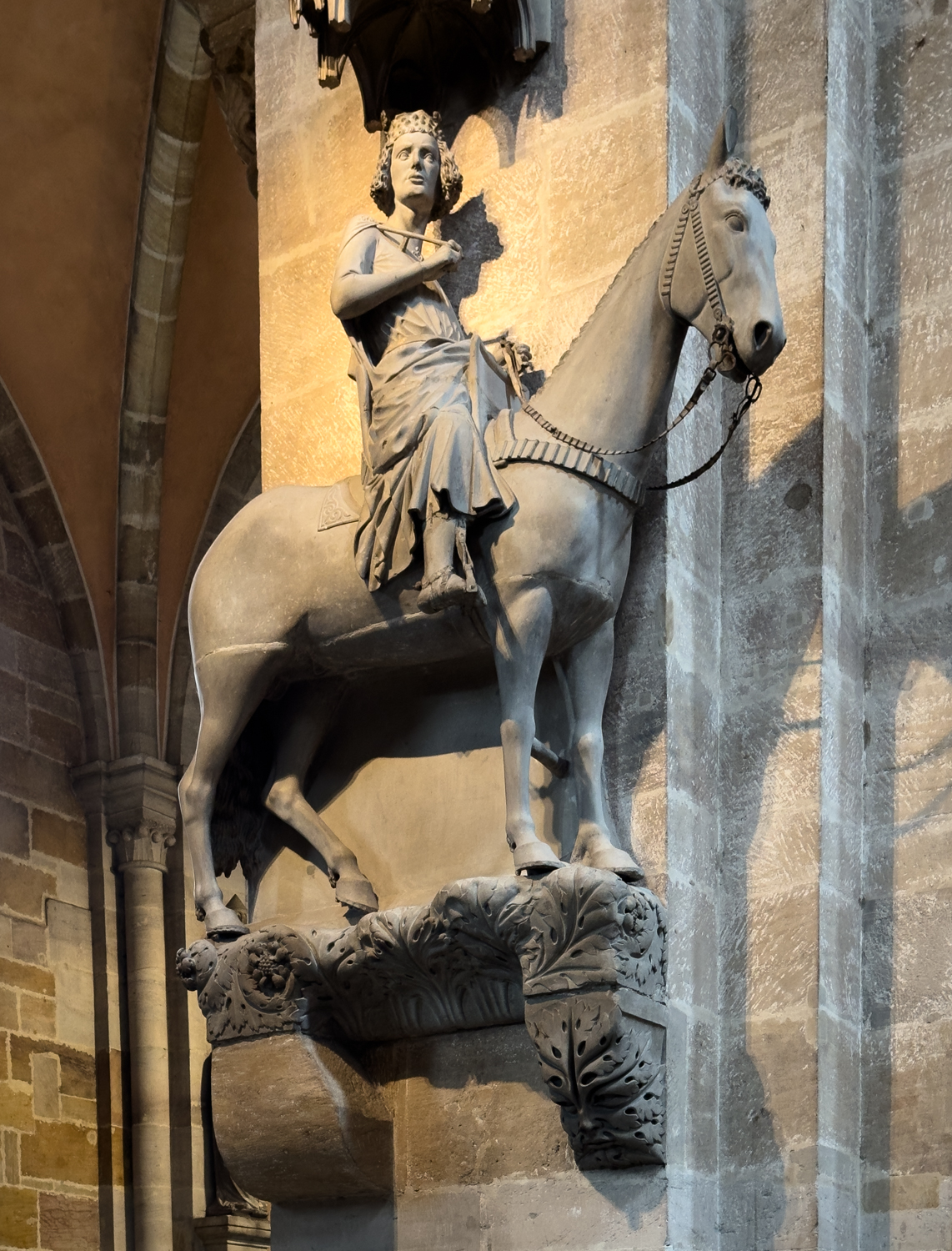
The cathedral and town are especially proud of the sculpture of a rider on the pier to the left of the east choir. This has been dated to about 1235 and is accounted the oldest such statue in Germany. The model for it is unknown, but is variously said to be King Stephen of Hungary, Constantine, or another king or noble.

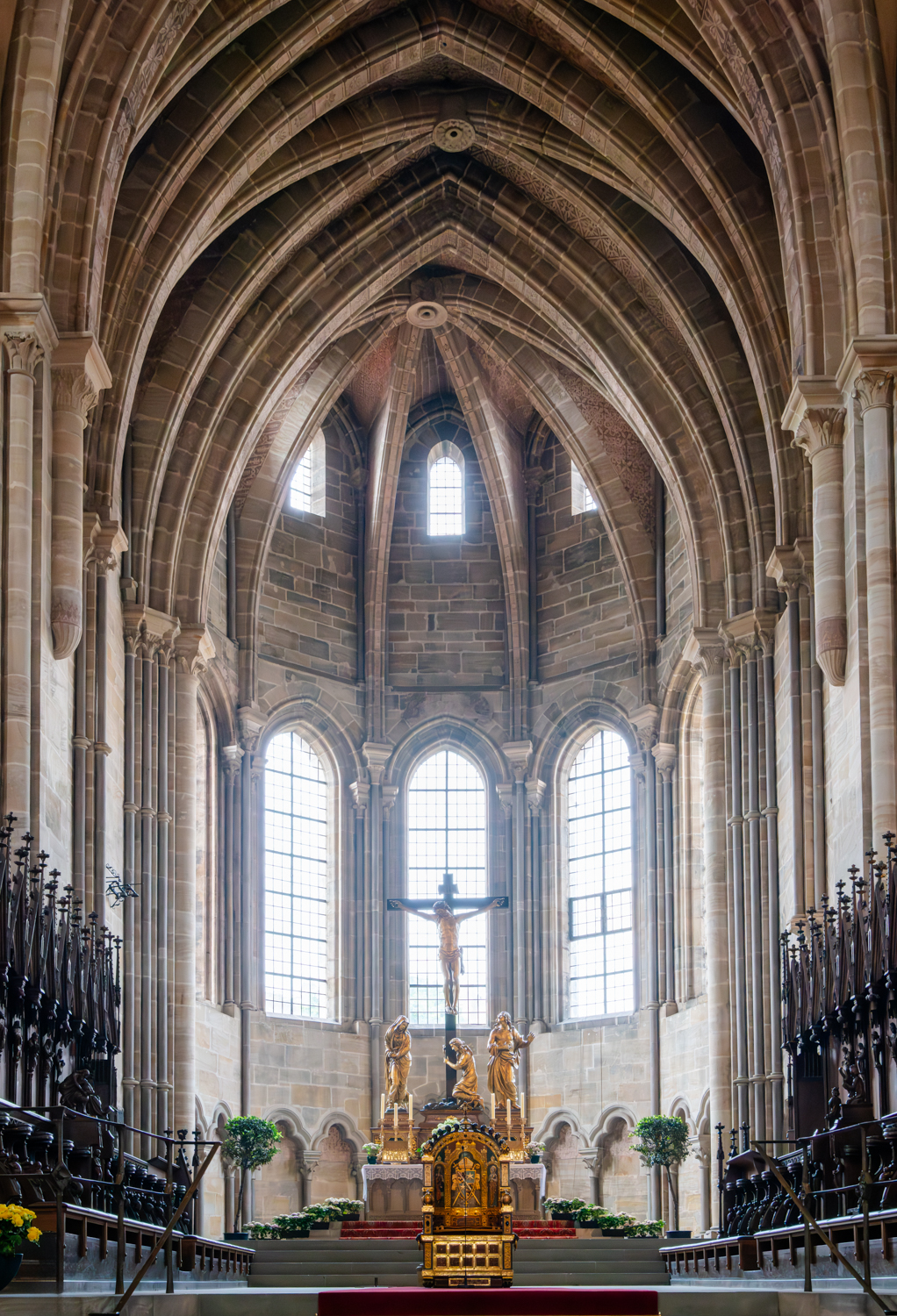
Bamberg, like many other german cathedrals has a choir at each end. The west choir was the last section of the cathedral built, and it is pure, early gothic. The walls are somewhat thinner, the windows larger with distinctly pointed arches, and the heavy ribbed vaults are more elaborate than in those in the nave.

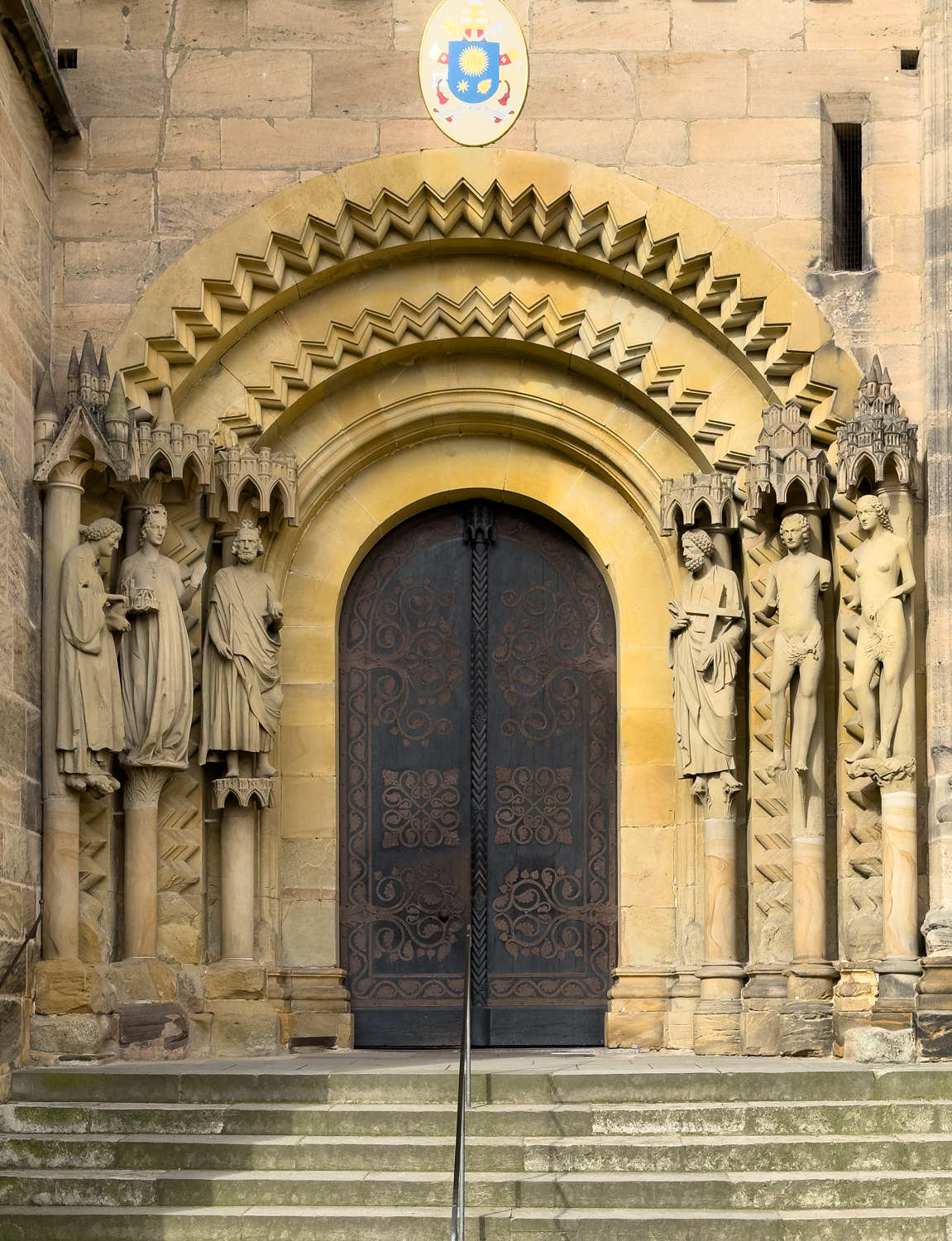
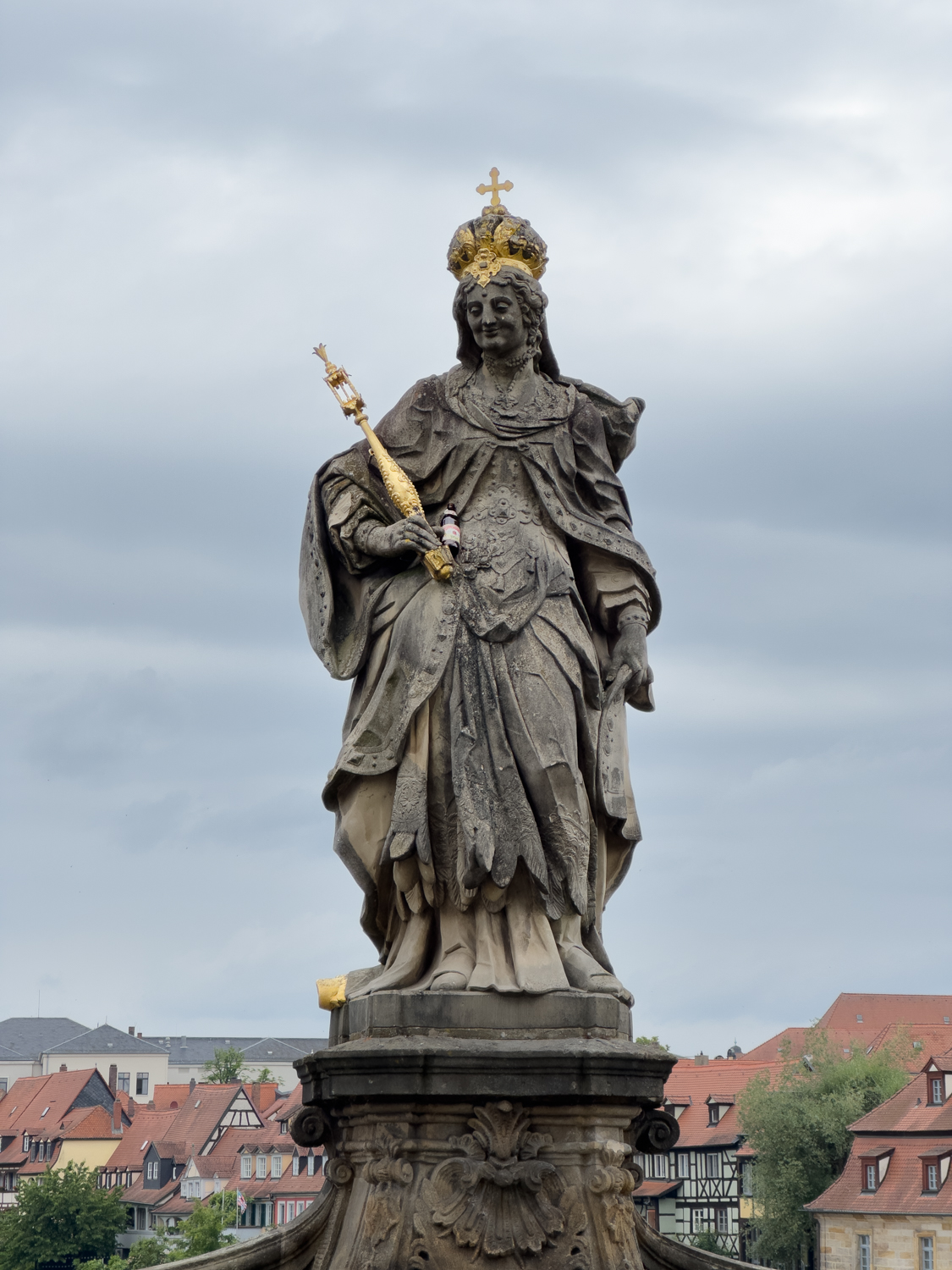
The founders, especially Kunigunde, receive special attention in Bamberg. The southeast portal of the cathedral is flanked by six figures. On the left are St. Stephen, Kunigunde, and Heinrich. There is also a supersized statue of the empress on one of the bridges leading to the cathedral. She is smiling down at an empty beer bottle that someone tucked between her scepter and waist.

Some of the information in this post was gleaned from a brochure available at the cathedral. See the official website .

Bad Hersfeld

Bad Hersfeld is a small town near the geographic center of Germany. There is a lively old-town (except when raining) with many buildings dating to the middle ages. There are also baths fed by mineral springs. You can take a sip of the water in the springhouse where an analysis posted on the wall indicates that the salt content is about one third that of seawater.

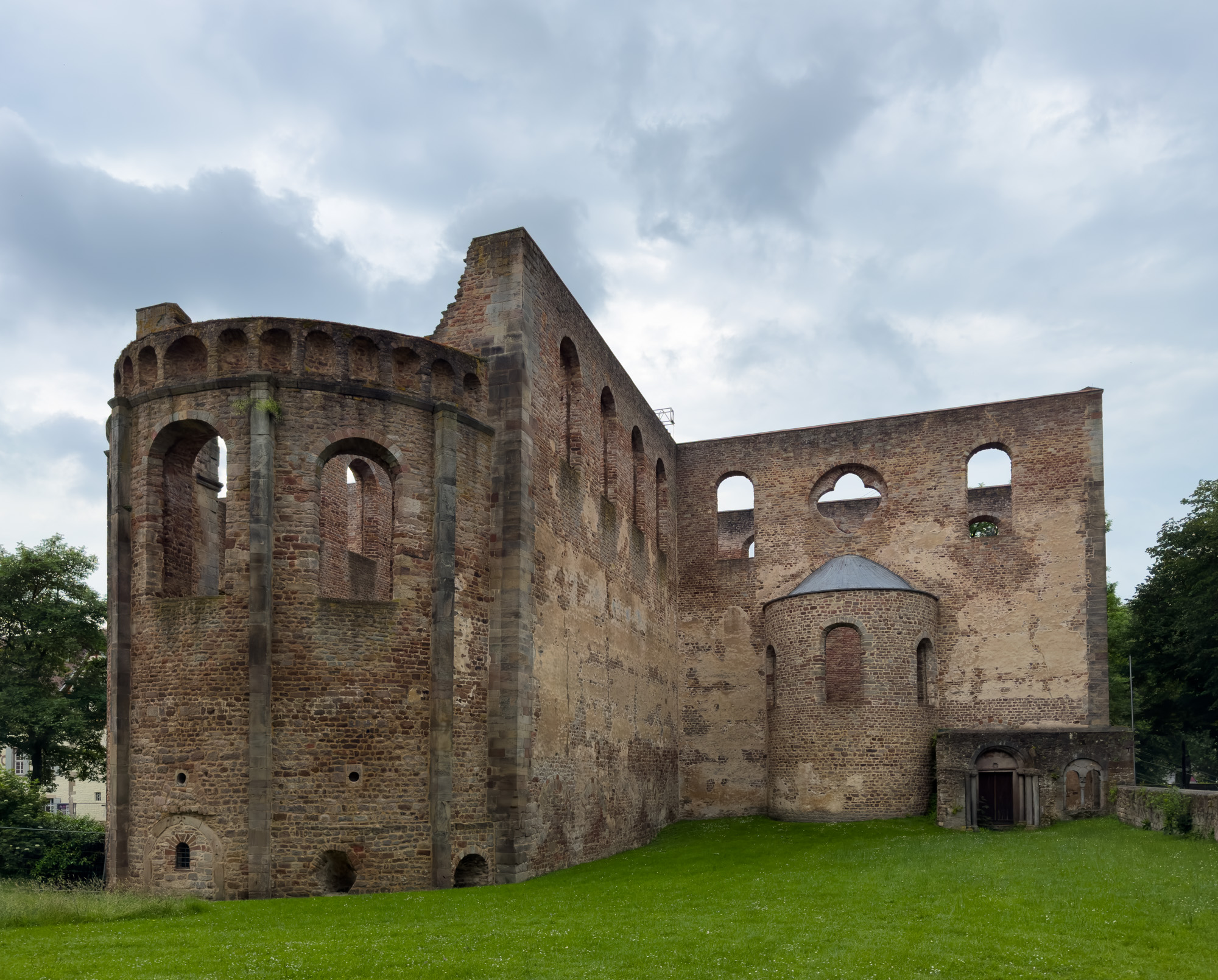
An abbey was founded here in the 8th century by St. Lullus, who succeeded Boniface as archbishop of Mainz. The monumental abbey church, now a ruin, was build in the 9th century. Martin Luther preached here on his return from the Diet of Wurms in 1521. The church burned in 1761, when a retreating French army set fire to their supplies which were stored there. Today the interior of the ruin has been converted into a theater with shows produced throughout the summer months.

Several signs around town and a sculpture memorialize the Mückenstürmer. In the summer of 1674, the citizens were alarmed to see a smoky cloud over the tower of the city church. They gathered ladders and buckets of water to storm the church only to discover that the “fire” was a dense swarm of gnats or mosquitoes (German: Mücken).

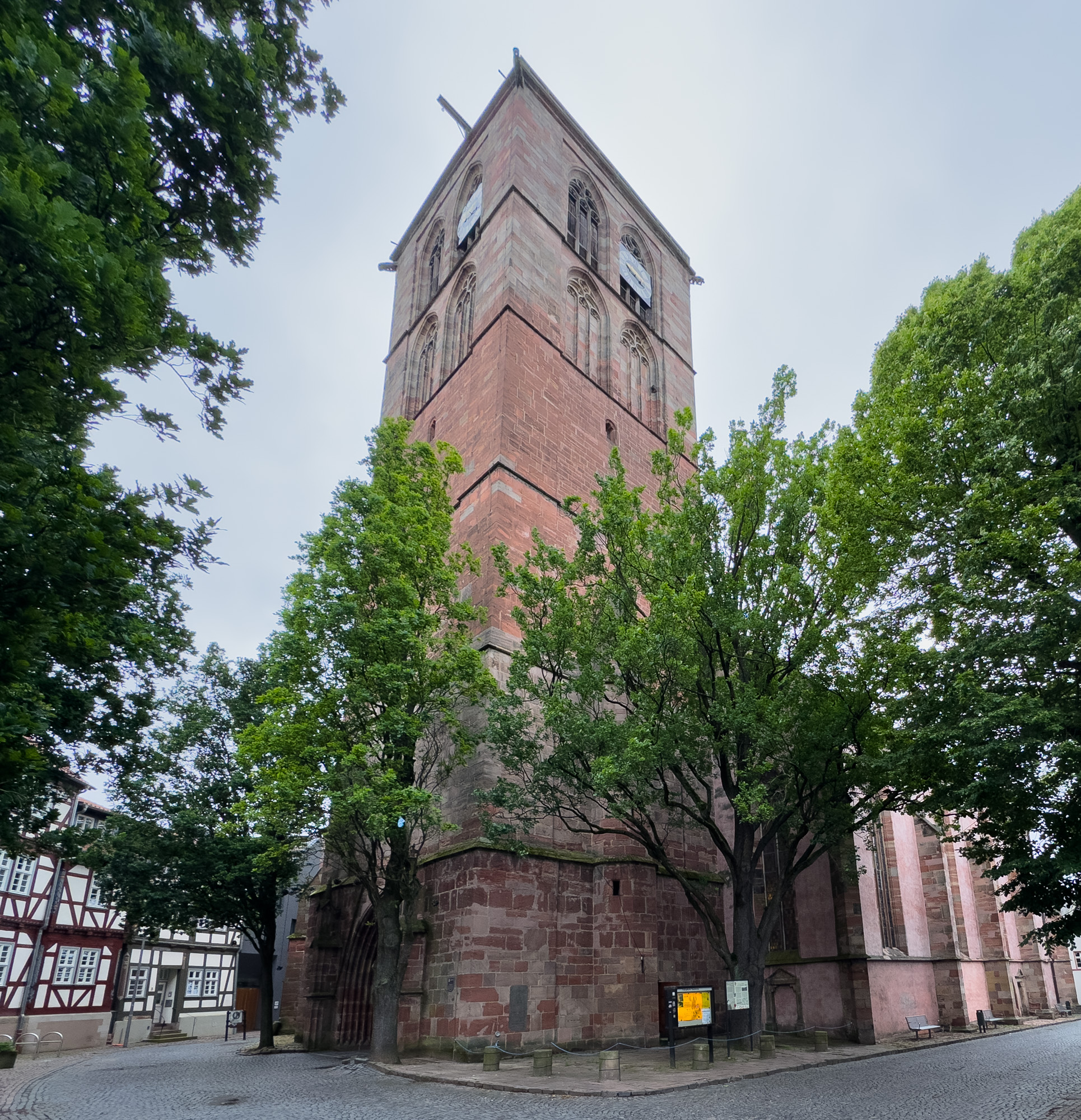
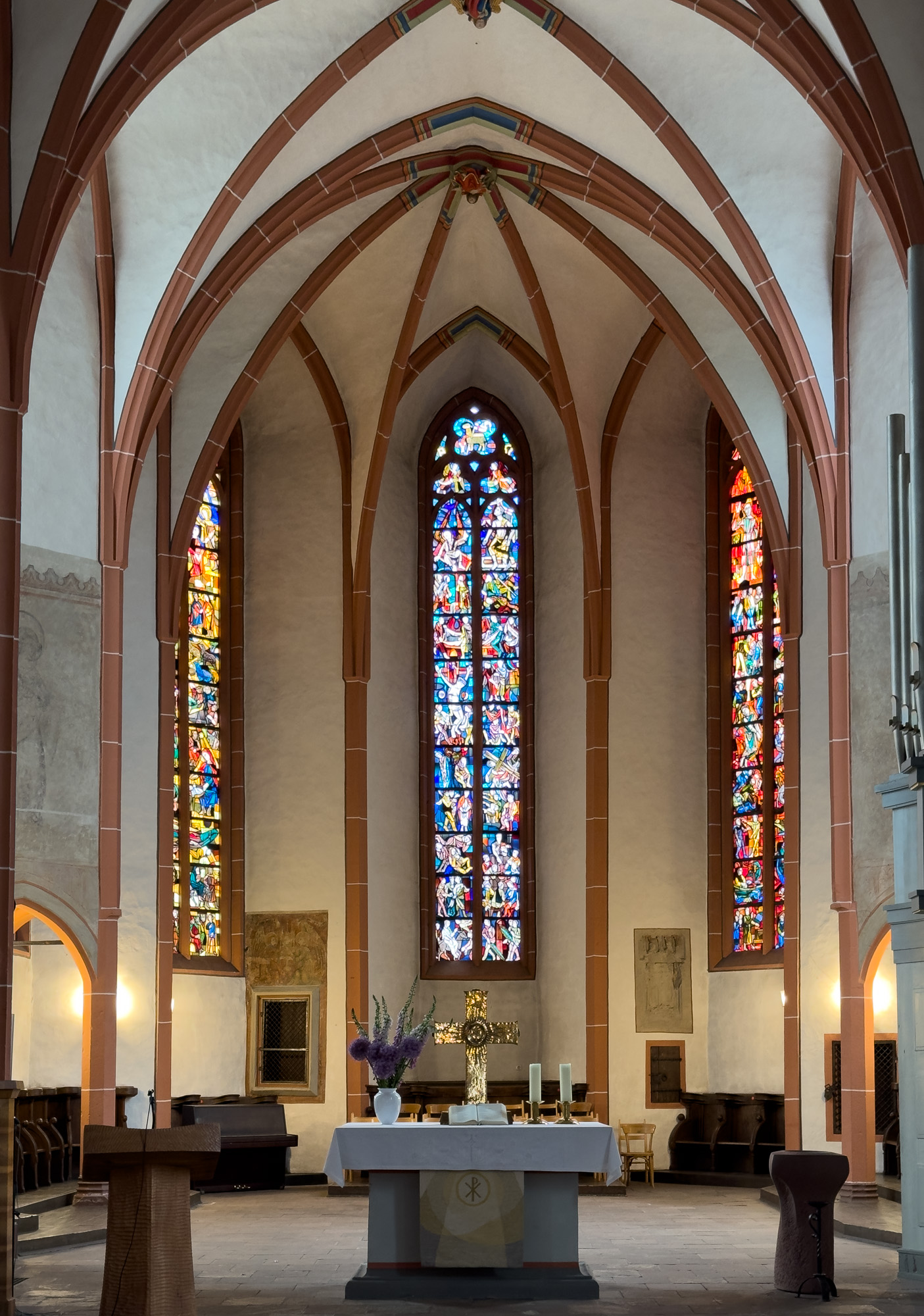
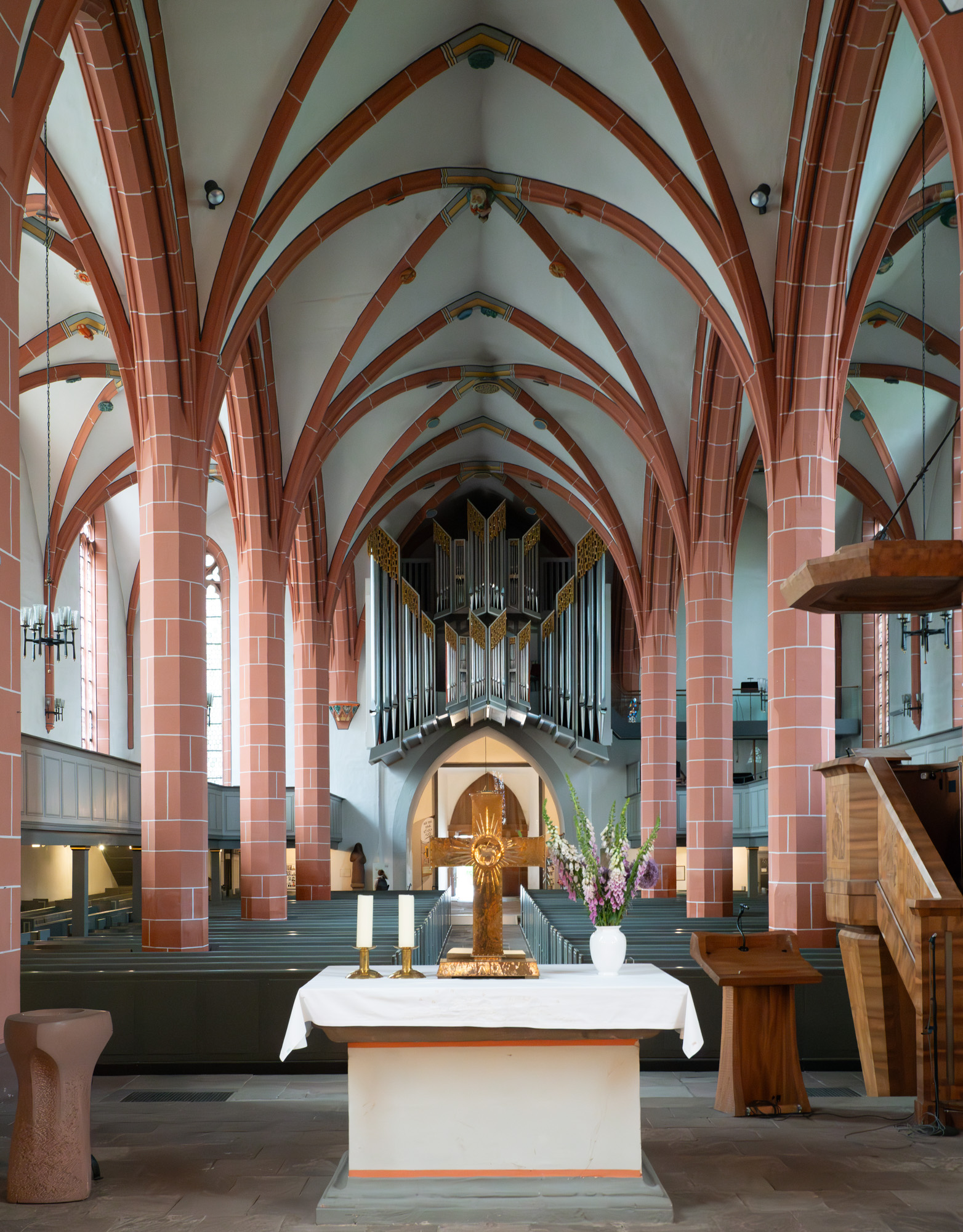
A romanesque church was built on this site beginning about A.D 1060. The current structure is the result of a series of renovations and expansions in the gothic period. The conversion of the church to Lutheranism during the Reformation and a renovation after an electrical fire in 1952 have yielded the elegantly simple interior.

St. Pierre Le Jeune, Strasbourg

In a quiet corner one block from the north branch of the River Ill is the late 13th/early 14th century “New” Church of St. Peter. The church replaced an earlier romanesque structure and served as a collegiate church until the reformation. In the 17th century a wall was built on the choir side of the rood screen to completely isolate the choir. During the French revolution, the church was vacated for several years and used for storage by the army. During the Franco Prussian war, the roof was damaged and the original stained glass destroyed.

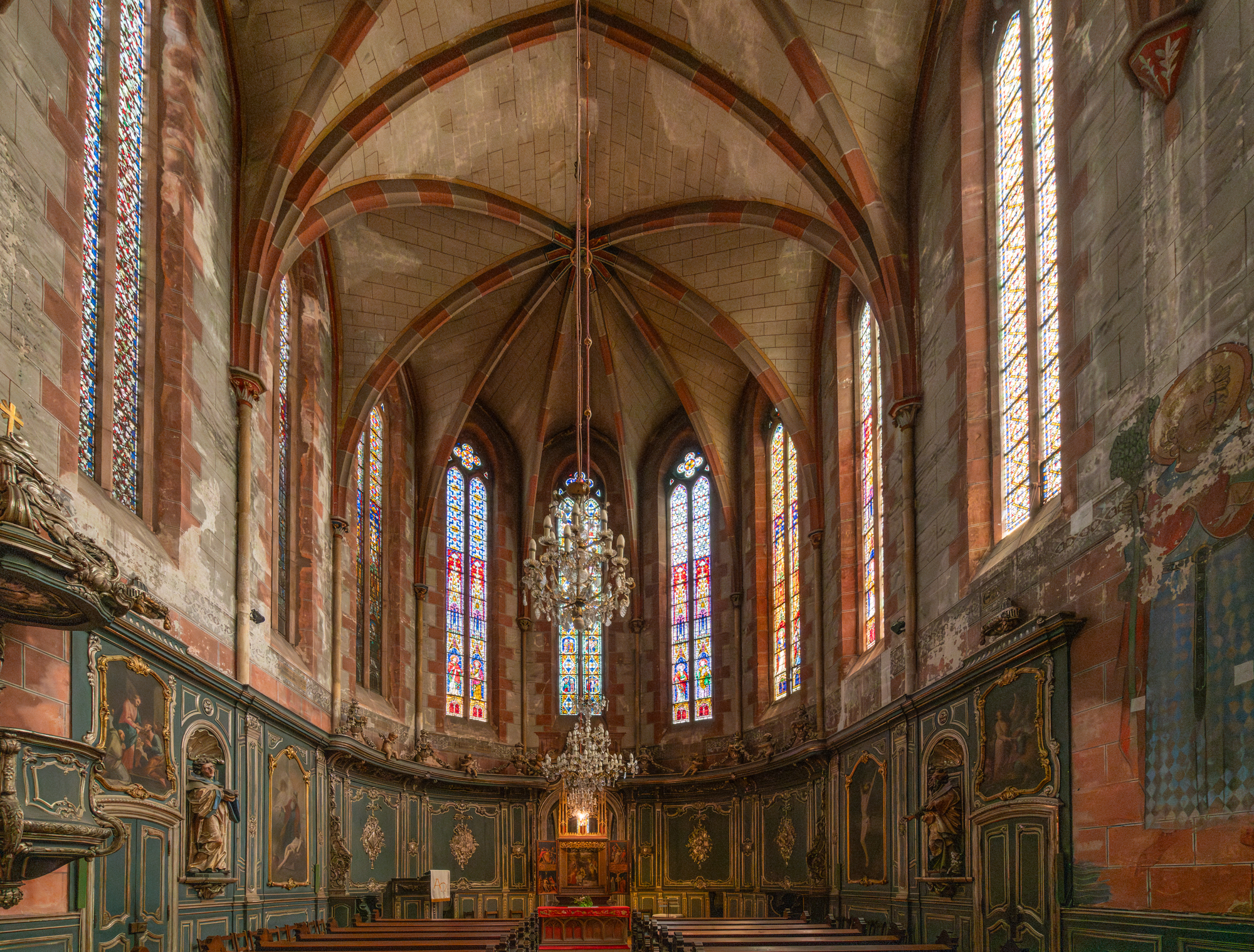
After the reformation, the Catholic, monastic chapter continued to use the choir (above) while the protestant congregation used the nave. This sharing agreement lasted until the end of the 19th century, when a new Catholic church was built across the river.

Many original 14th century frescos have been fully or partially restored. This shows Peter coming to Jesus, walking on the surface of Lake Gallilee. Underneath are 8 Angels holding banners with the text of the Beatitudes.

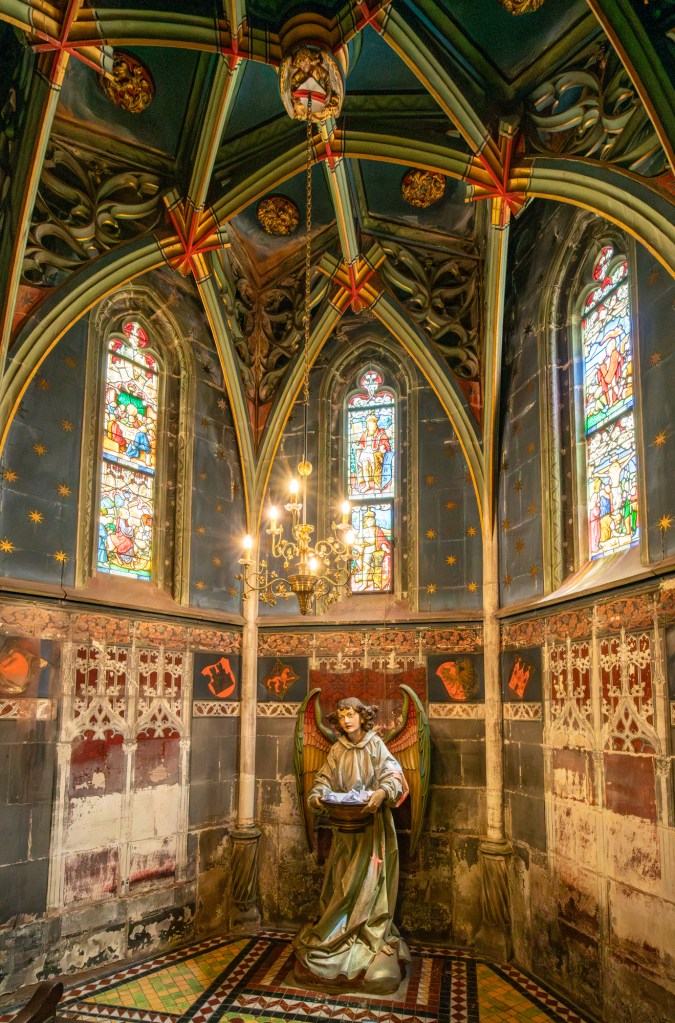
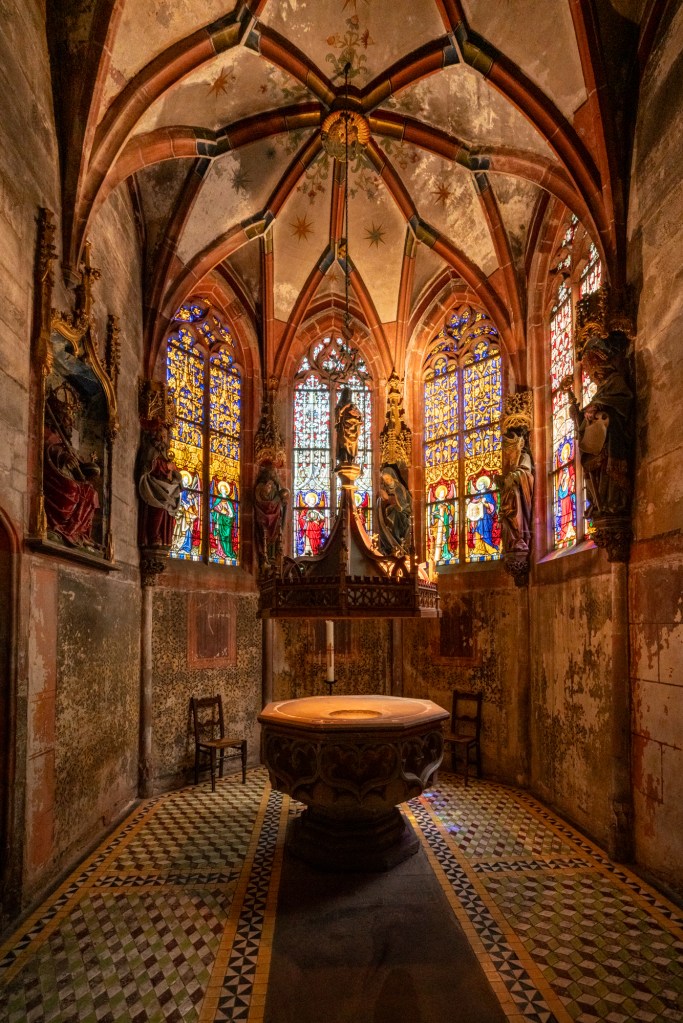
The Angel Chapel (above left) is off the choir, behind the altar. The wall paintings are ancient, the windows and angel are 19th century. The Chapel of the Trinity (above right) was added in 1491. The statues flanking the windows depict St. Peter, Christ, the Virgin Mary, St. Athanasius and St. Maternus (the first bishop of Strasbourg). Take note of the elaborate vaults in each chapel.

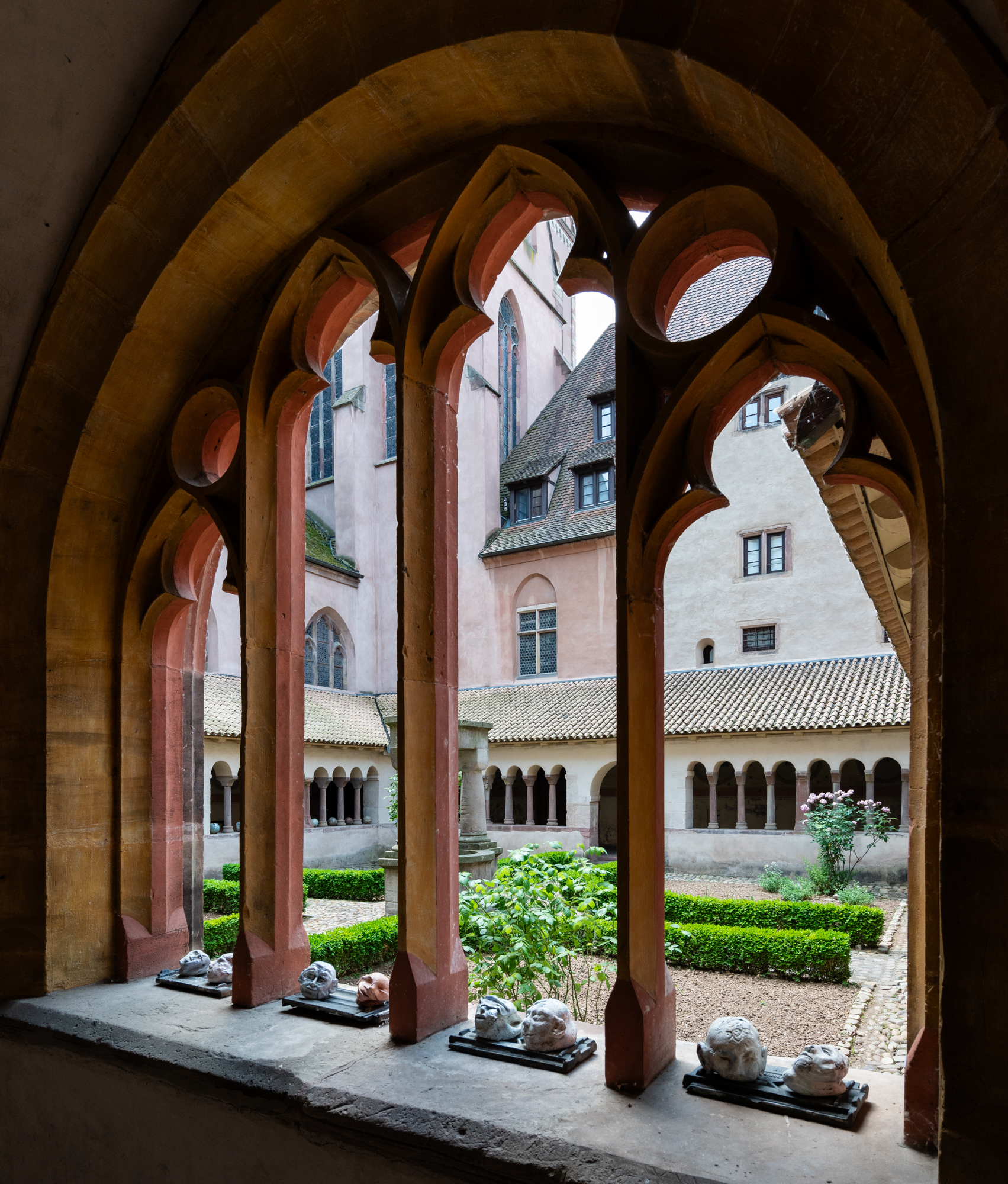
Below is a view of the cloister garden. The west and south aisles visible across the courtyard show the original romanesque arches. The ceramic heads on the sill of this gothic archway were created by students of the Lycée Heinrich Nessel de Haguenau as a memorial to the victims of genocide in the Holocaust, Armenia and Rwanda.

St. Lubentius, Dietkirchen on the Lahn

Just a short bike ride from Limburg on the Lahn

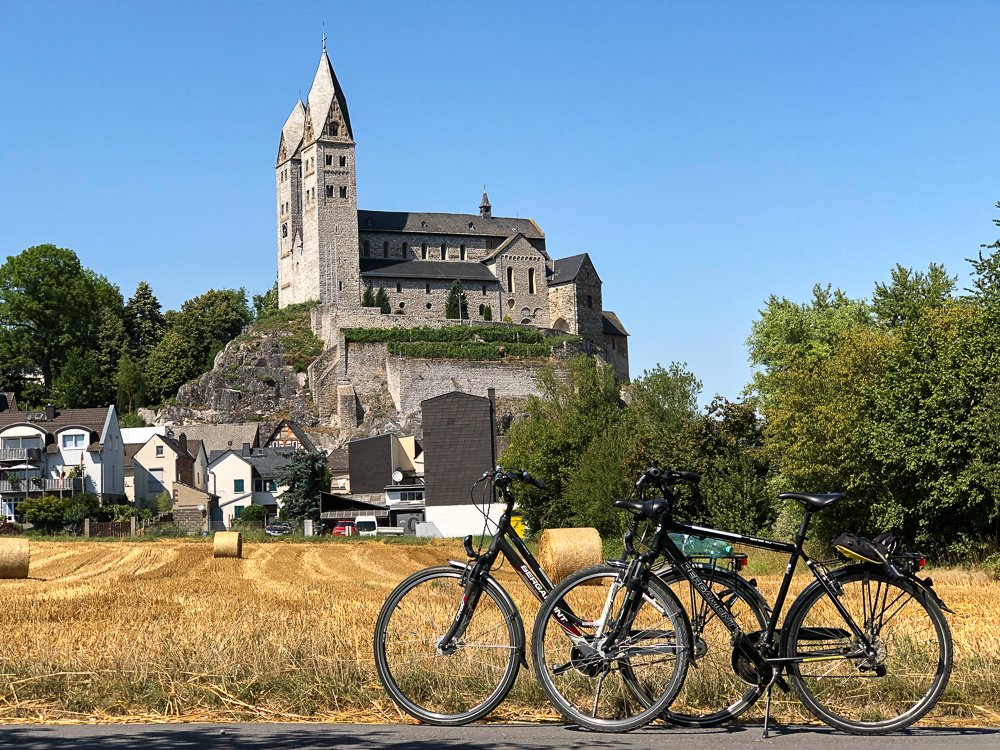
The church of St. Lubentius rises from a rocky bluff overlooking fields of wheat, the River Lahn and the village of Dietkirchen. The bluff has been inhabited since the Neolithic era. A church may have existed on the site since the 4th century. The first stone church was built about the year 730. A monastery was established by the 9th century. The church was rebuilt about 1000 and again in the 11th century when the current floor plan was established. There have been several renovations since then.

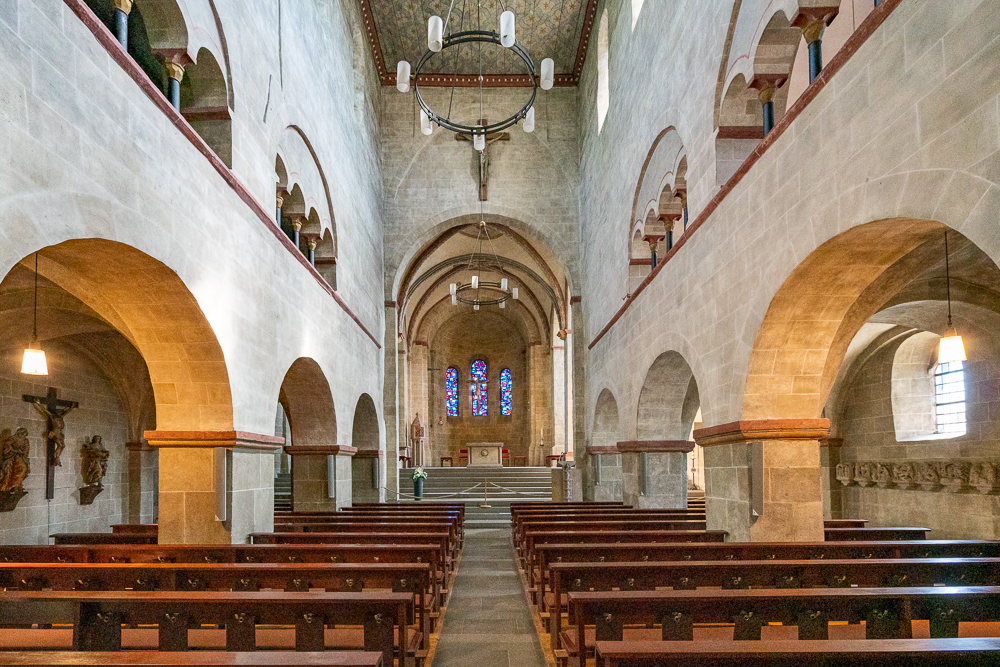
18th century decorations were removed to reveal the stark lines of the limestone.

From the nave several generations of construction can be distinguished. The side aisles were groin vaulted in the 12th century. The galleries above were enlarged at about the same time, the arches were filled in with the slender middle columns in the 13th, reopened in the 19th century and restored to the 13th century configuration in the 1960s. The Choir and crossing were expanded and ribs were added to their existing groin vaults.

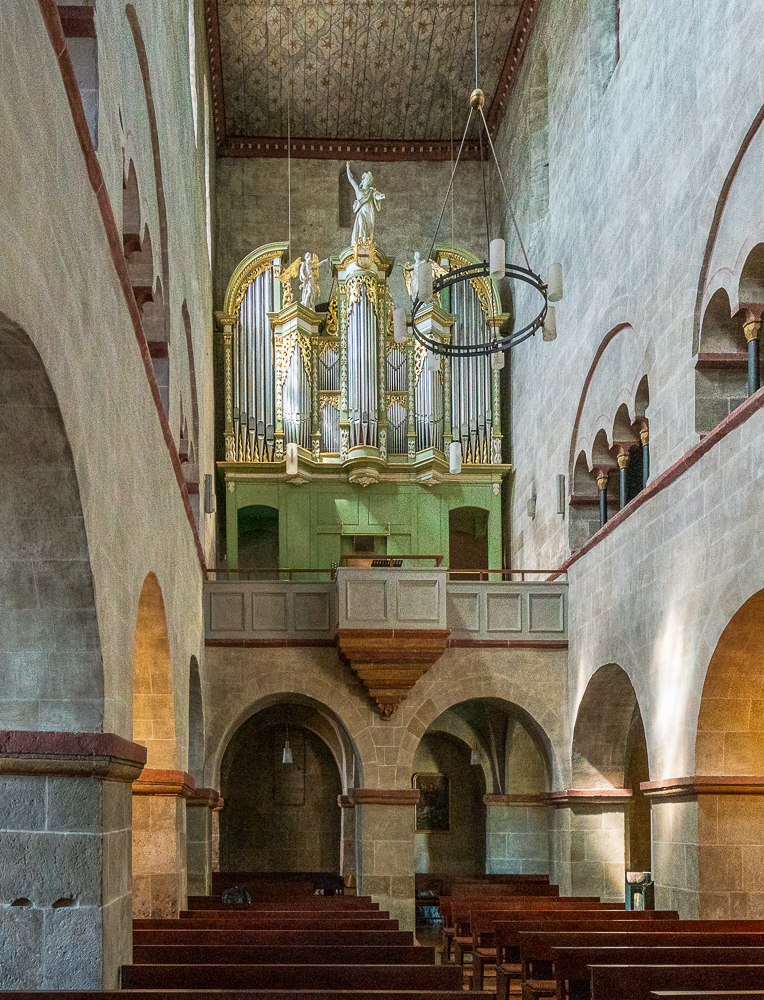
The 17th century organ was rebuilt in 1893.

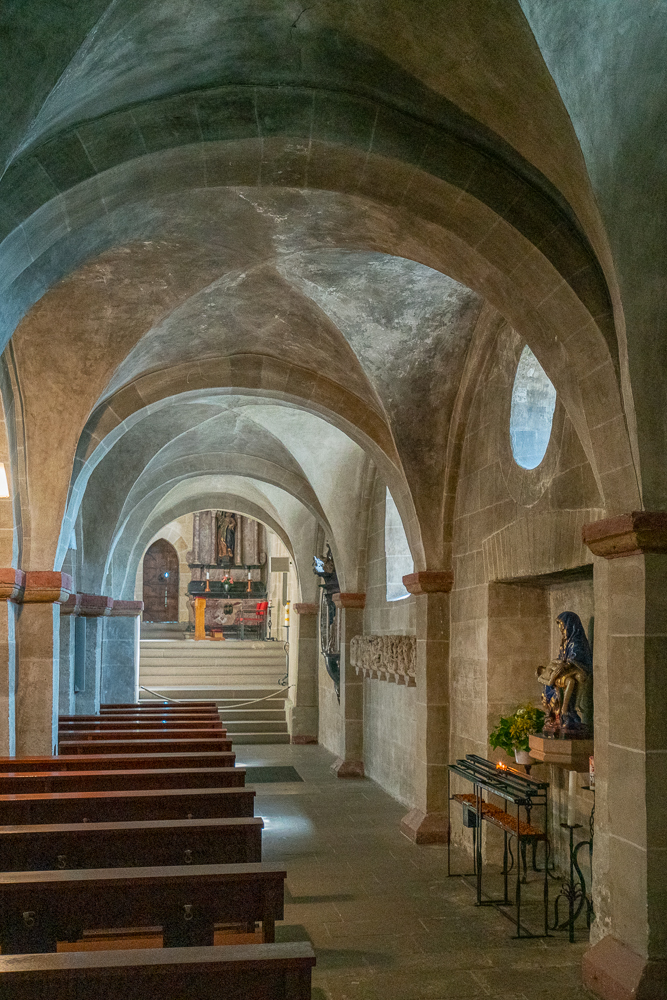
The low groin vaulted side aisles held numerous altars that were used by priests from the adjacent monastery, which was destroyed in 1640. Later that century the altars were removed.

St. Lubentius Chapel

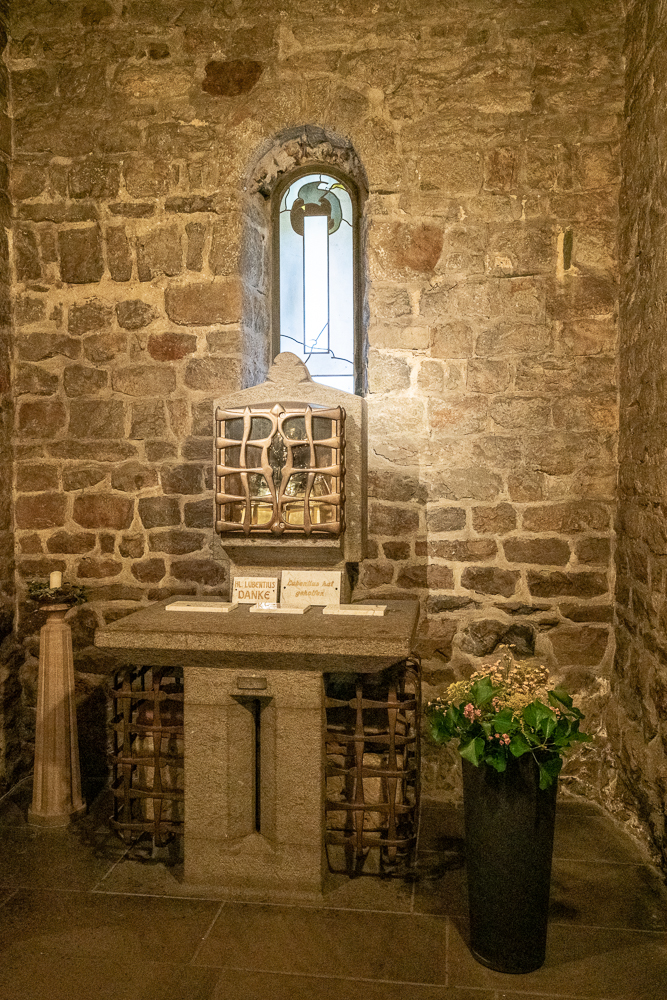
A small chapel in the back of the church holds the reputed relics of St. Lubentius. He was a priest in Koburn, a town on the Mosel River to the west, who died about 370. He is not known to have been to Dietkirchen, but his bones were probably sent there no later than 841. The gold bust in the case on the altar contains his skull. The casket beneath holds the rest of his bones.

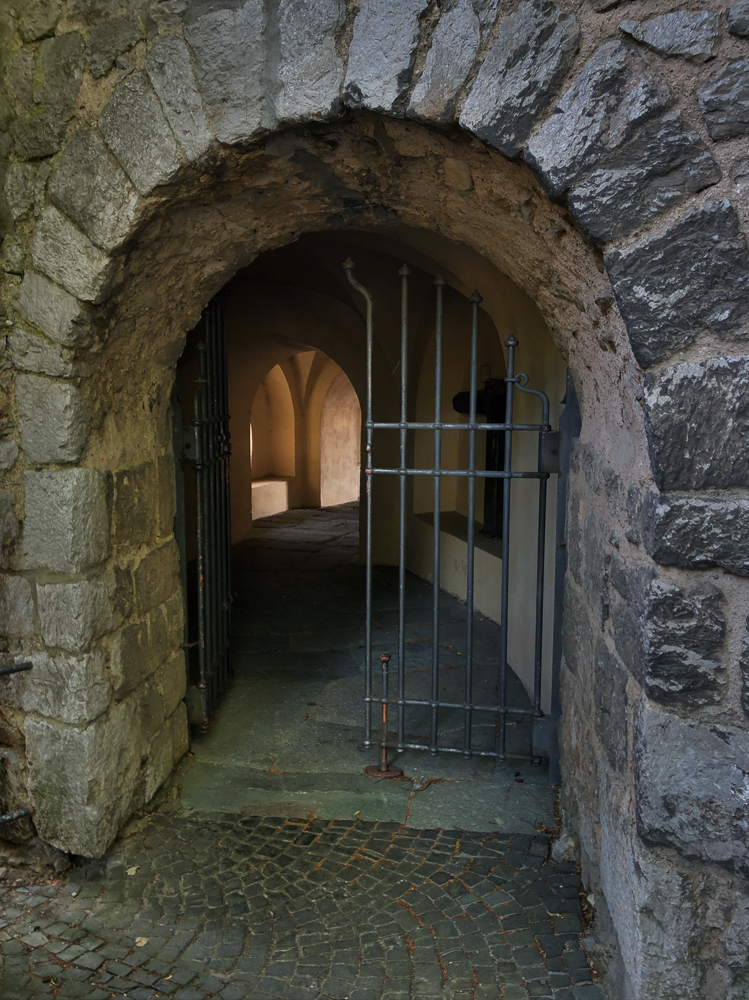
Garden terraces on the south side of the church are reached through this tunnel beneath the chancel.
View of the church and bluff overlooking the River Lahn

Cathedral of Limburg on the Lahn

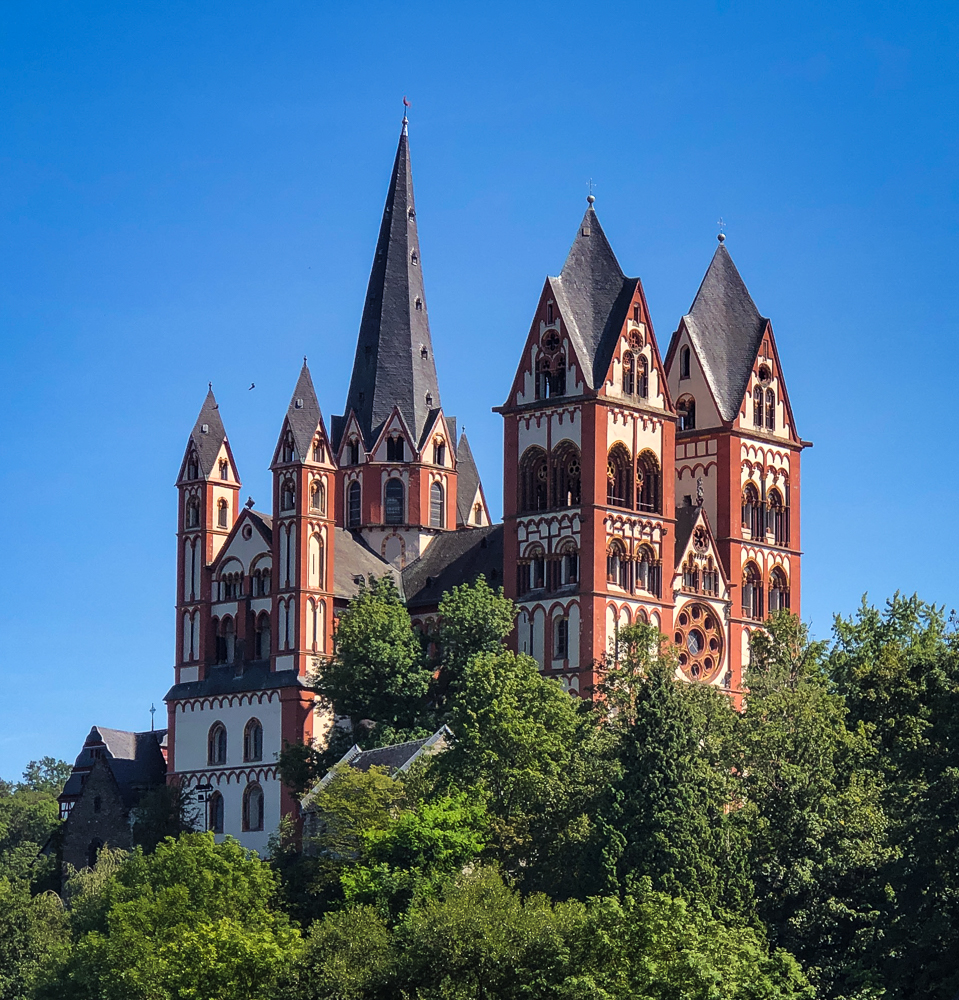
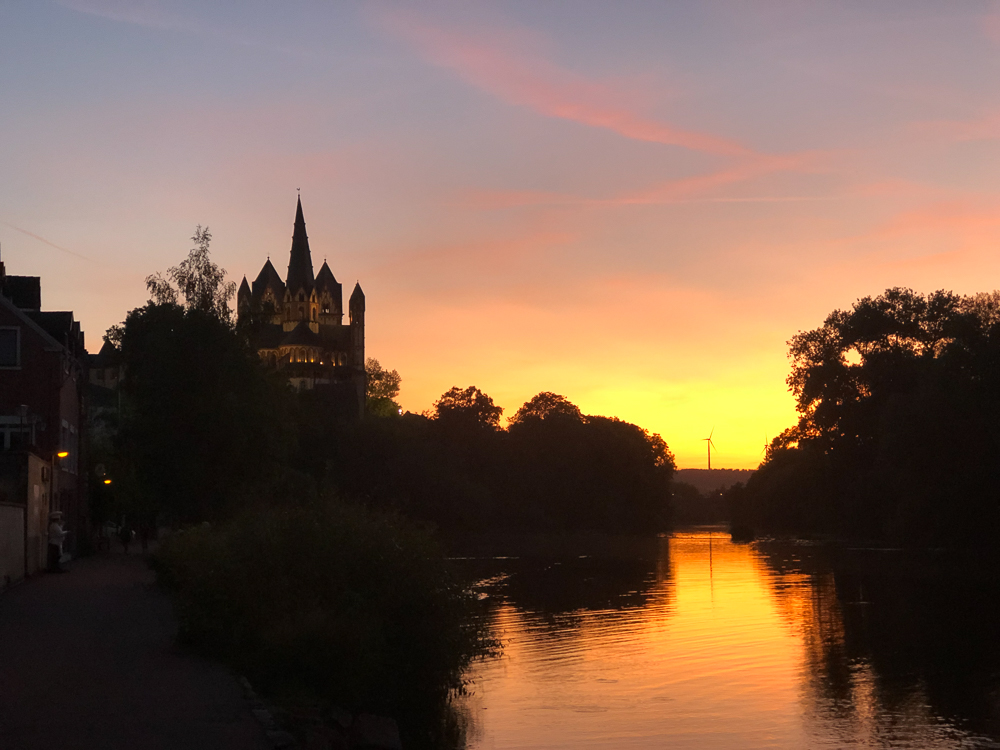
Limburg an der Lahn (not the cheese city) is a short train ride north of Frankfurt. The Cathedral stands on a cliff above the medieval city center. Founded on a romanesque plan in 1180-1190, during the construction process it gradually incorporated Gothic elements as that style spread into Germany over the next few decades.

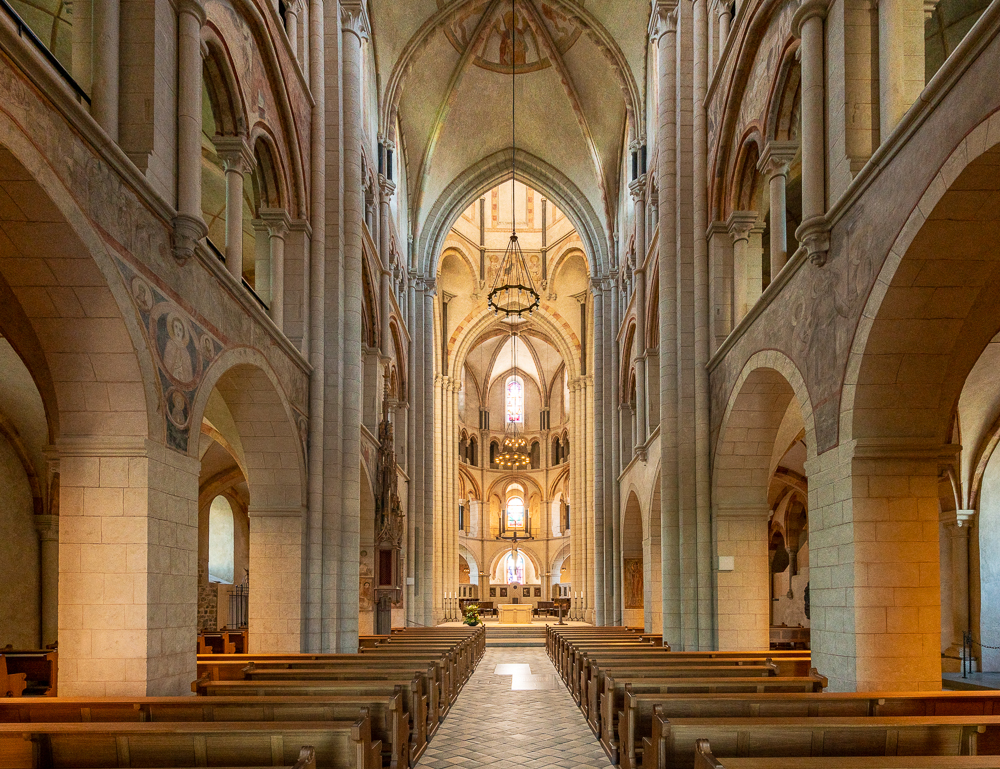
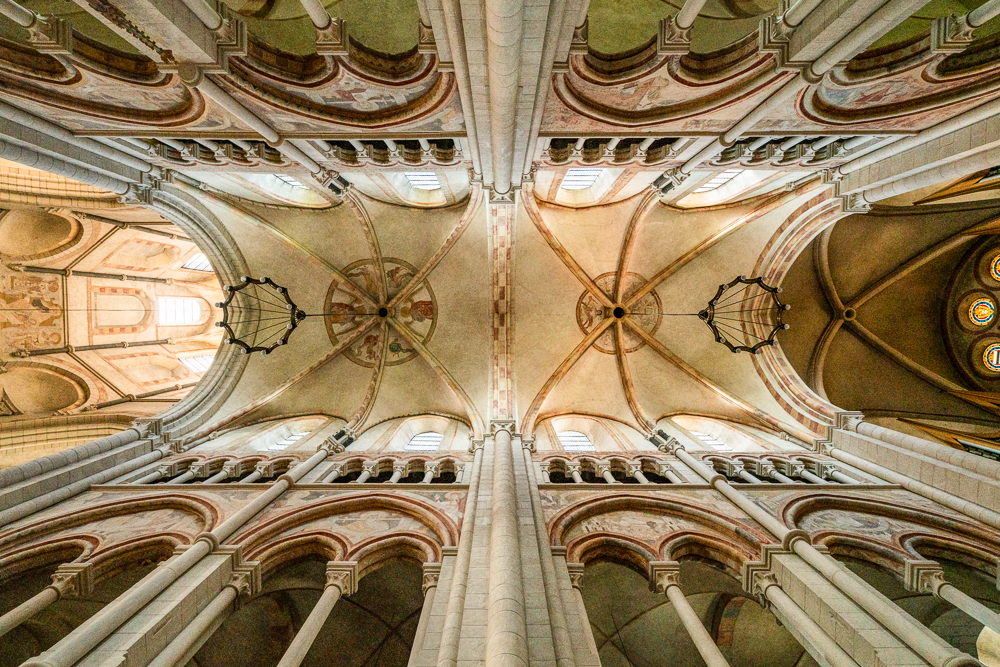
The square piers and round arches of the lower nave are late romanesque. The fluted columns, vaulted ceiling and pointed arches of the clerestory are gothic additions.

The height of the crossing, and relatively large windows bring bright light into the interior.

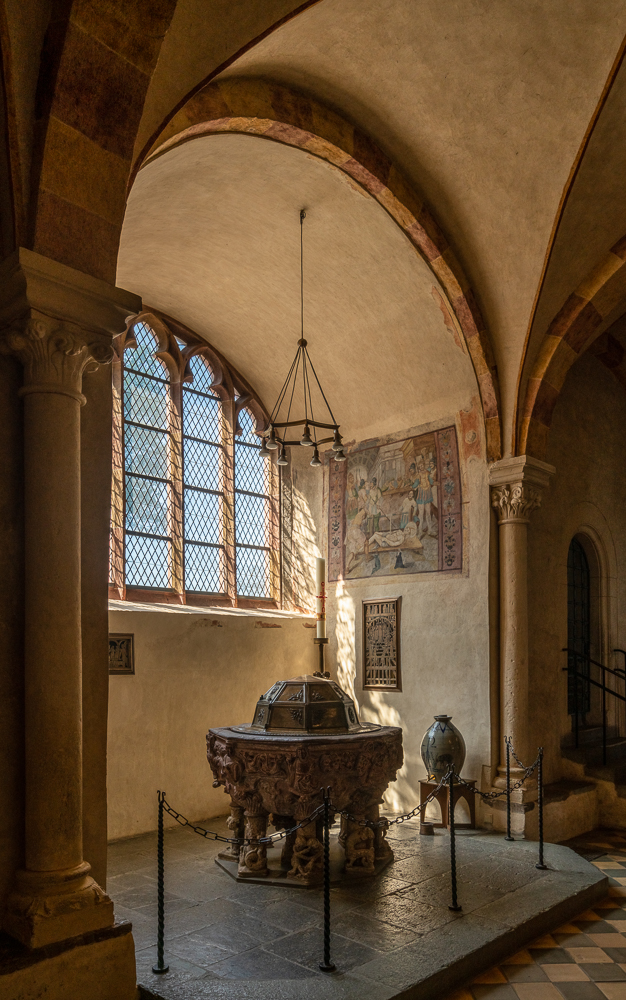
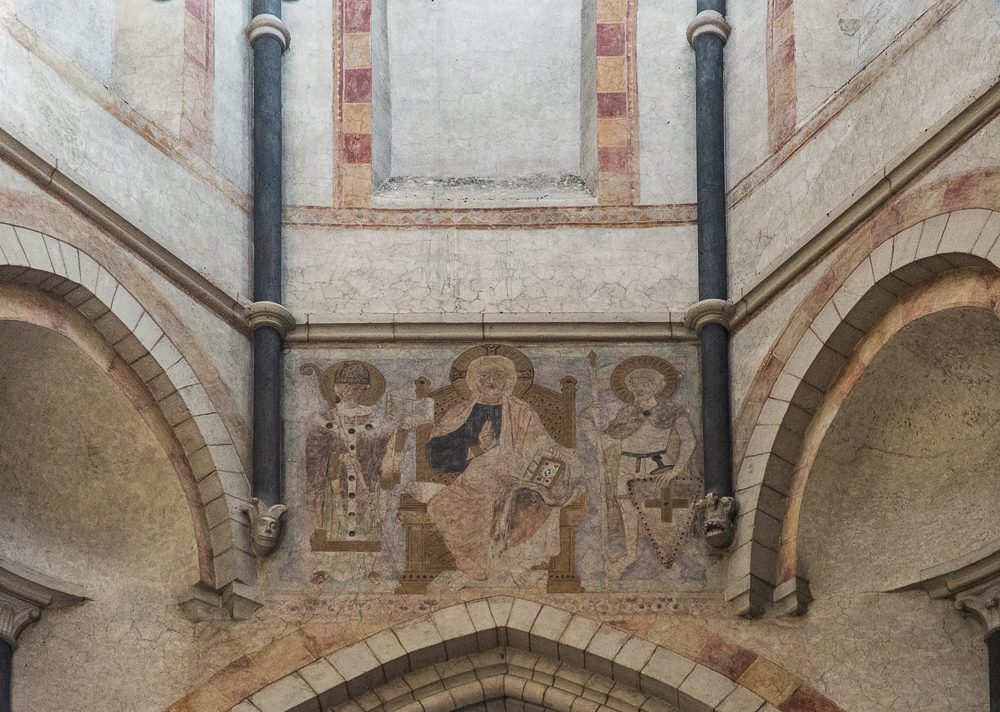
This church is relatively unscathed by the centuries that have passed since its construction. Many of the artifacts including the stone baptismal font below and paintings date to the earliest days of the 13th century.

Many of the original wall paintings were “restored” in the 19th century but the result looks a bit modern to me.

St. Quirinusmünster, Neuss

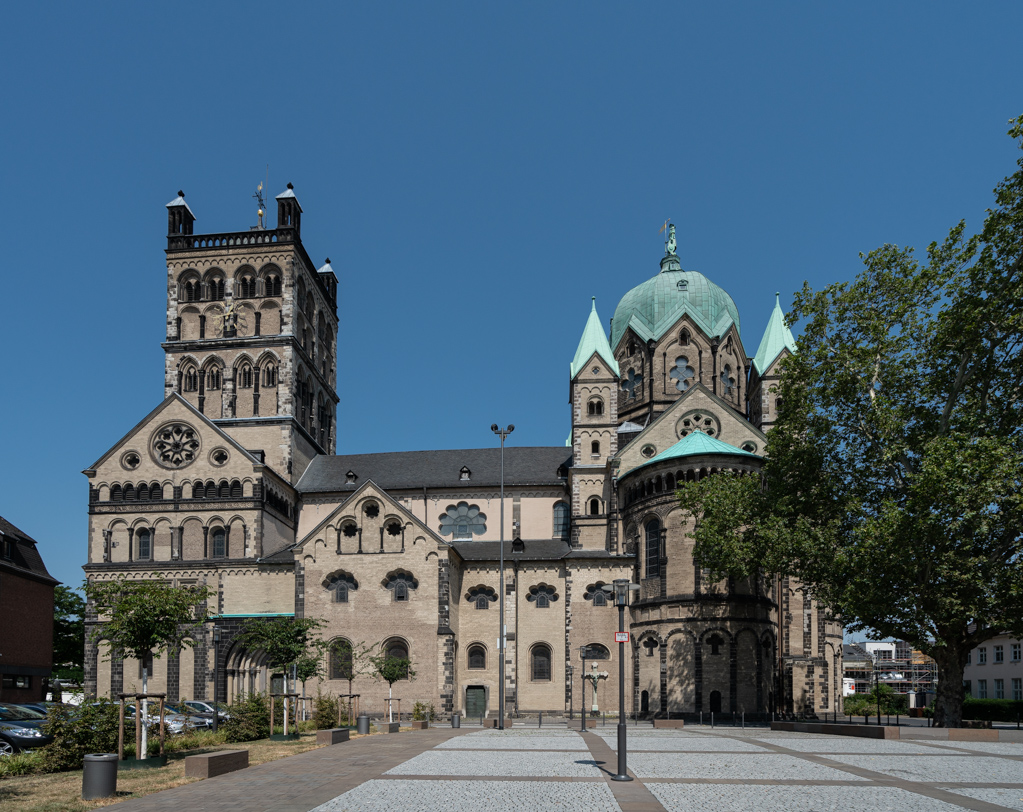
Across the Rhine from bustling Düsseldorf is the relatively quiet town of Neuss. A military camp was established near here in 16 B.C. by the Romans. The site of this church was originally a cemetery with a small chapel. Successive church buildings appeared on the site as the camp grew into a town. In time an abbey was established adjacent to the church. By the early 13th century, the church had acquired essentially its current form, though roof and towers have been damaged and restored multiple times.

Quirinus was reportedly a tribune who was martyred in A.D. 116 and interred in Rome. In 1050, his bones were brought to Neuss by the Abbess, Gepa, who may have been a sister to Pope Leo IX. I’m always fascinated by the variety of roman martyrs to whom churches in medieval Germany were dedicated. There was a definite interest connecting with early Roman christianity through relics of early martyrs, even though details of their lives were often sketchy and of late date.

In 1794 French occupiers of the area used the church for fruit storage and later as a horse stable. Subsequently the adjacent abbey buildings were destroyed. After the region was incorporated into the Prussian State in the late 19th century, the church was restored. A new gold shrine was constructed to hold the bones of Quirinus and is now displayed in the apse.

_DSC5921-HDR

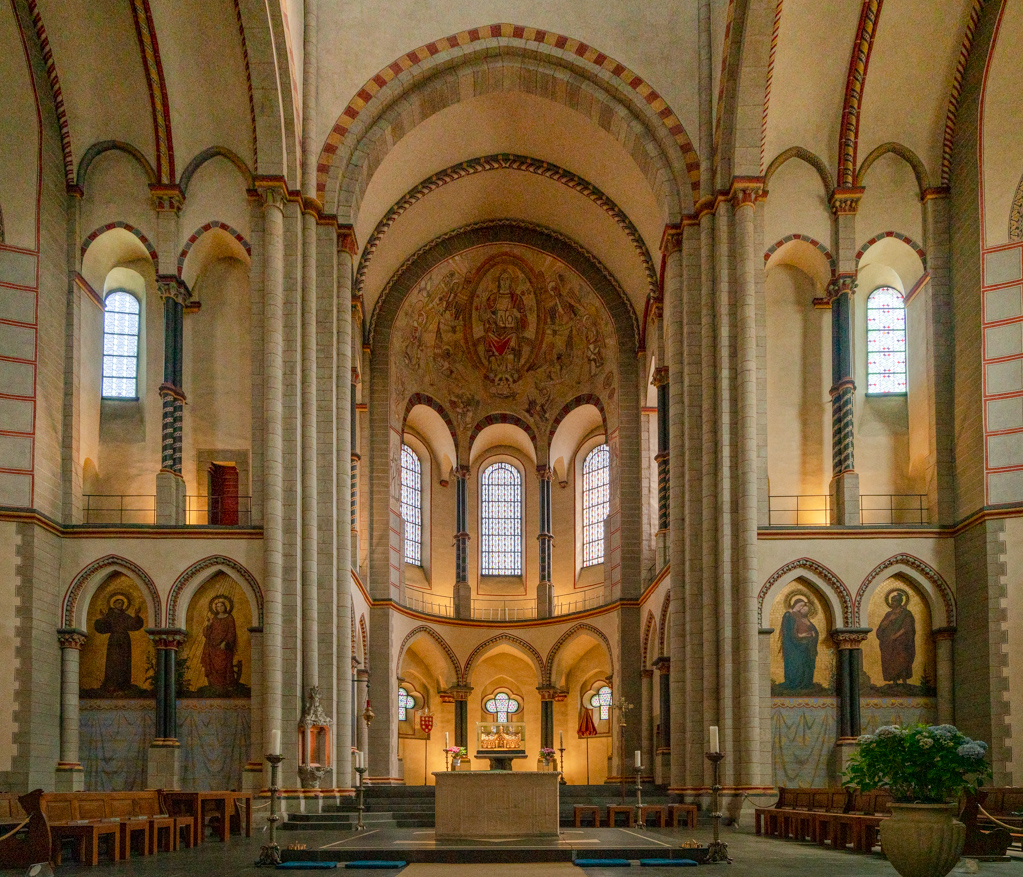
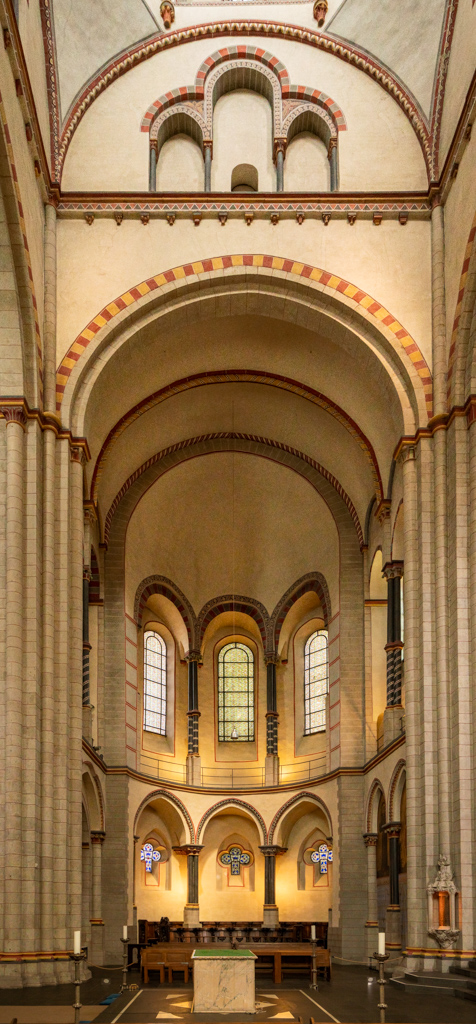
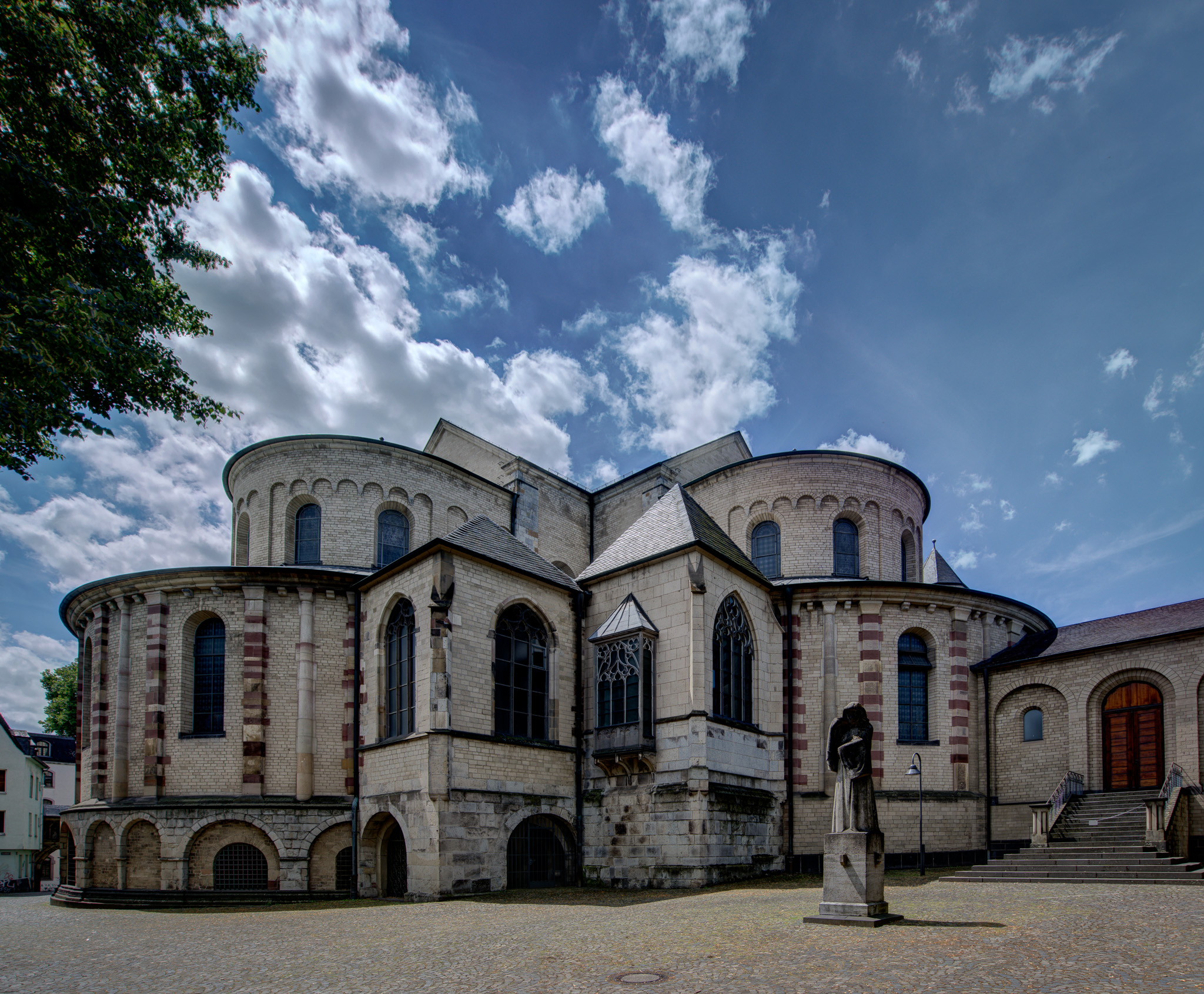
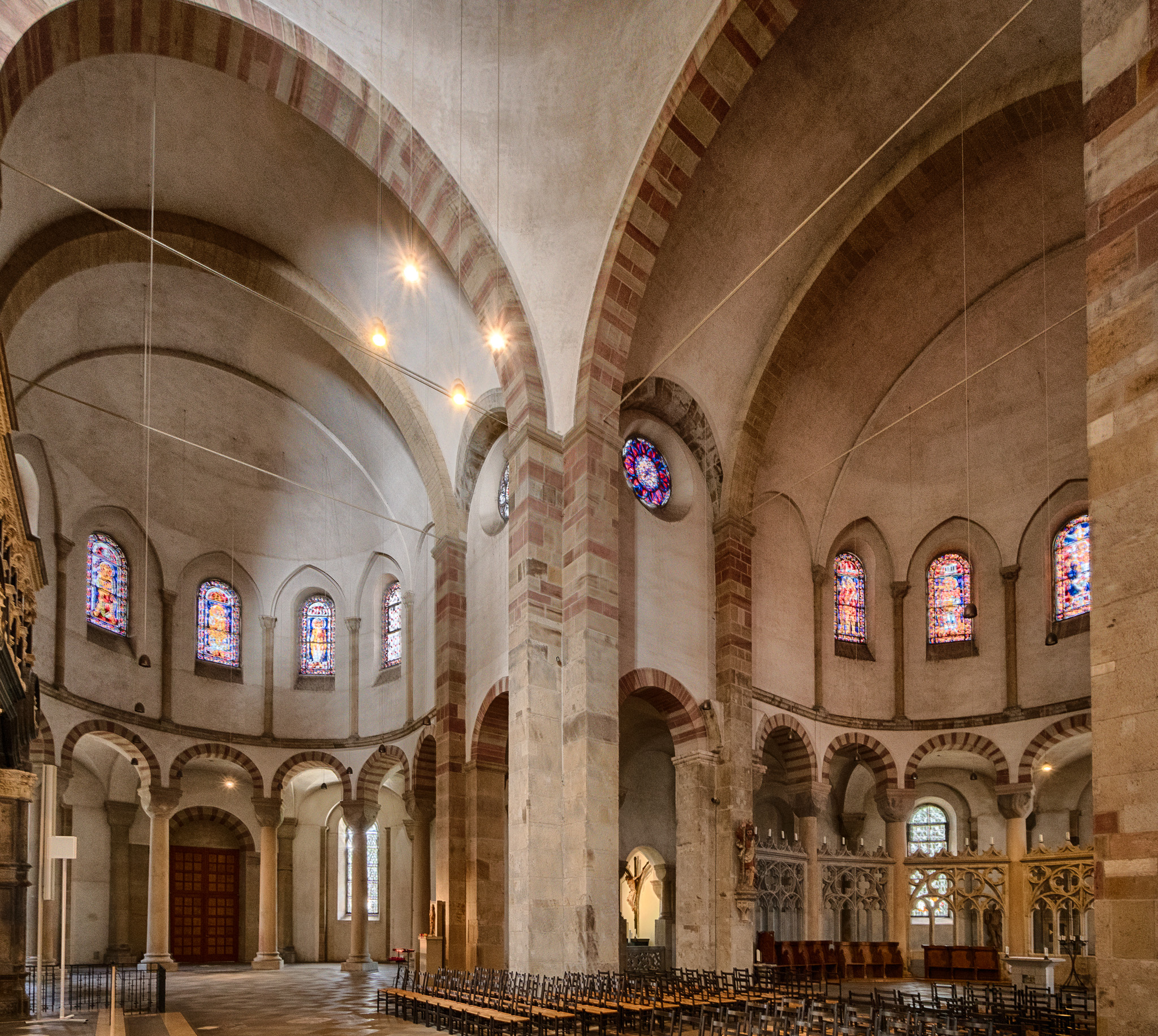
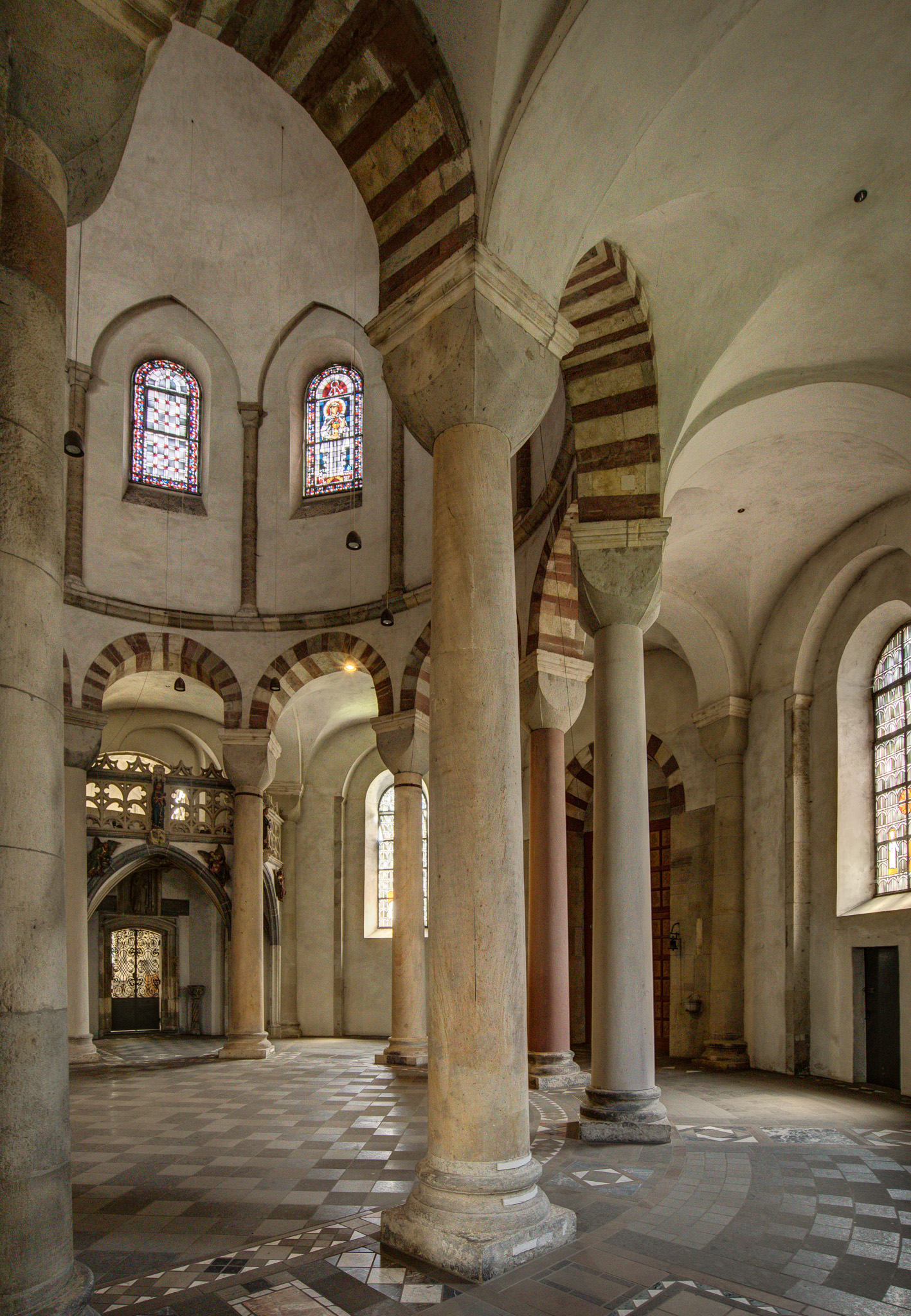
A distinctive feature of the church is the design of the east end. Two semicircular apses flank the eastern apse, rather than a typical transept. The design is similar to contemporary structures along the Rhine, e.g. St. Maria im Kapitol and Great St. Martin’s in Cologne. The image below is of the north “transept”.

The copper sheathing on the baroque style Central tower unifies it with the much older romanesque main structure. A statue of Quirinus caps the tower.

Sankt Maria im Kapitol, Köln

This 11th century church replaced a 7th century structure that in turn had replaced a roman temple. The courtyard (Lichhof) at the east end shown below covers an ancient burial ground. The statue on the right is a memorial to those who died in World War II. Like several other churches in Cologne, this church was built for the use of a Benedictine cloister founded by Archbishop Bruno, brother of Kaiser Otto I.

_DSC2595_6_7_8_9-2

The public entrance to the church is through the cloister (19th, 20th century construction).

_DSC2605_6_7_8_9-3

The church was severely damaged during WWII. Once elaborately painted, it has been restored to the simplicity of the early period of its existence. The ceiling of the nave is a modern replacement for the destroyed stone vaulting.

_DSC2620_1_2_3_4-Edit-5

The late gothic rood screen, seen from the west above and the east below, forms an elaborate boundary between the simple nave and the elaborate cloverleaf form of the choir. Carvings in the marble represent various Biblical scenes as well as the coats of arms of donor families.

_DSC2660_HDR-9

The choir has a cloverleaf or trefoil form with three large apses and the crossing which together form a large open space. Based on the design of the Church of the Nativity in Bethlehem, St. Maria im Kapitol became the model for other churches in Cologne. The windows, though modern, portray archbishops, abbesses and saints of importance to the early history of the church.

_DSC2780_HDR-Edit-29

The side aisles of the nave connect to an ambulatory surrounding the chancel space. Walking the aisles reveals a kaleidoscopic variation of lines and curves.

_DSC2760_1_2_3_4-Edit-26


Aachen Through the Ages

The cathedral at Aachen incorporates more than 1200 years of history into one building. The heart of the church is the octagonal Palatine chapel. It was built during the reign of Karl Der Große (Charlemagne ca A.D. 800) as a two story church. Many renovations, demolitions and expansions have produced the current structure. Thirty kings and twelve queens were crowned here over the centuries.

_DSC1828_HDR-32.jpg

The image above was taken from the original chapel looking toward the 14th century choir that was modeled after Ste. Chapelle in Paris. The reliquary or shrine in the lower center reputedly contains the robe of Mary, the swaddling clothes and loincloth of Christ, and the beheading cloth of John the Baptist. The shrine is opened periodically for viewing.

The image below shows the verticality of the original chapel. At the time of construction it was the tallest building north of the Alps. The mosaic in the ceiling is a 19th century creation in the mode of medieval mosaics. Some of the columns are thought to have come from Rome. The 12-sided chandelier hanging from the roof represents the heavenly Jerusalem. It was donated by the emperor Frederic Barbarossa in 1165.

_DSC1593_4_5_6_7-11.jpg

The arches and vaults of the ambulatory around the chapel shift kaleidoscopically as one walks around.

_DSC1763-HDR-Edit-26.jpg

In this view of the church, the Palatine chapel is bracketed by the gothic addition and the Gothic superstructure over the original narthex.

_DSC1673_4_5_6_7-1.jpg

The choir, with its stained glass walls, contrasts with the heavier central chapel. The reliquary at the bottom of the photo is reputed to contain the bones of Charlemagne. At the very least it contains the bones of a tall man who died early in the 9th century, so the tradition has credibility.

_DSC1718_19_20_21_22-Edit-20.jpg