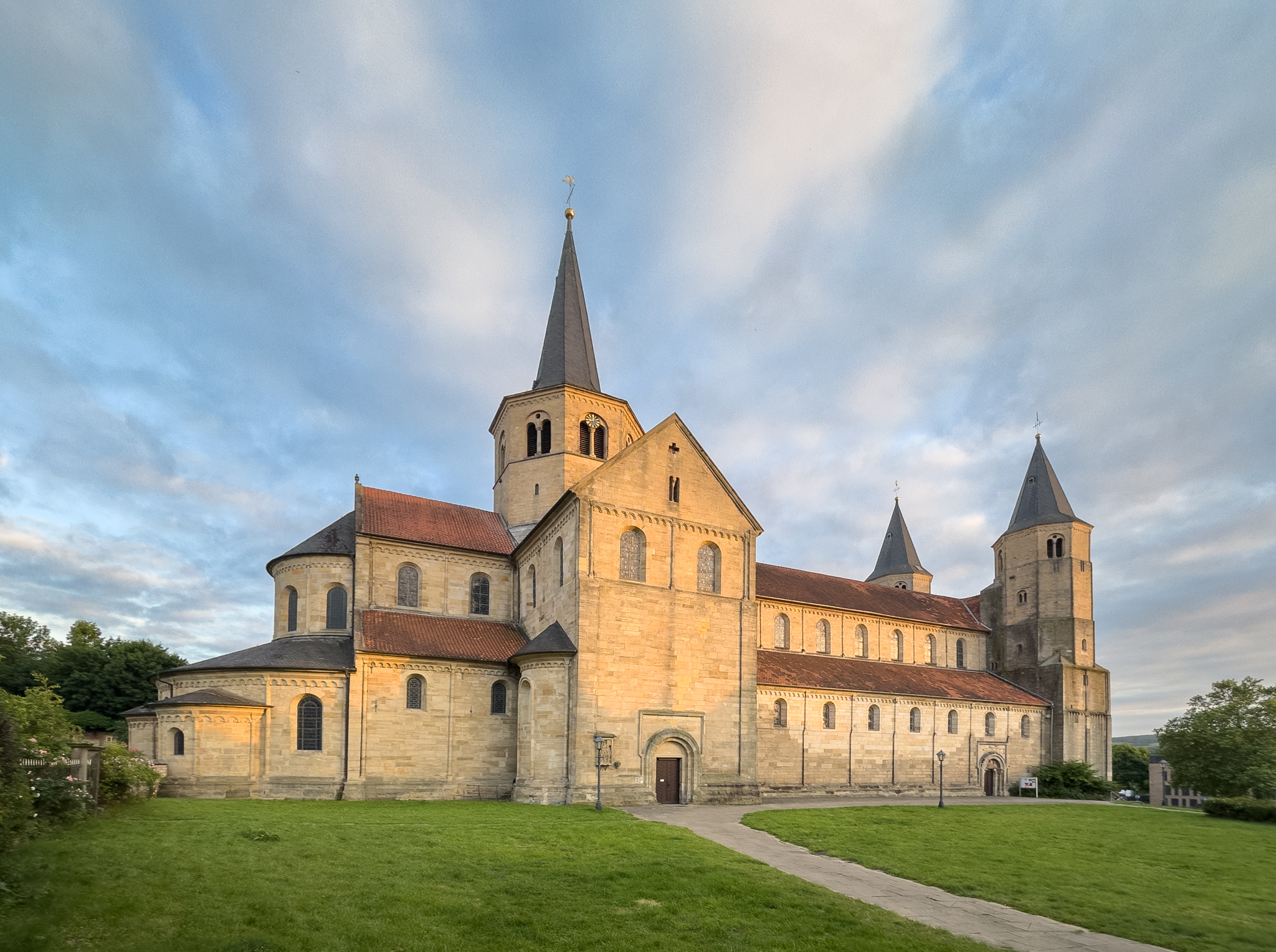
On 22 March 1945 hundreds of RAF and RCAF bomber, in 15 minutes, destroyed the city center of Hildesheim. Several churches close to the city center were almost completely destroyed. St. Godehard church is situated on a hill just south of the city and only suffered superficial damage. So it retains much of its original, 12th century character.
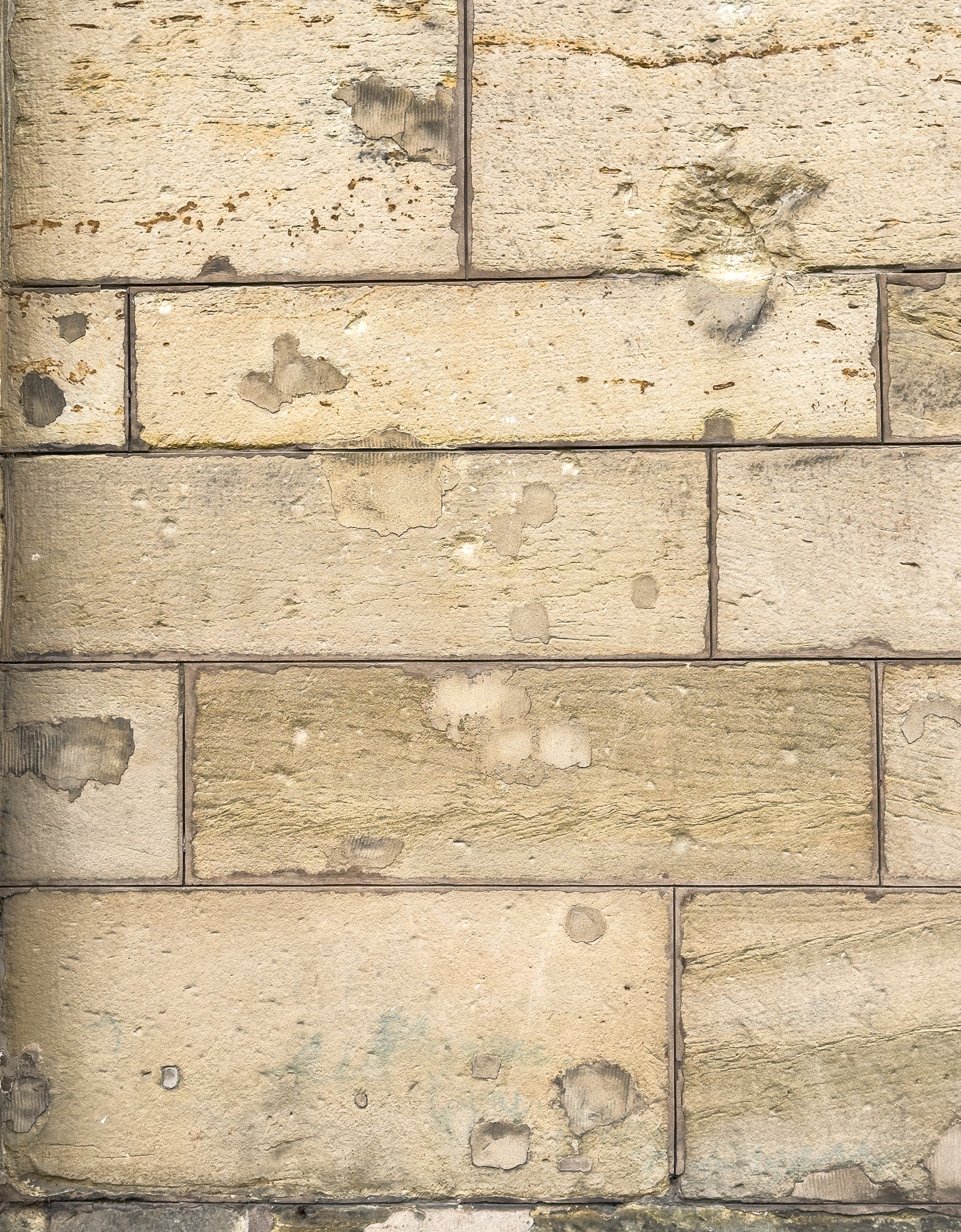
The north wall of the church shows pockmarks from shrapnel. Some have been filled in.
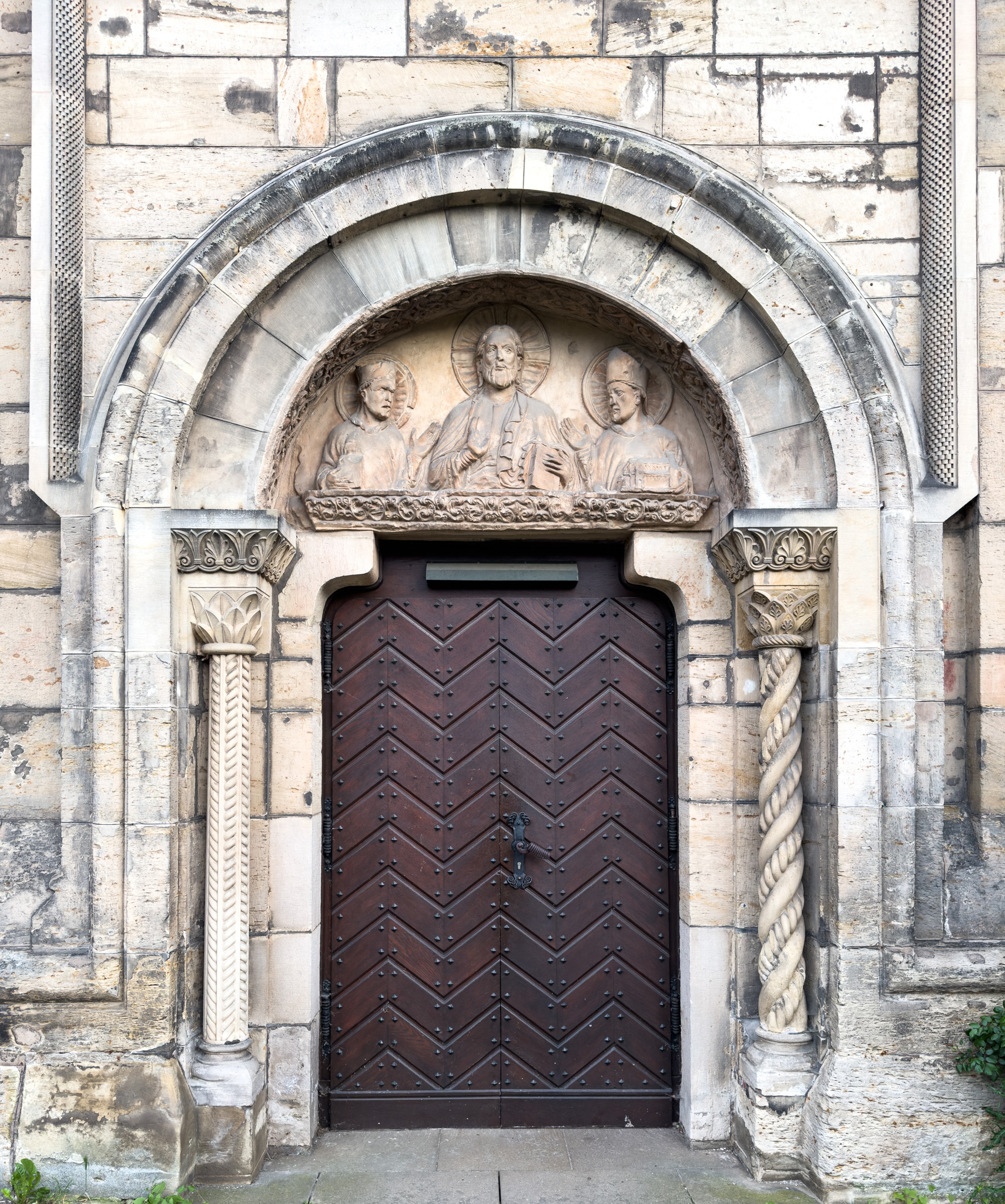
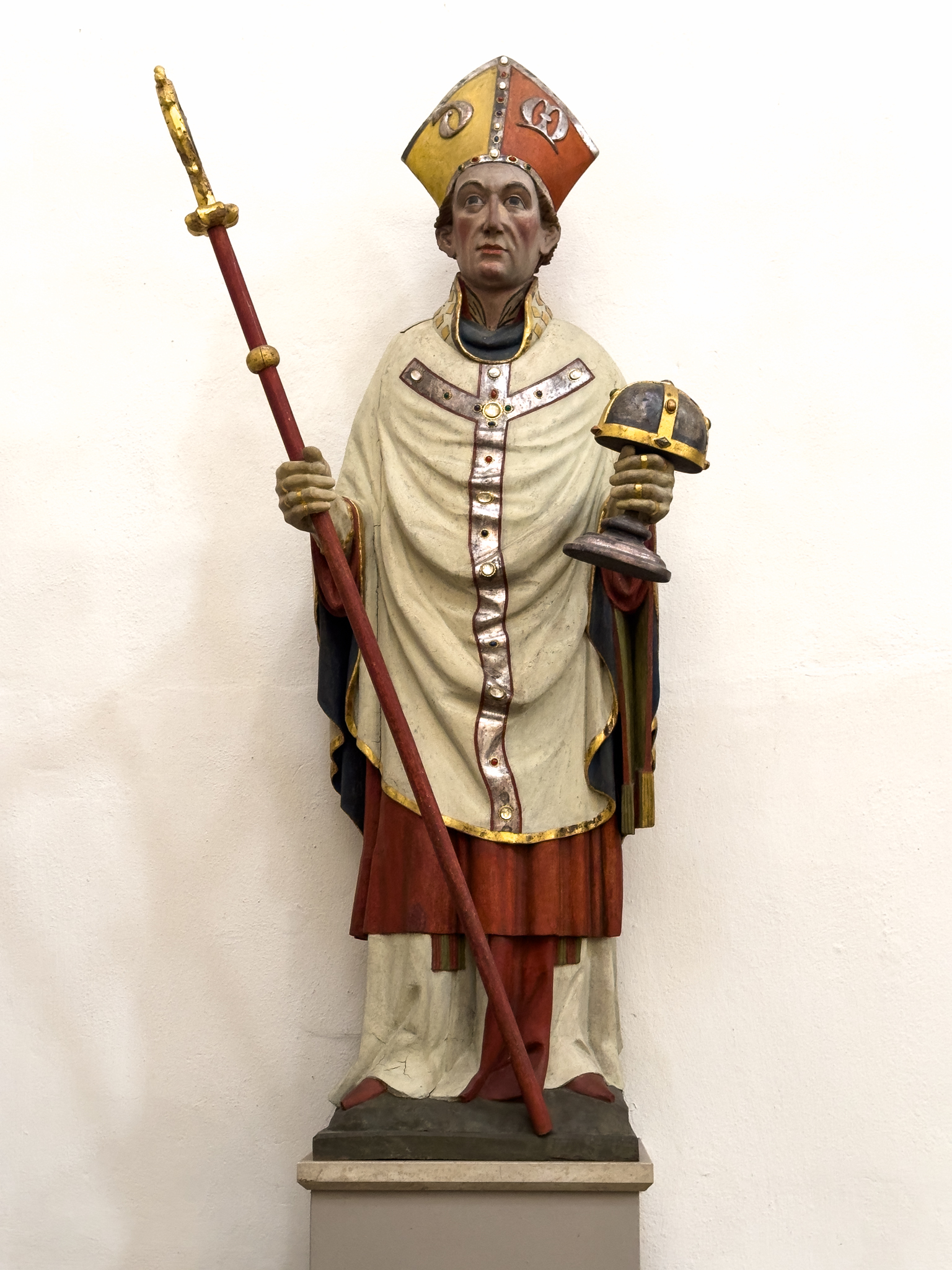
Godehard was bishop of Hildesheim in A.D. 1022-1038. This church was begun in 1133 with the establishment of a monastery by Bishop Bernhard. The tympanum over the entrance represents Christ in the center and perhaps Godehard on the left with Bernhard on the right. The carved sculpture of Godehard dates to the mid 15th century.
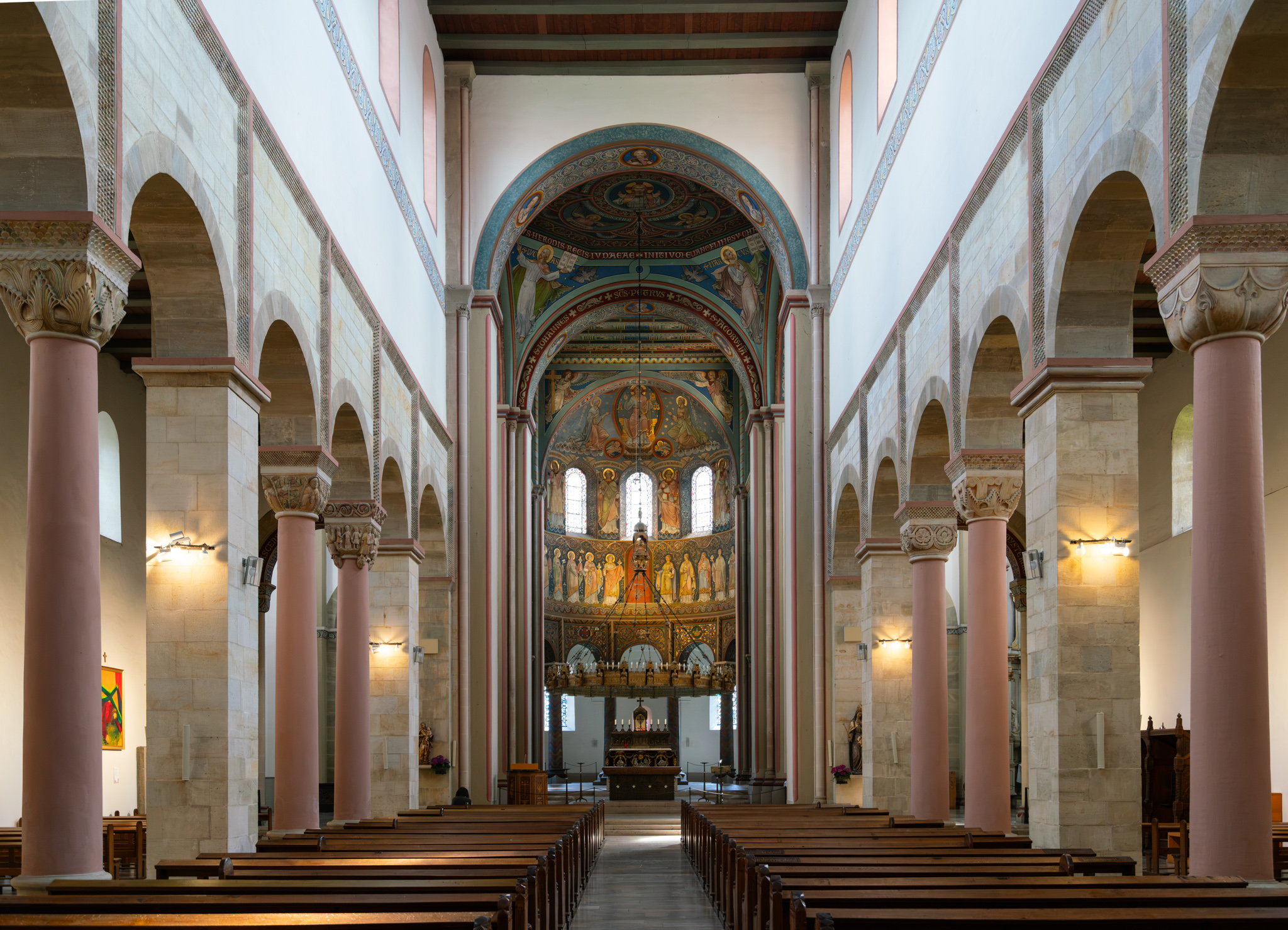
Through the centuries, Gothic and then Baroque modifications were made. A major renovation took place in the early 19th century that restored the Romanesque character of the main structure while retaining some furnishings of the later periods. Subsequent repairs and restorations have conformed to the ancient character.
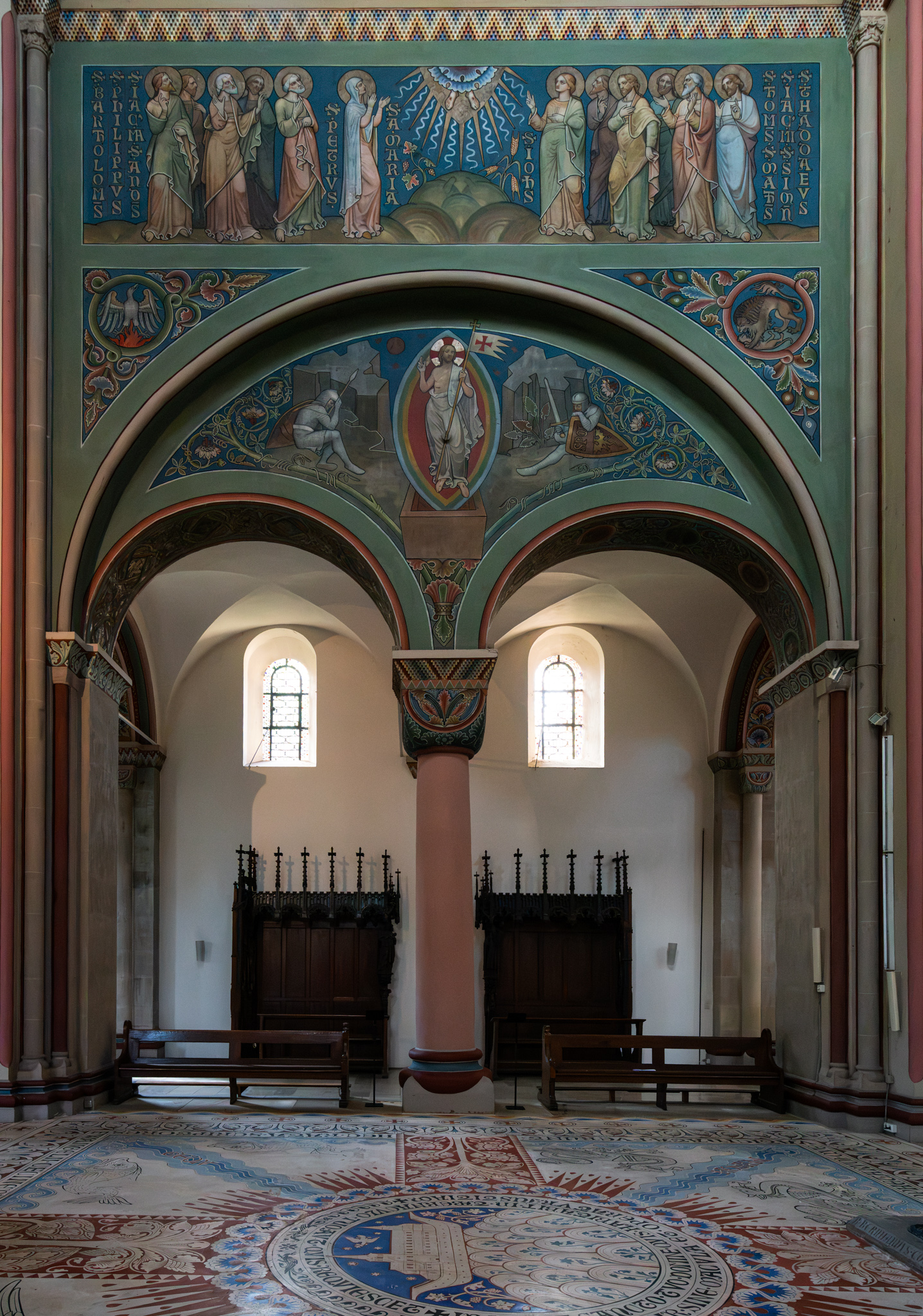
The Choir is decorated with elaborate frescos from 1861-63. The artist, Michael Welter copied the style of 12th-century artwork from the local region. Above the altar are scenes of Christ reigning surrounded by various saints and angels. The sides of the choir show other biblical scenes such as this image of the South wall with the resurrection of Jesus and his ascension with the apostles and Mary watching.
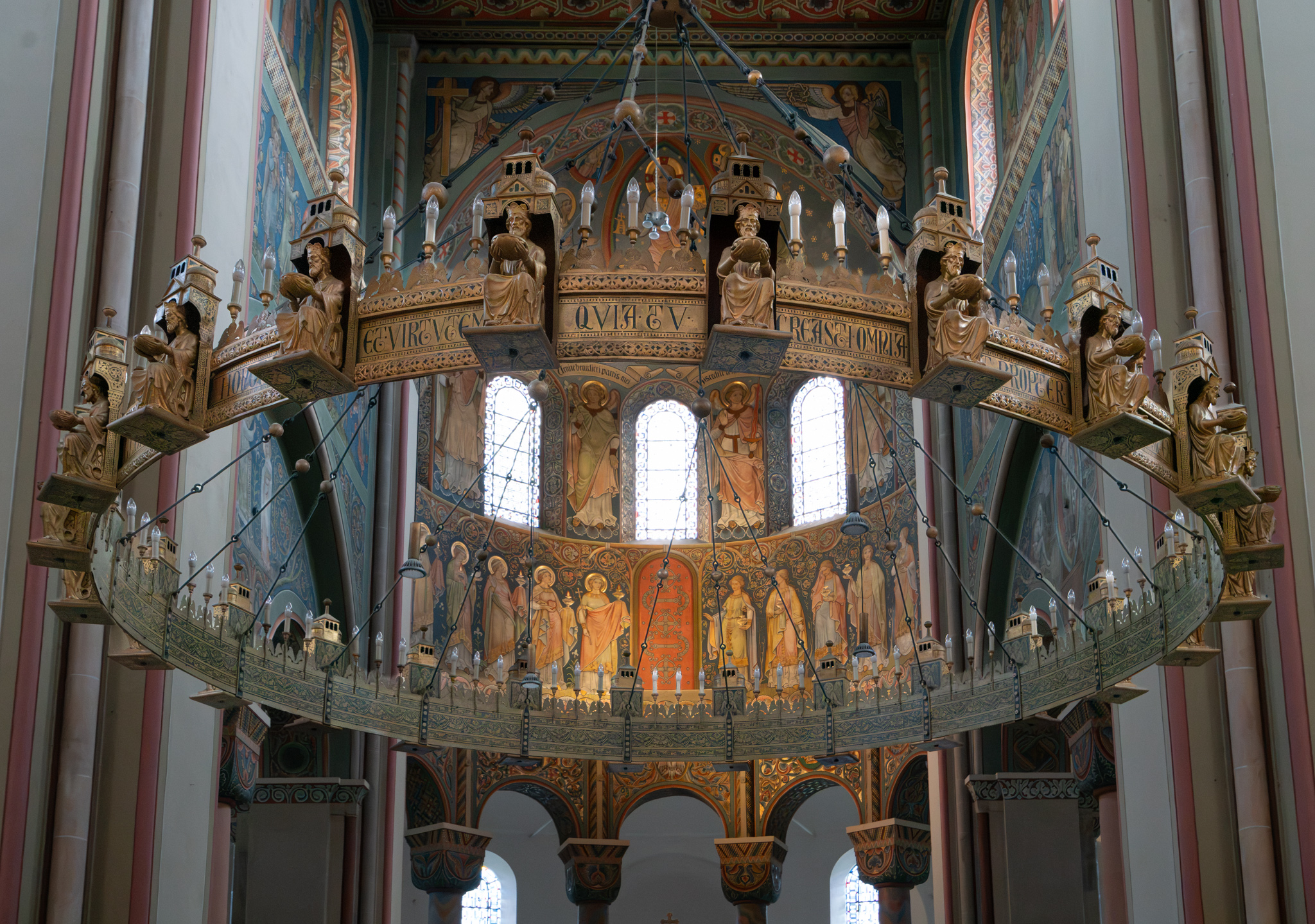
A neo-romanesque chandelier hangs above the altar in the crossing. This portrays the 24 elders on their thrones described in Revelation chapter 4. Looking through the ring toward the fresco in the apse you can see the images of the wise (with lit lamps) and foolish virgins (with burned out lamps) waiting outside the door to enter the wedding feast.
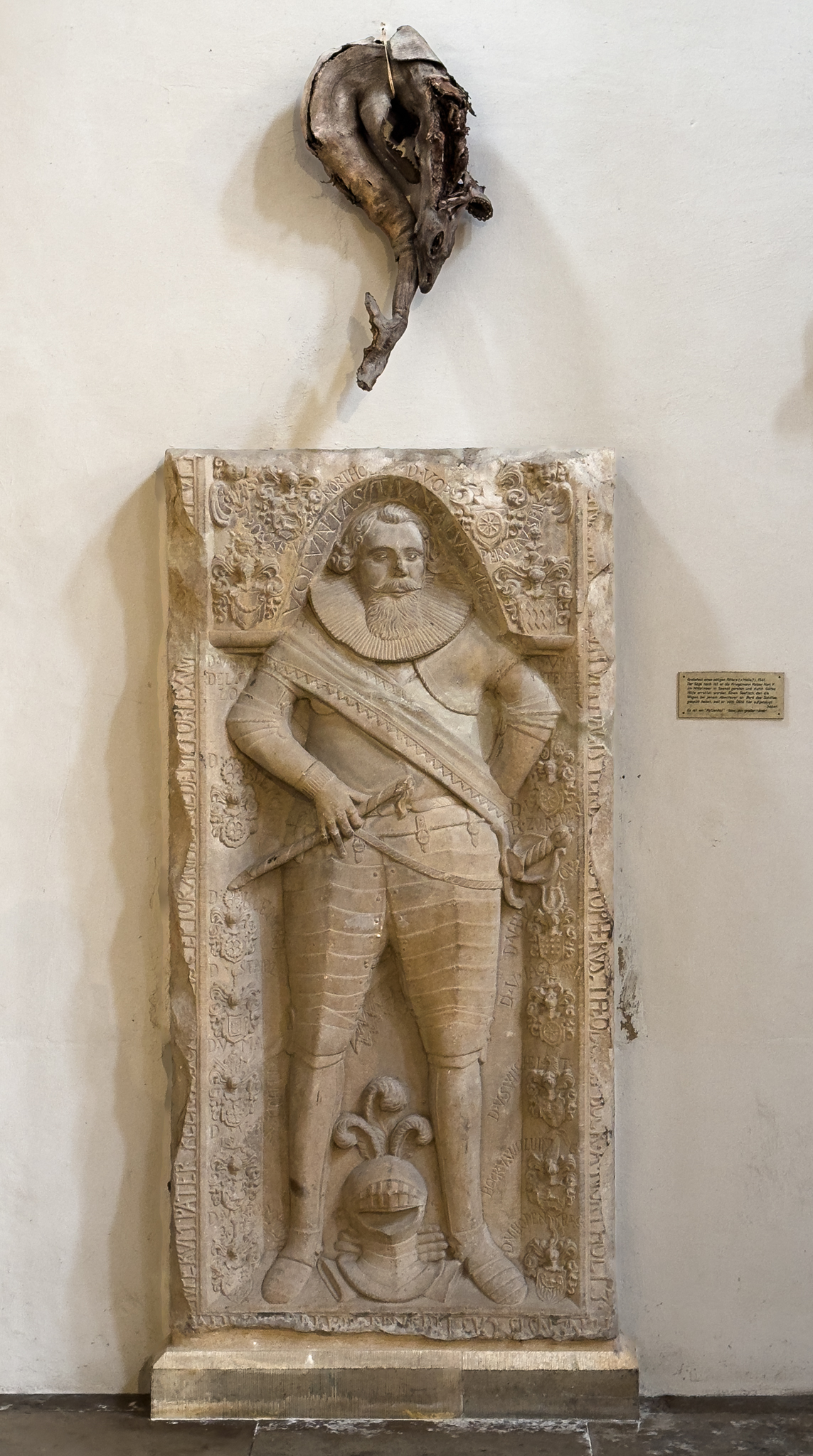
It seems that a lot of churches have some unique oddity or even grotesque display. The image below shows a Grave stone of a 17th century nobleman. The object above the stone is a stuffed eel. The plaque explains that a different man from the 16th century was miraculously saved from a storm on the Mediterranean and after the storm, this eel was found on the deck of the ship and interpreted as a sign of the miracle. The gravestone of the grateful man is elsewhere in the church.