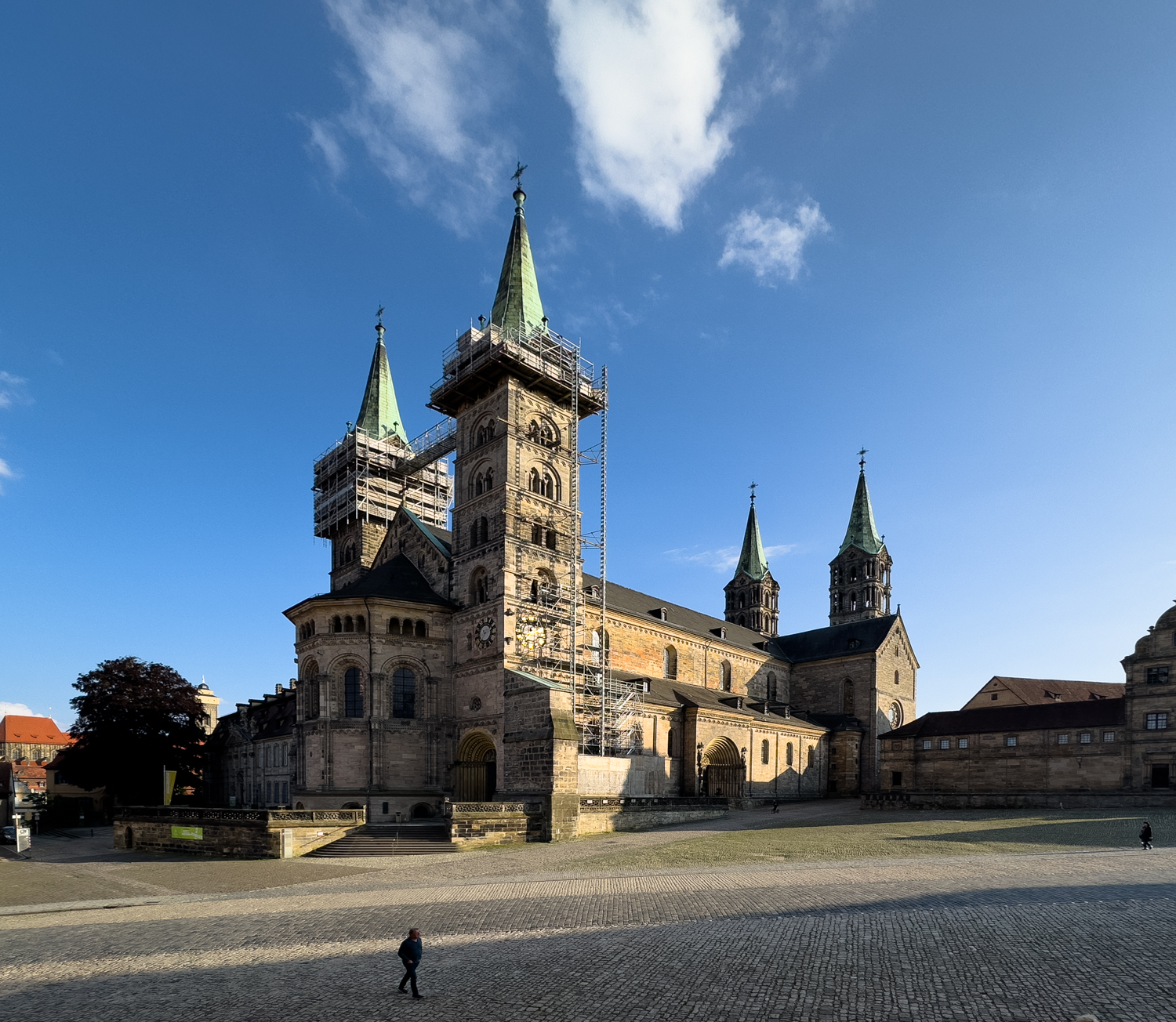
As similar as medieval churches may seem at first glance, there is wide variation when one takes a closer look. Each church has unique stories to tell.
The diocese of Bamberg was founded in A.D. 1007 under the patronage of Heinrich II and his wife Kunigunde. The first cathedral was consecrated in 1012. After two fires, the present building was constructed from about 1215 to 1237. In Germany, this was a time of transition from the Romanesque style to the Gothic.
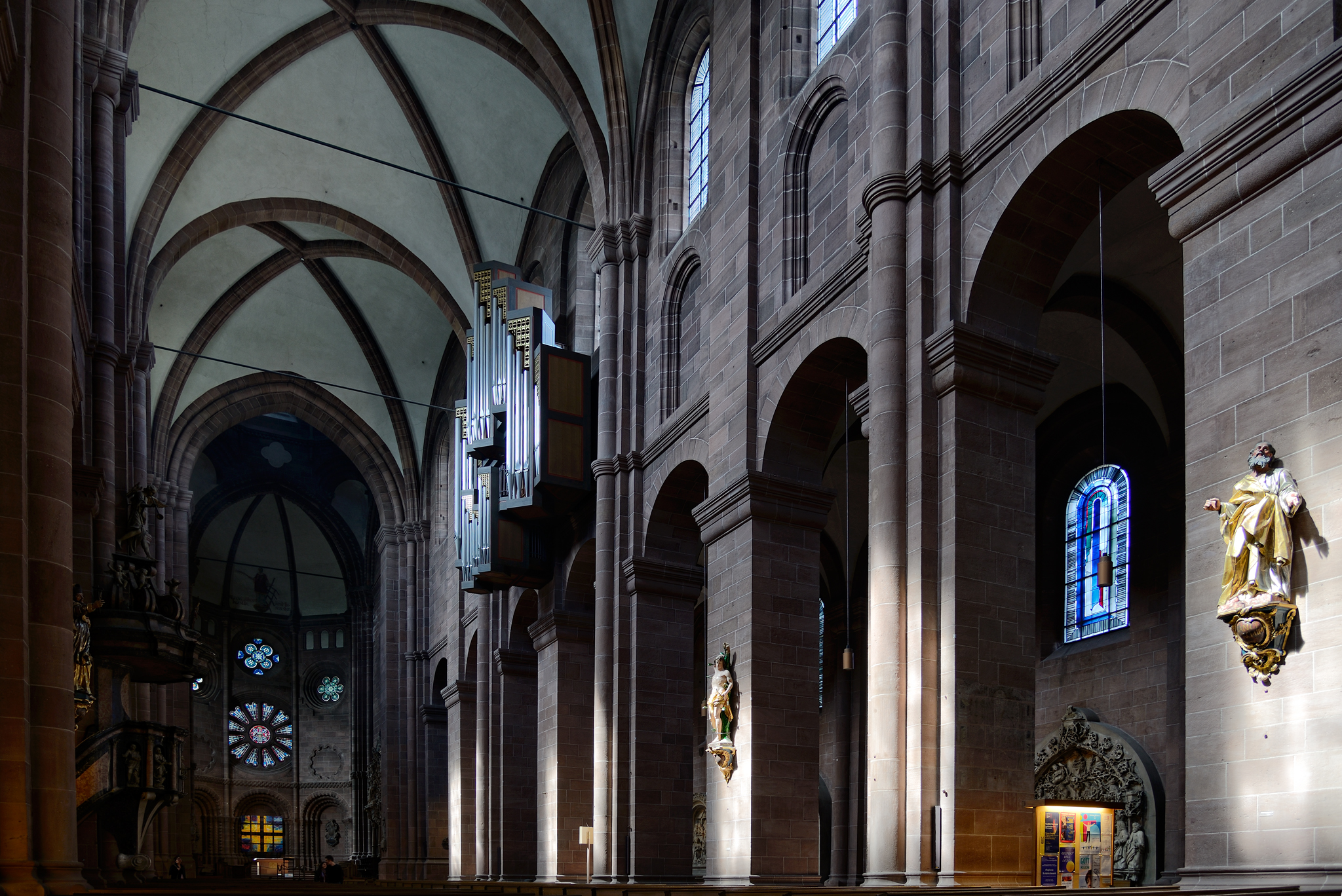
Thick walls, rounded arches and relatively small windows mark the main body of the church as Romanesque. The upper stories of the four towers with their copper clad spires display the lighter structure and pointed arches of the Gothic period.
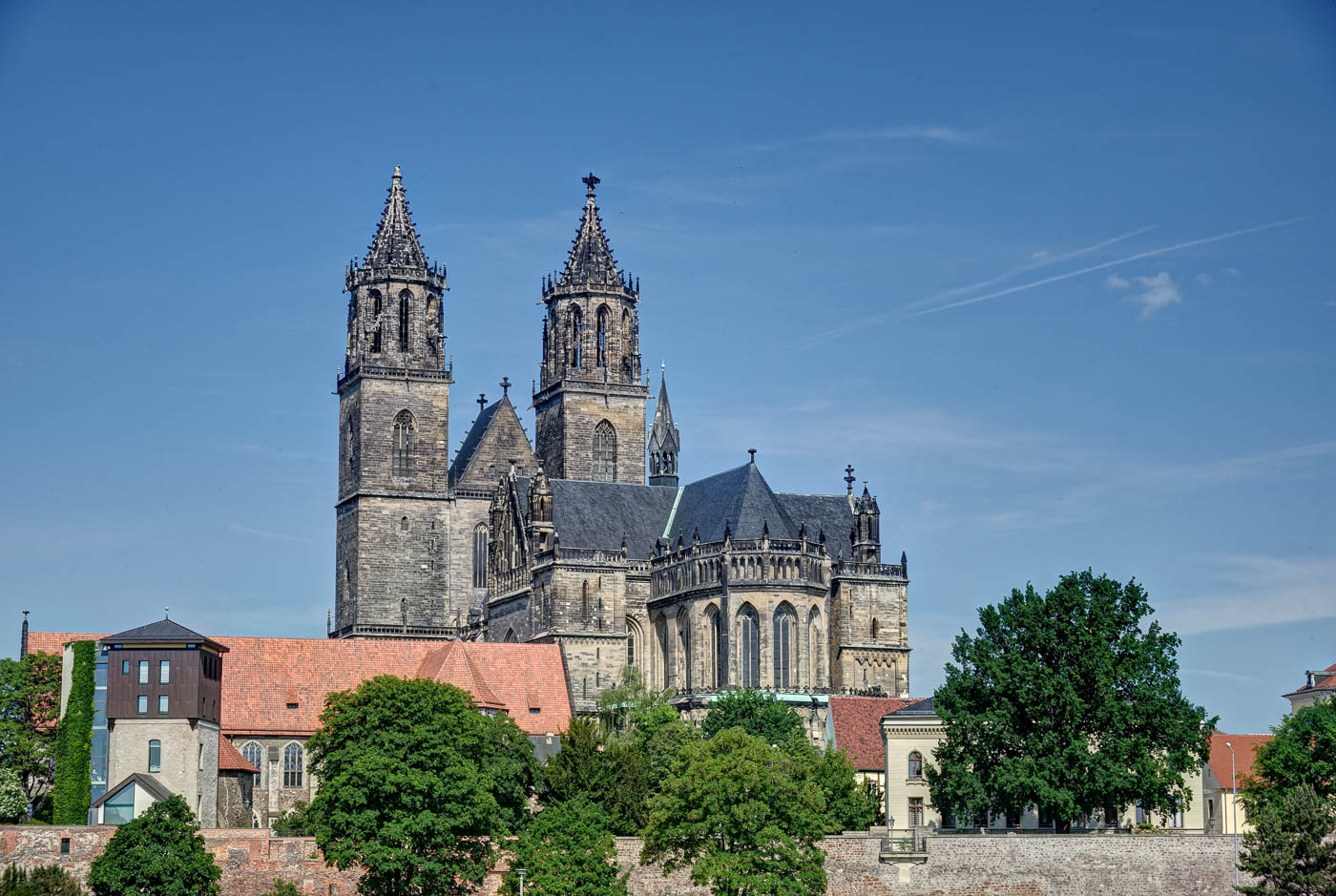
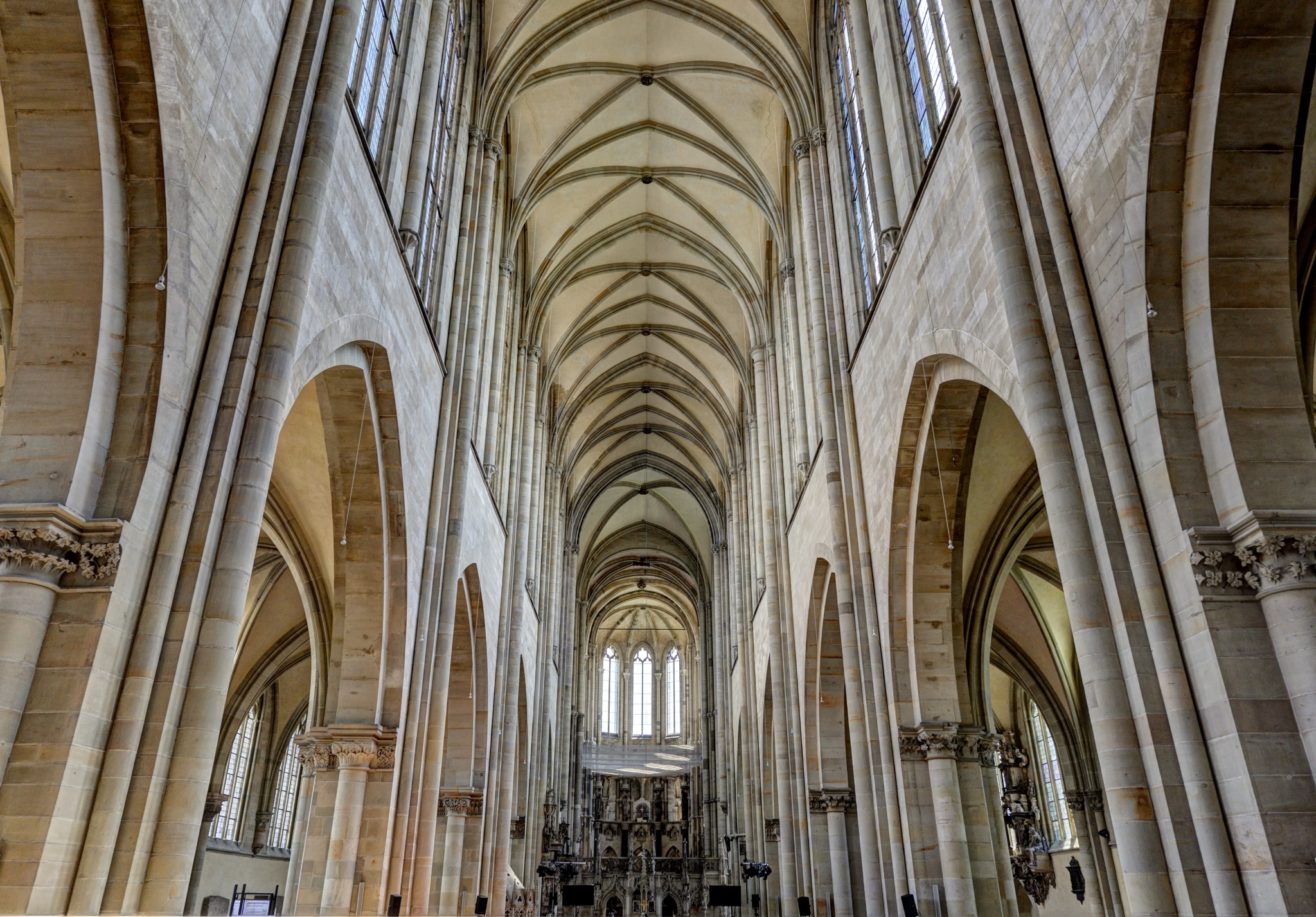
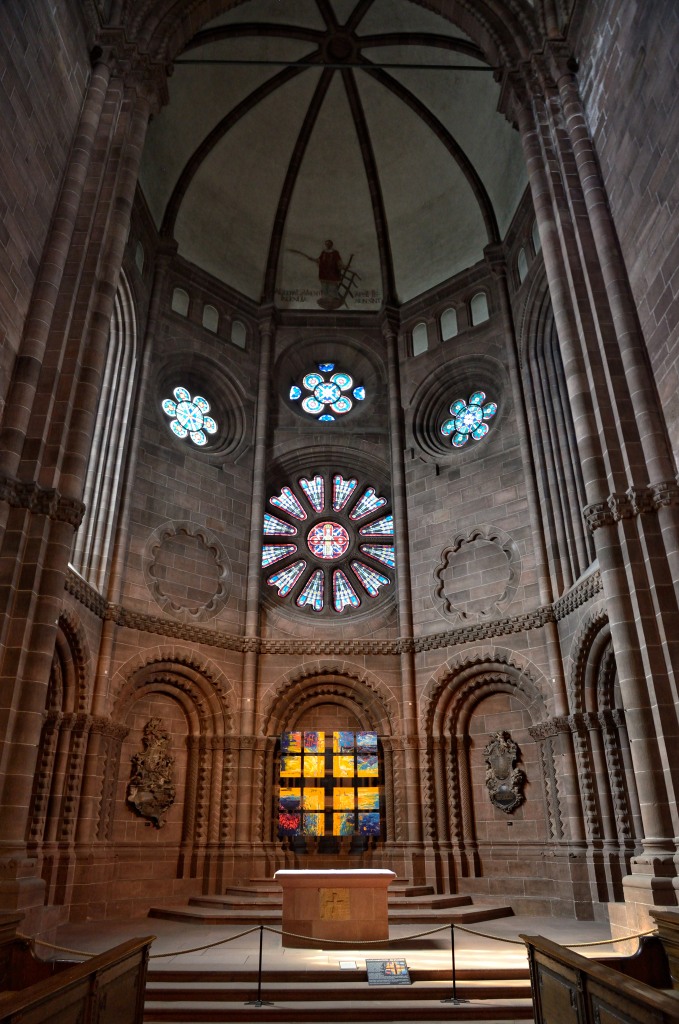
The view of the interior below shows the east choir, the oldest section of the church, and the nave. The choir is very traditional Romanesque. Along the nave, note the heavy piers and very shallow points of the arches. The ribs of the vaulted roof are among the heaviest I have seen. Perhaps these are indications that German architects, or their patrons, were only cautiously adopting the new Gothic technology. See my post about the cathedral in Magdeburg, for comparison.
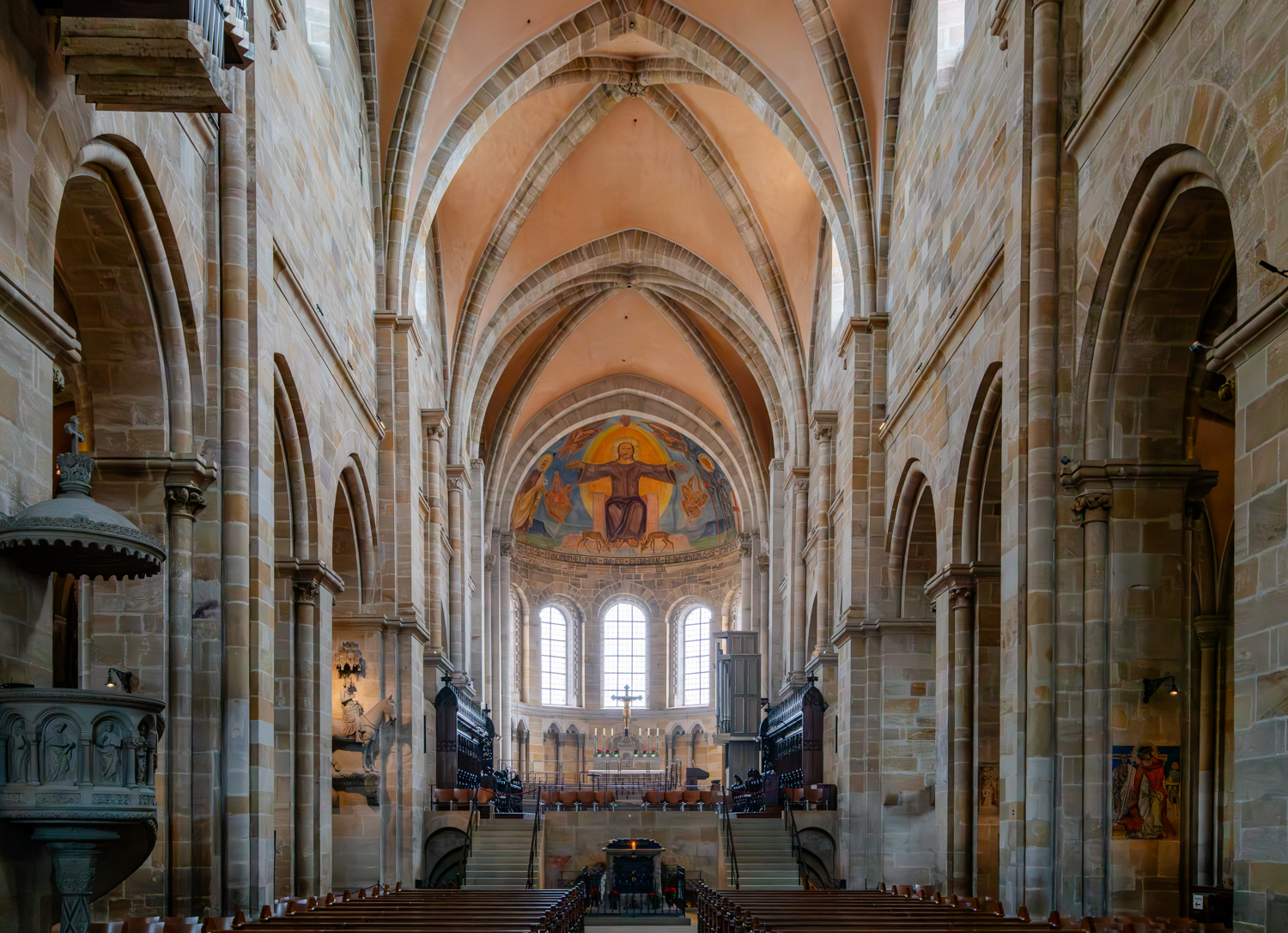
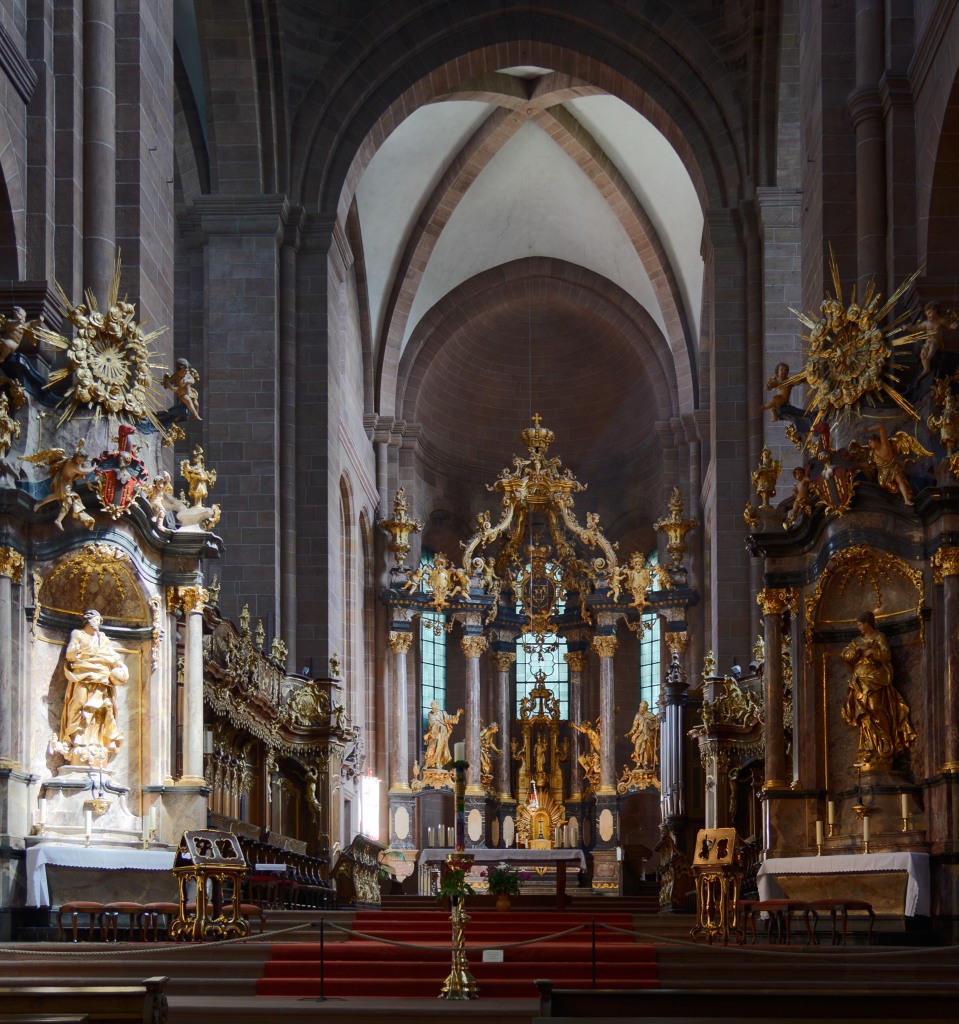
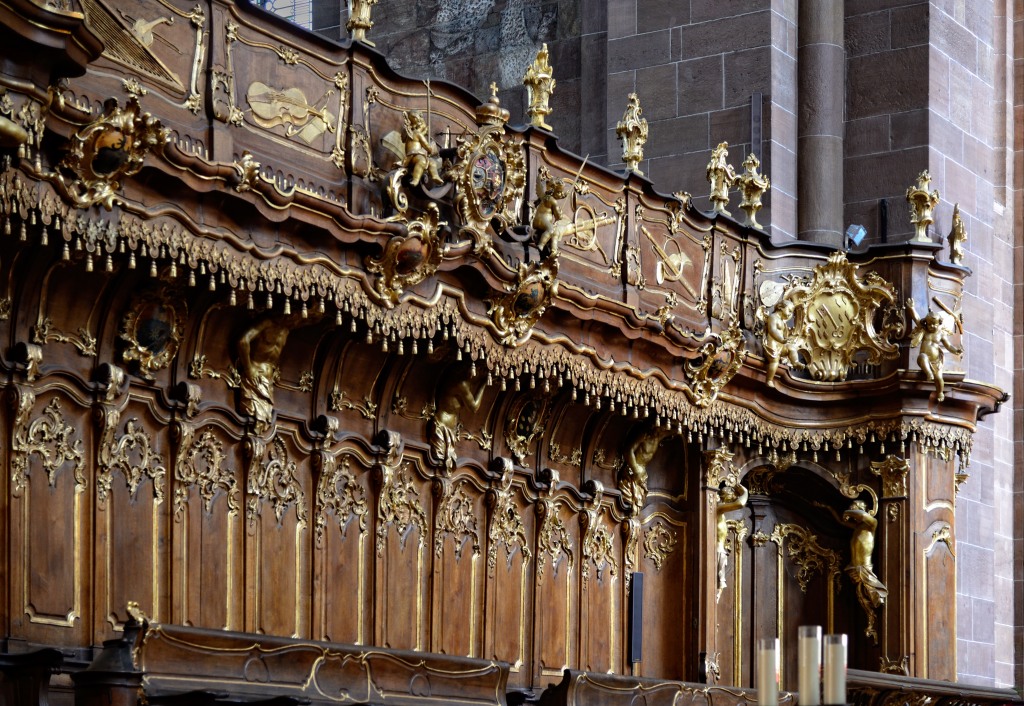
The interior has undergone several significant “redecorations.” Most notably, the 17th century saw a renovation in the elaborate Baroque style. In the 19th century the church was restored to the plainer style that would have prevailed in the 13th century. The fresco of Christ returning in judgement was completed in 1928 in that style.
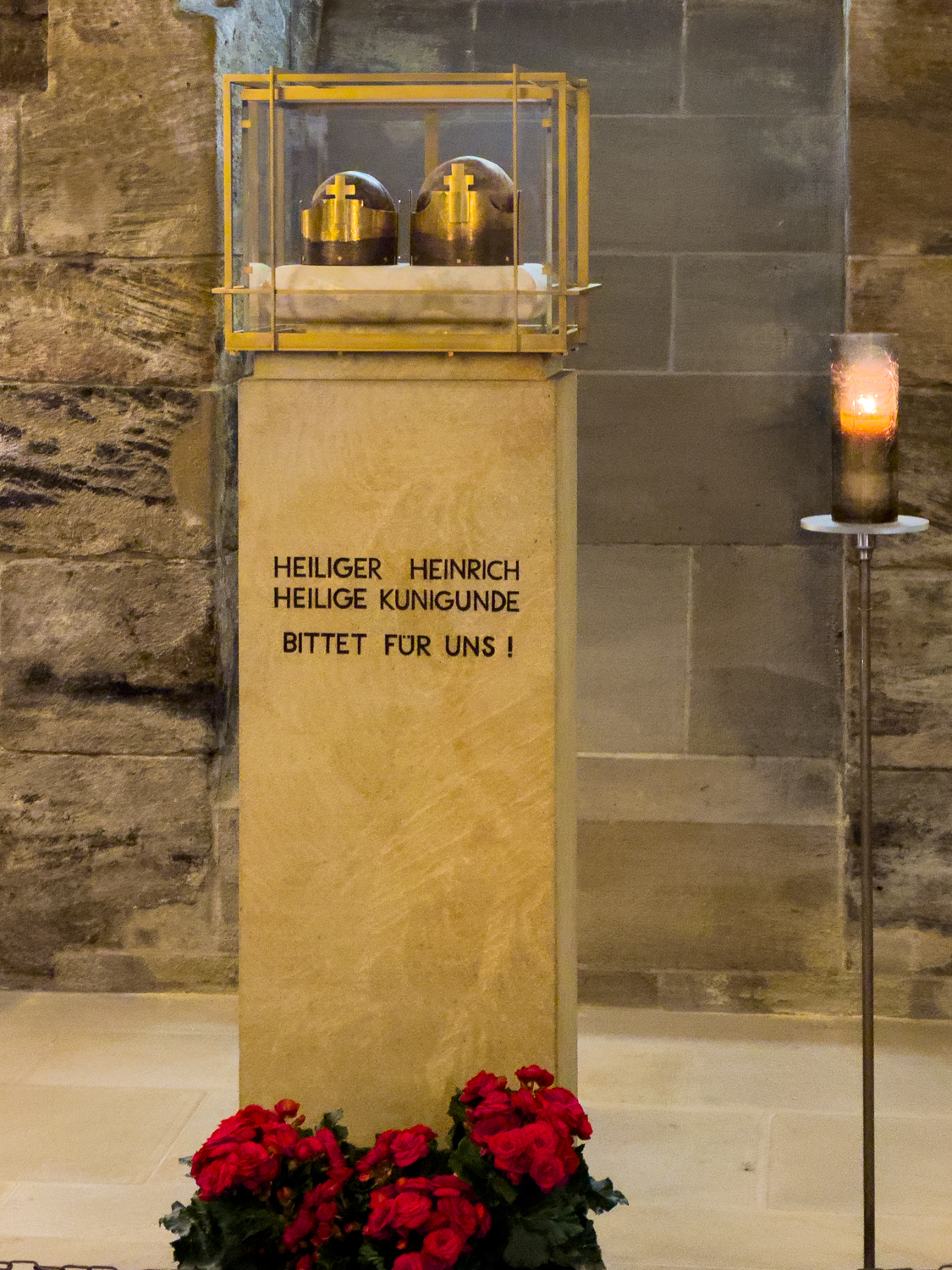
At the bottom center of the image above, between the stairs, is the tomb of the sainted, imperial couple who founded the bishopric and first cathedral. I was sure that I stood on the steps and photographed the top where their images are carved in relief, but I somehow didn’t. At the other end of the church, In the west crypt there is a shrine where their two crowned heads are displayed in a glass case on a stele.
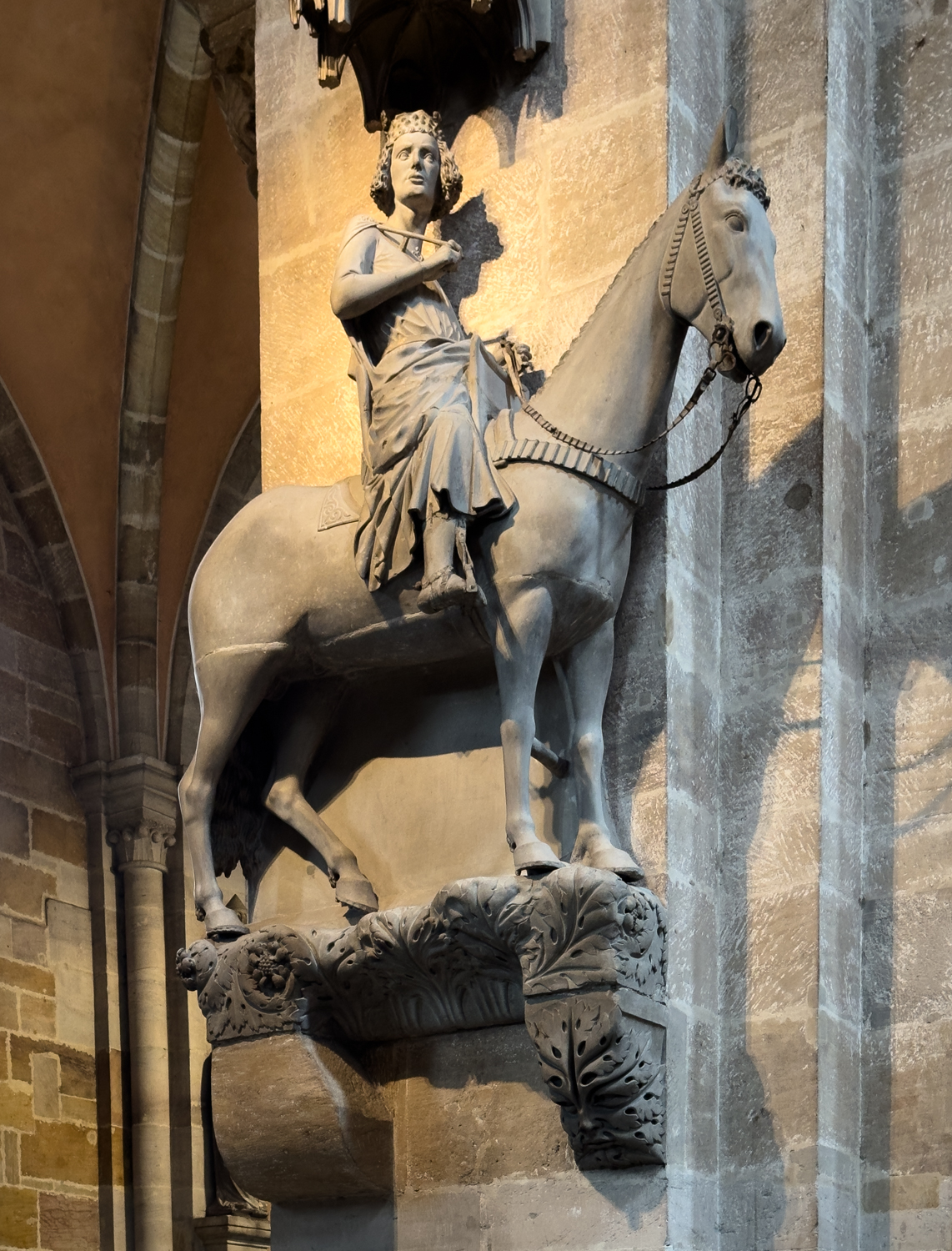
The cathedral and town are especially proud of the sculpture of a rider on the pier to the left of the east choir. This has been dated to about 1235 and is accounted the oldest such statue in Germany. The model for it is unknown, but is variously said to be King Stephen of Hungary, Constantine, or another king or noble.
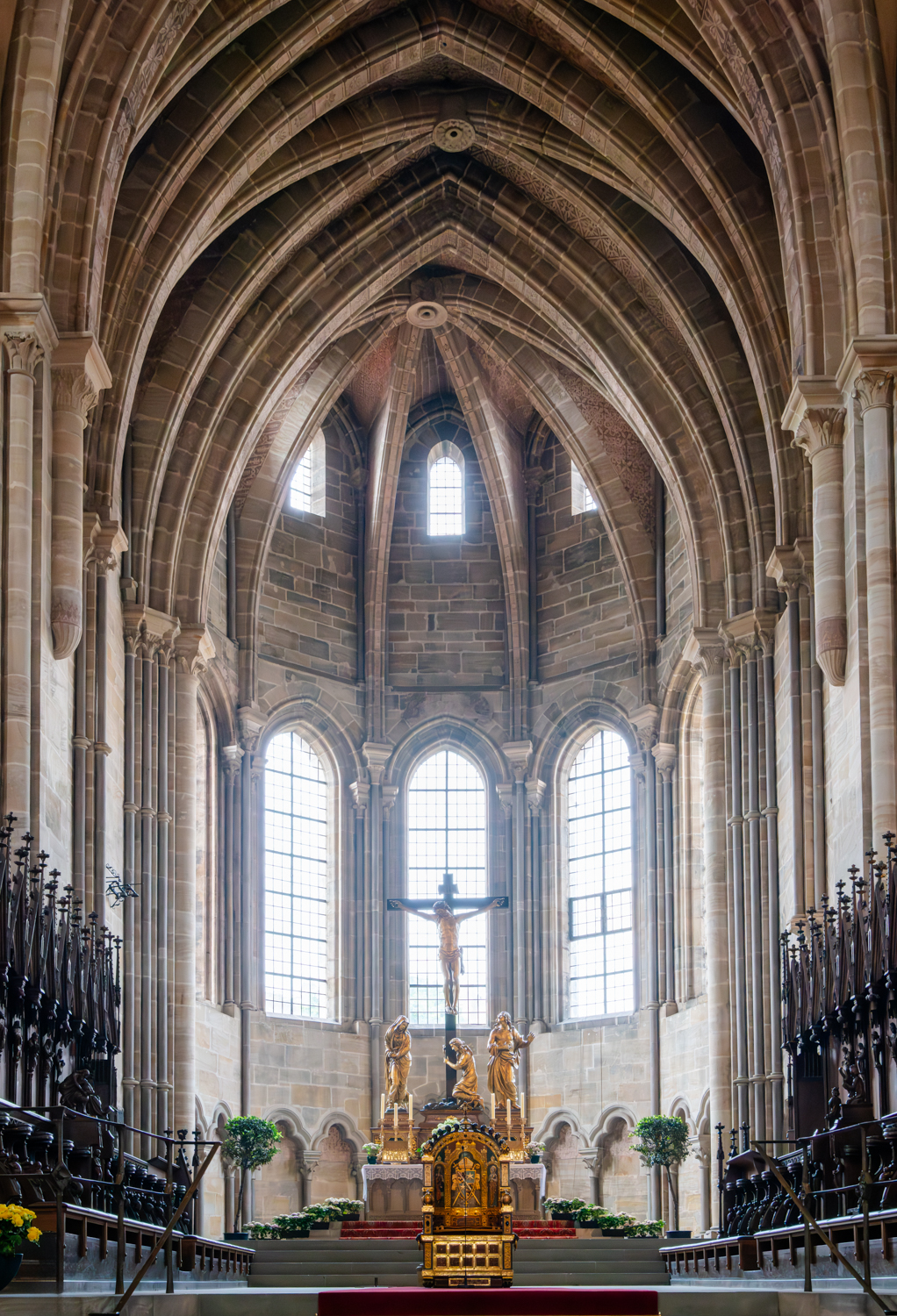
Bamberg, like many other german cathedrals has a choir at each end. The west choir was the last section of the cathedral built, and it is pure, early gothic. The walls are somewhat thinner, the windows larger with distinctly pointed arches, and the heavy ribbed vaults are more elaborate than in those in the nave.
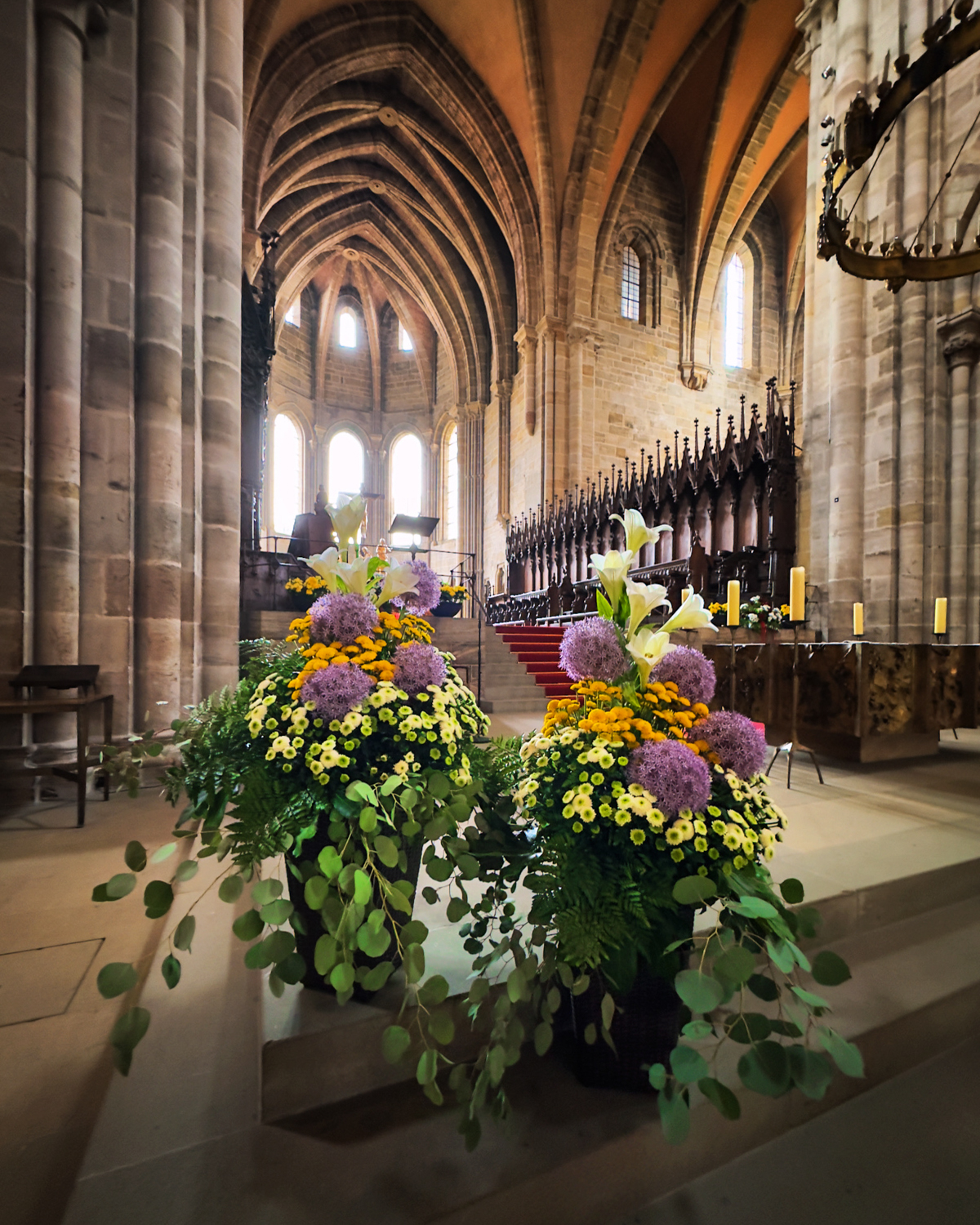
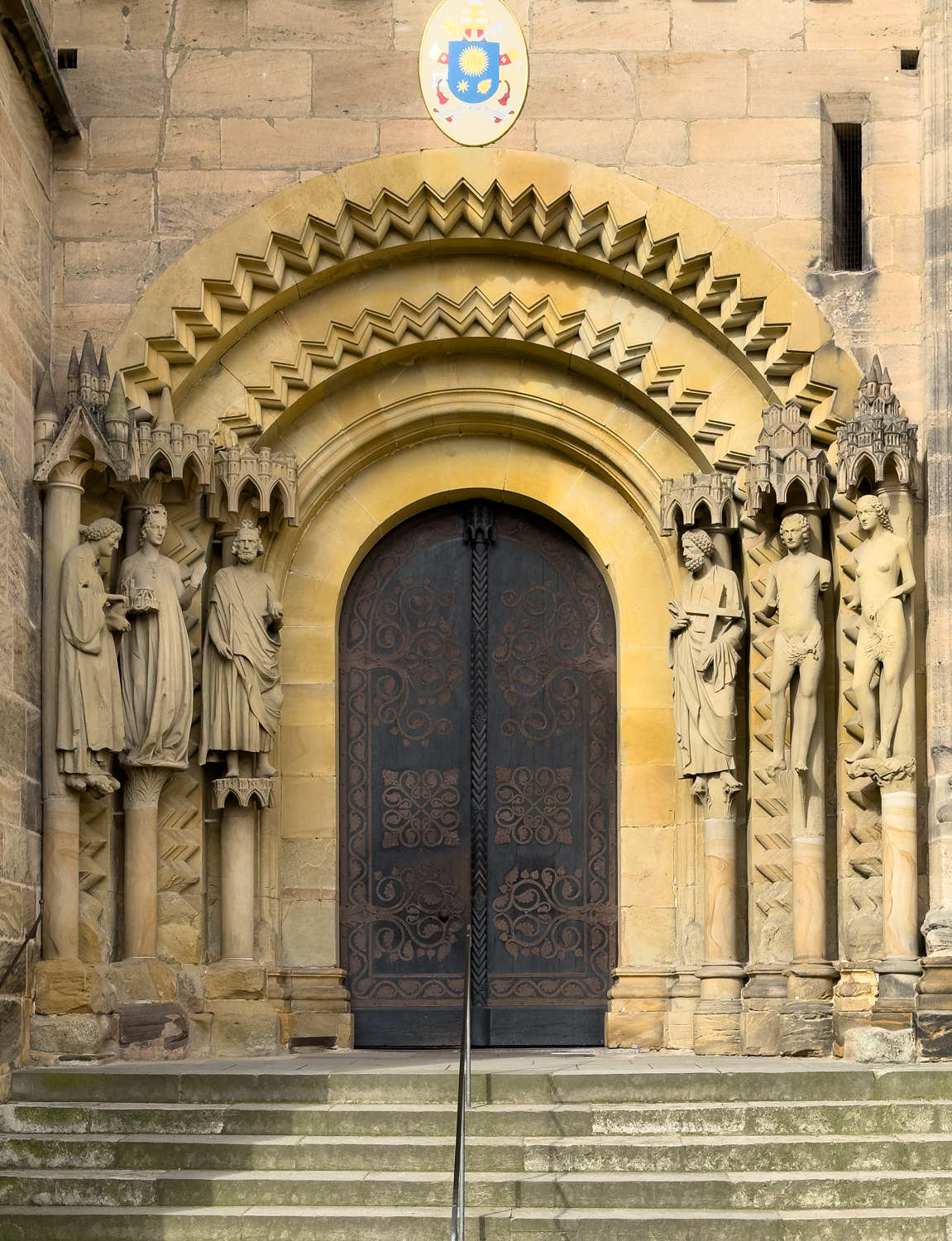
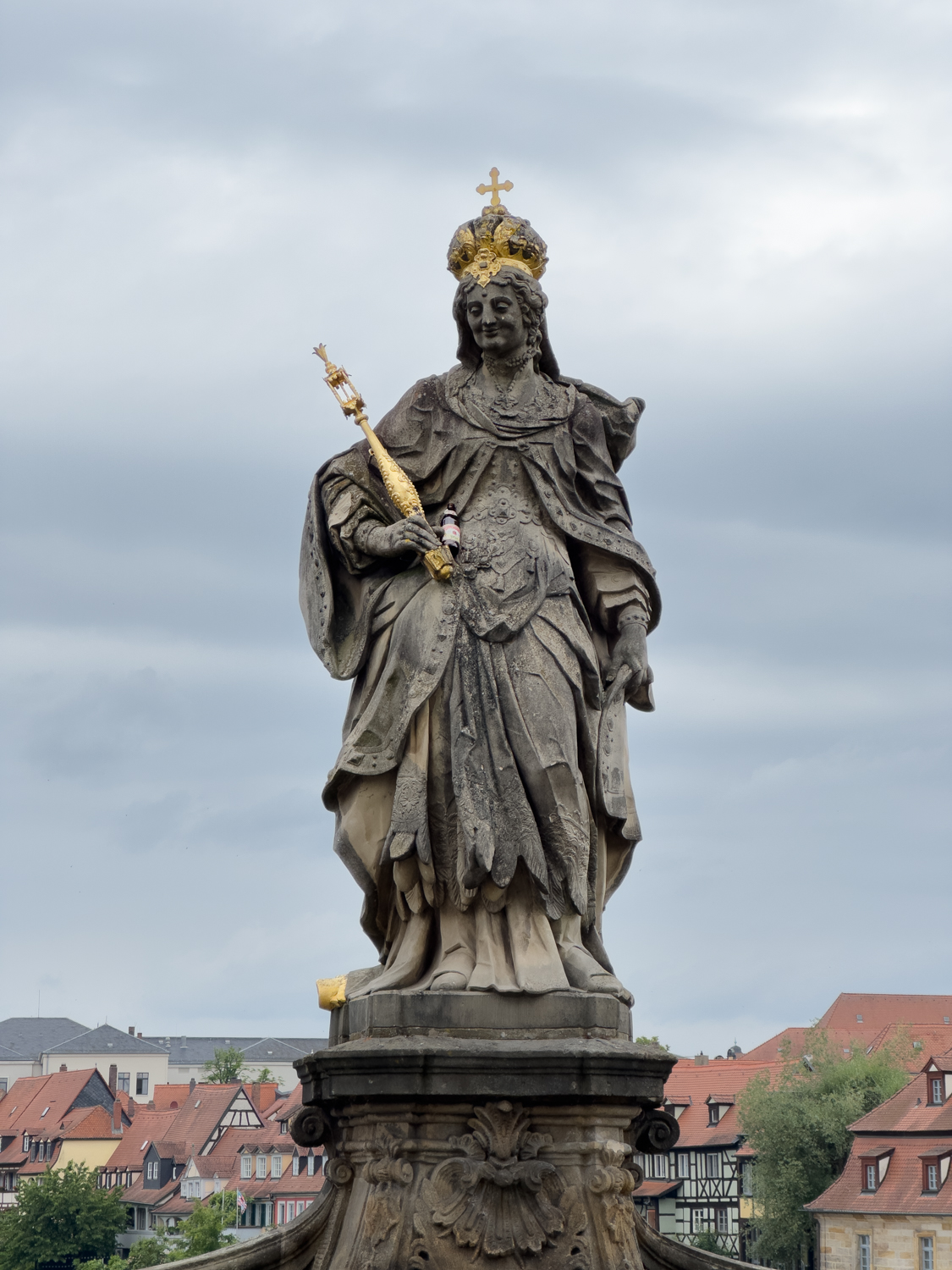
The founders, especially Kunigunde, receive special attention in Bamberg. The southeast portal of the cathedral is flanked by six figures. On the left are St. Stephen, Kunigunde, and Heinrich. There is also a supersized statue of the empress on one of the bridges leading to the cathedral. She is smiling down at an empty beer bottle that someone tucked between her scepter and waist.
Some of the information in this post was gleaned from a brochure available at the cathedral. See the official website .
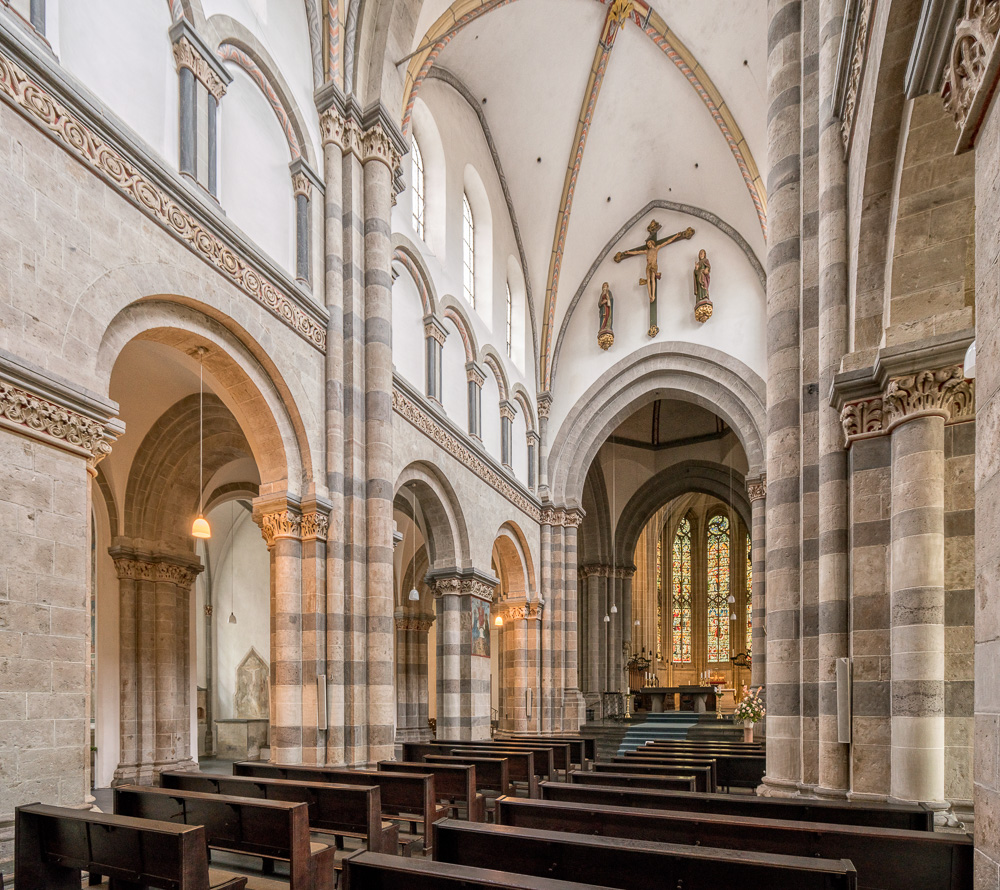
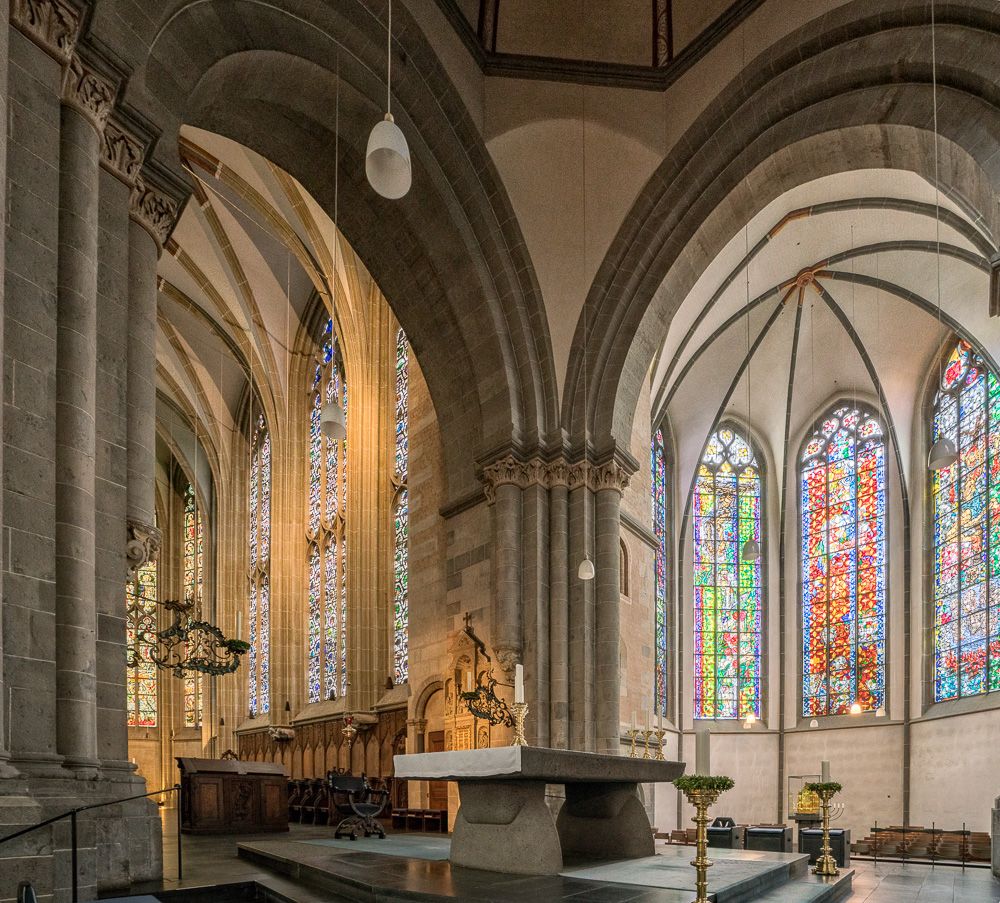
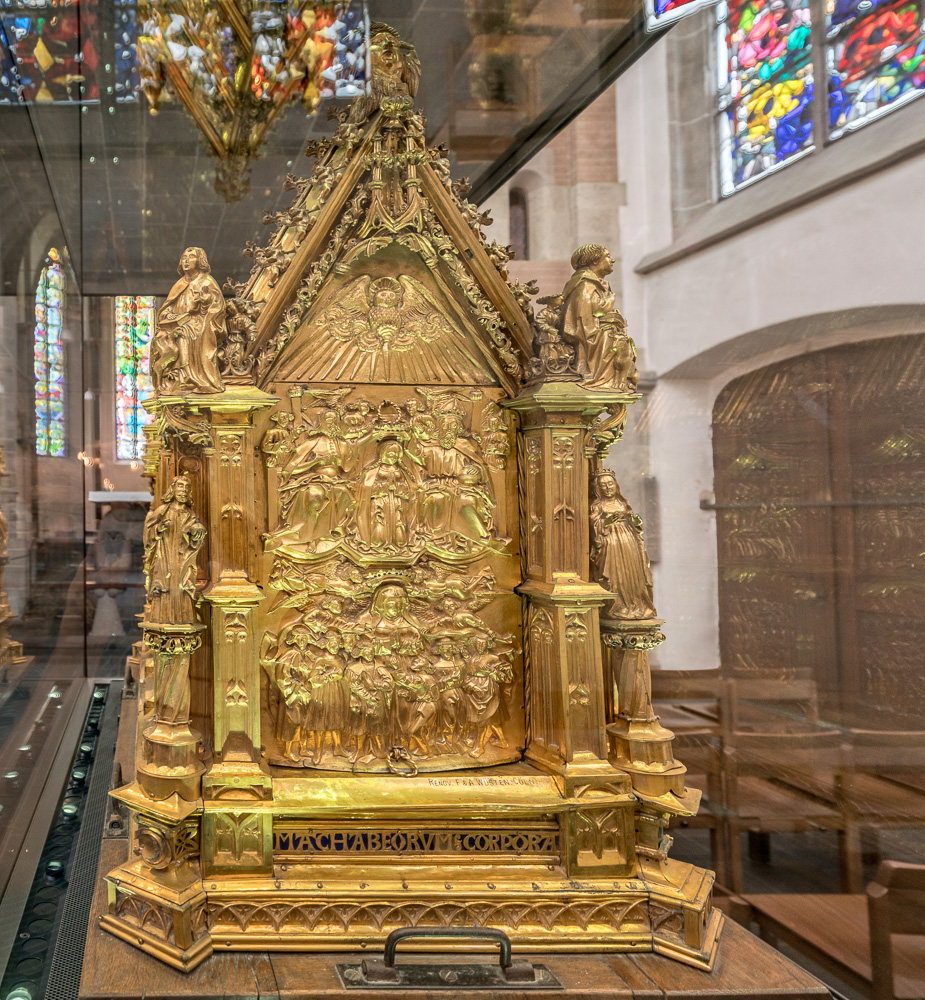
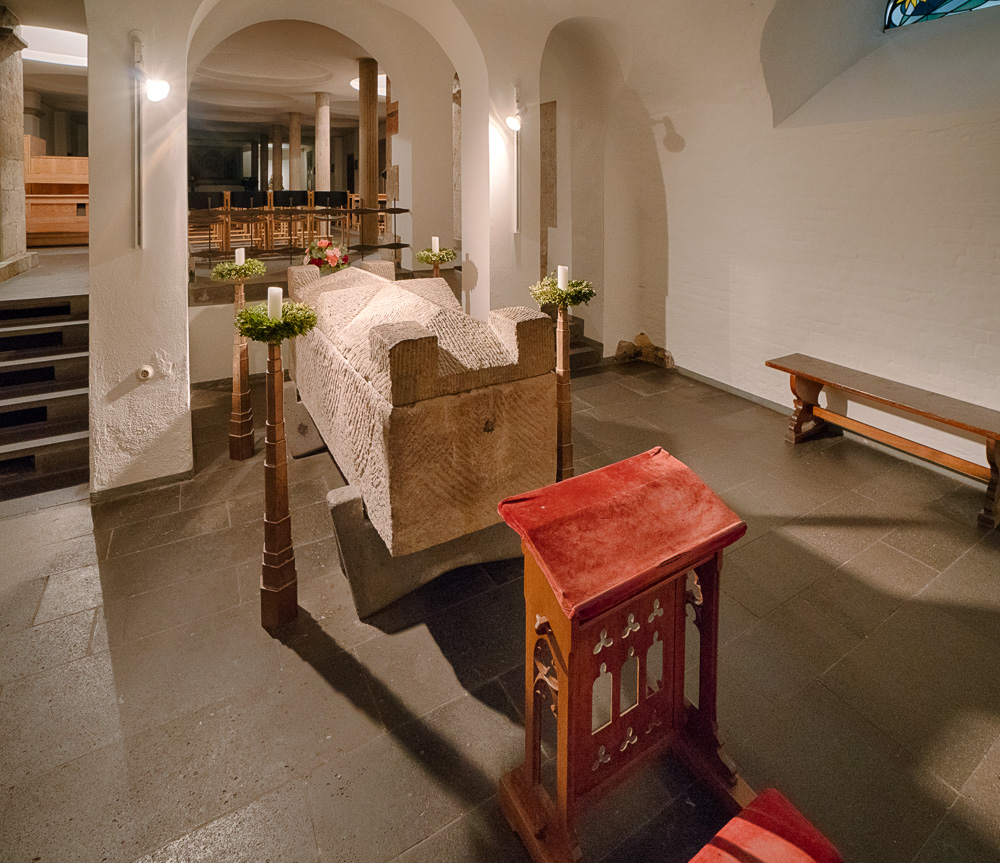
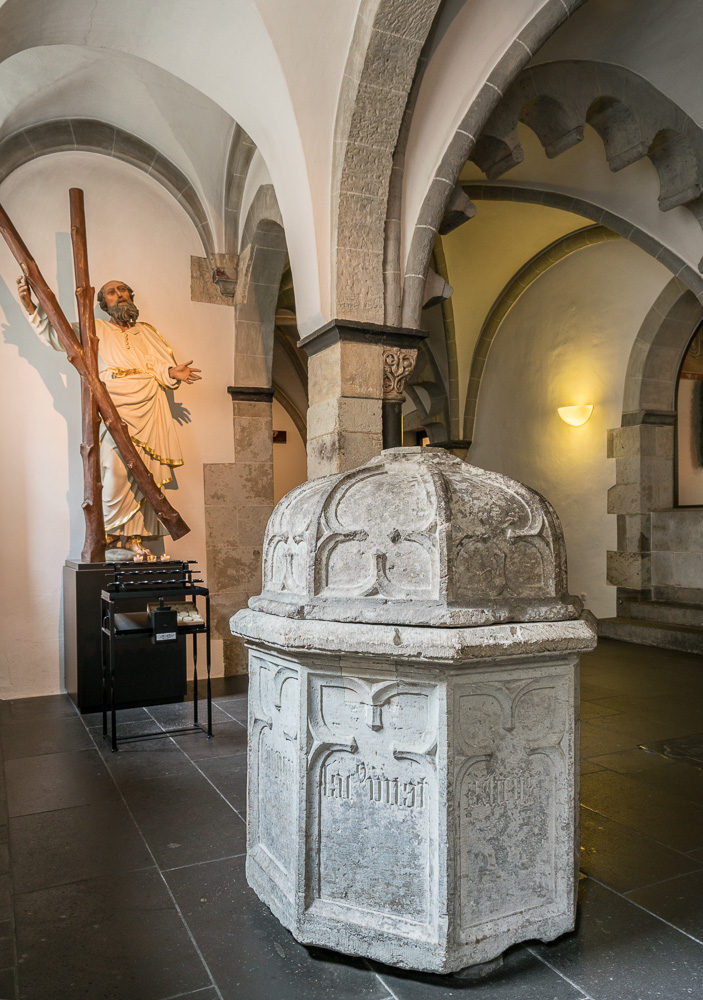
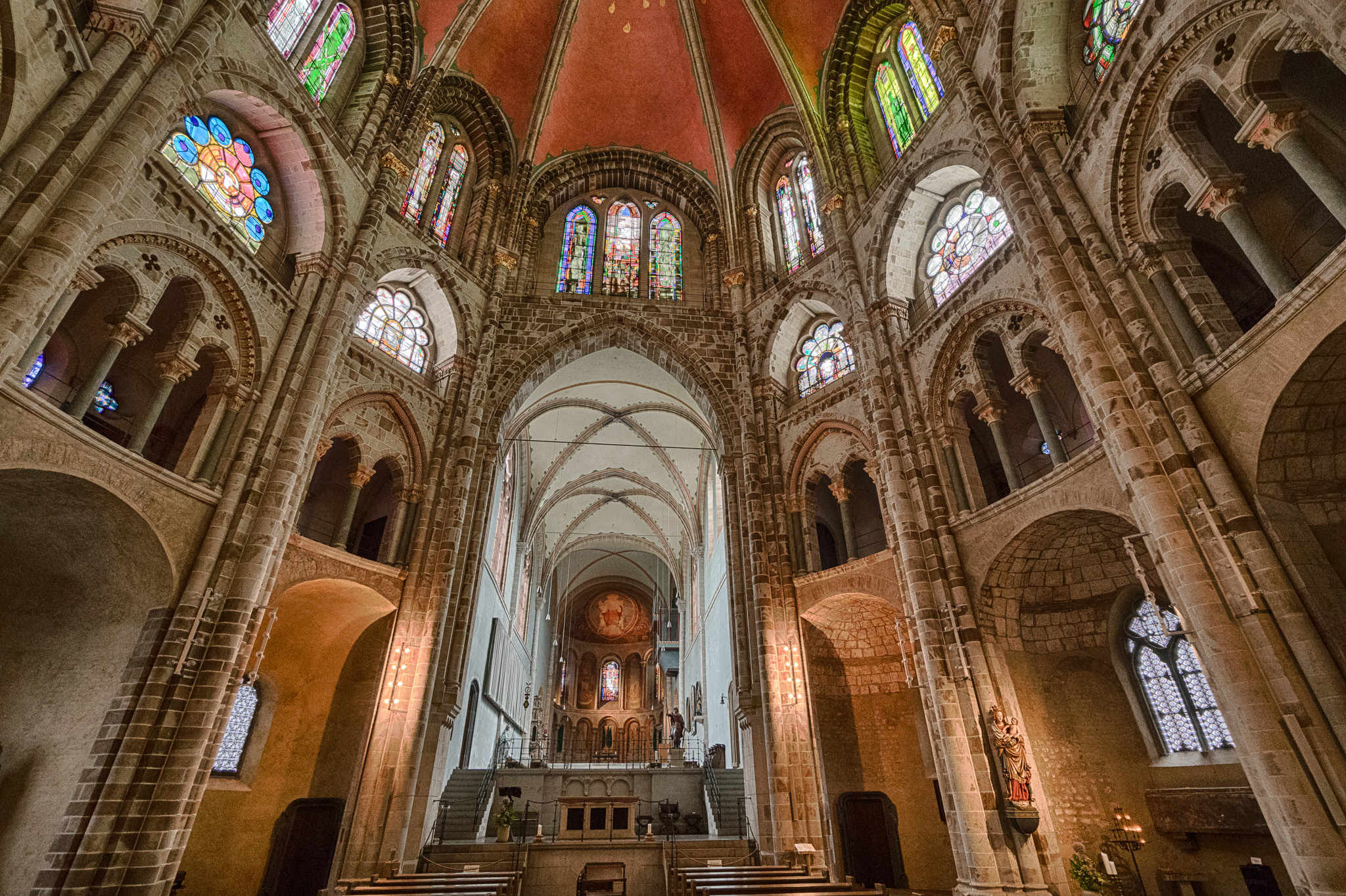
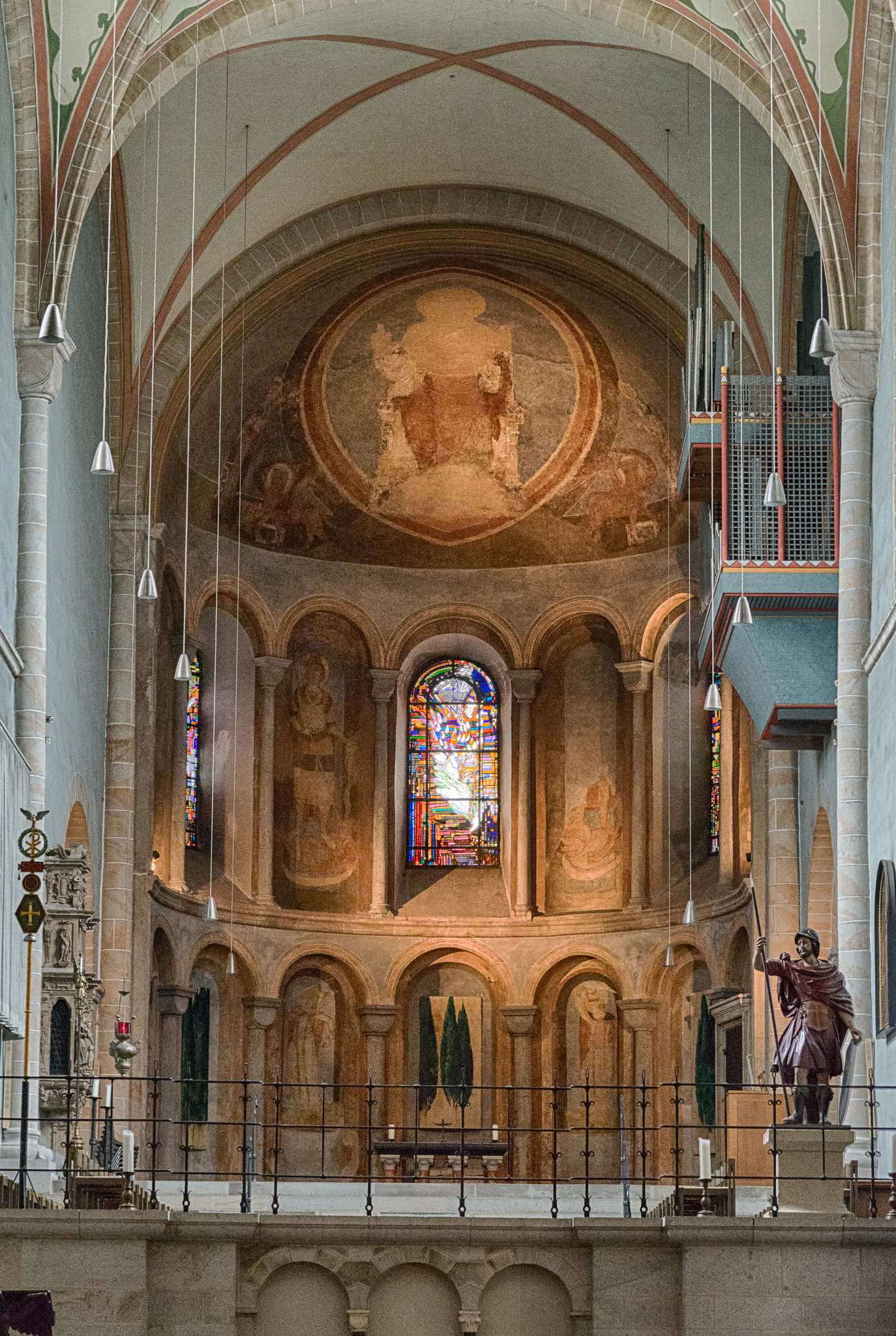
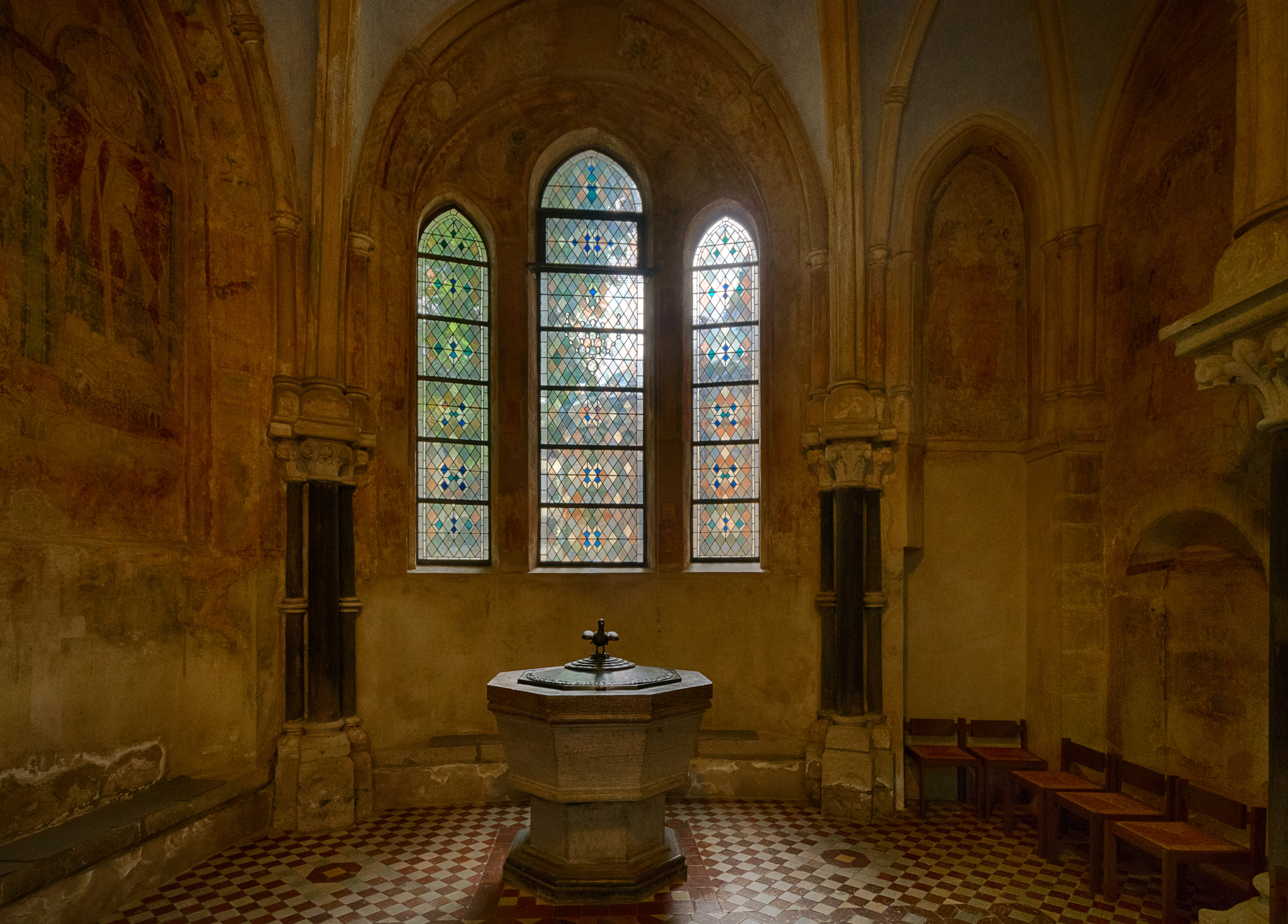
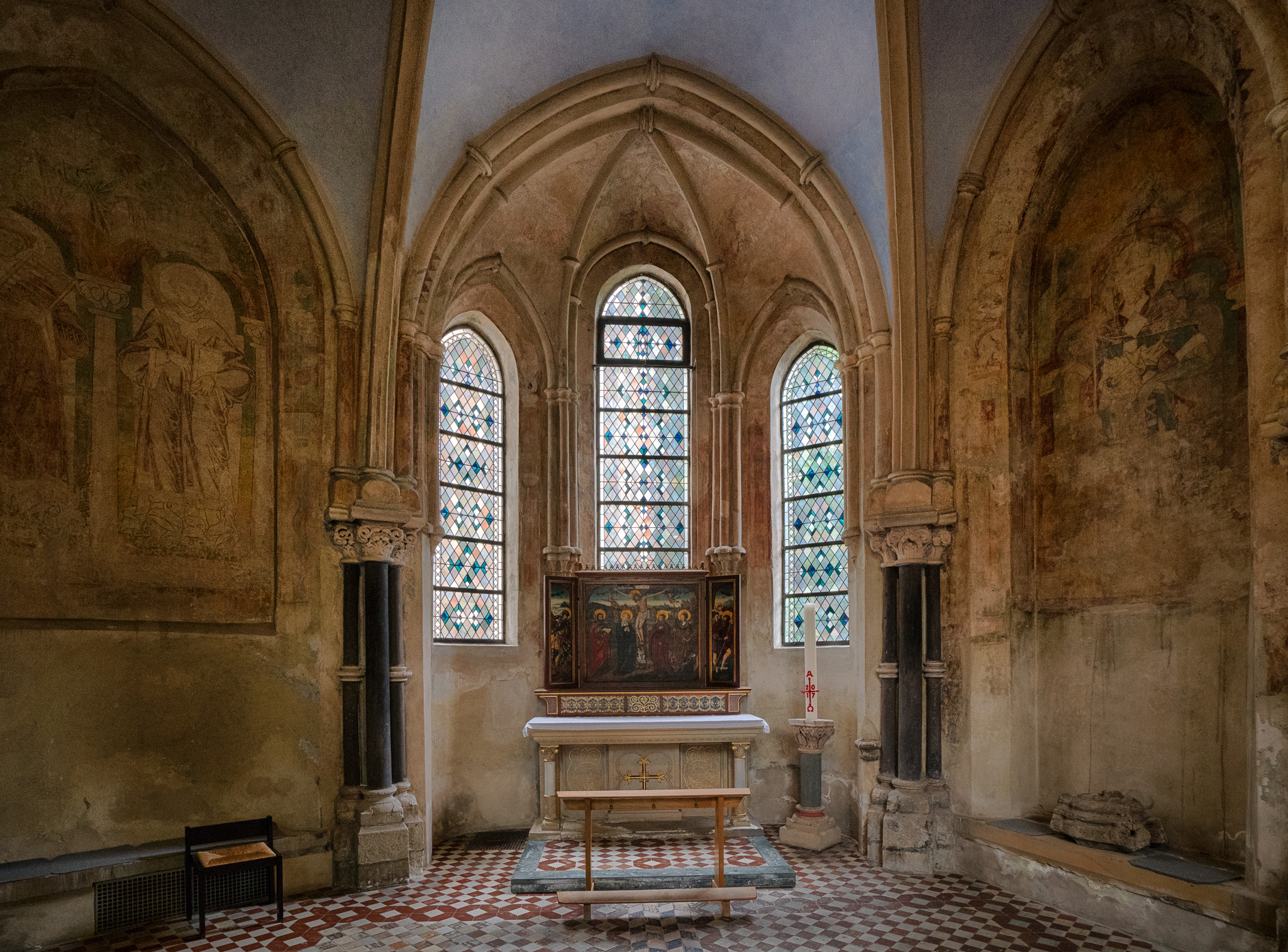

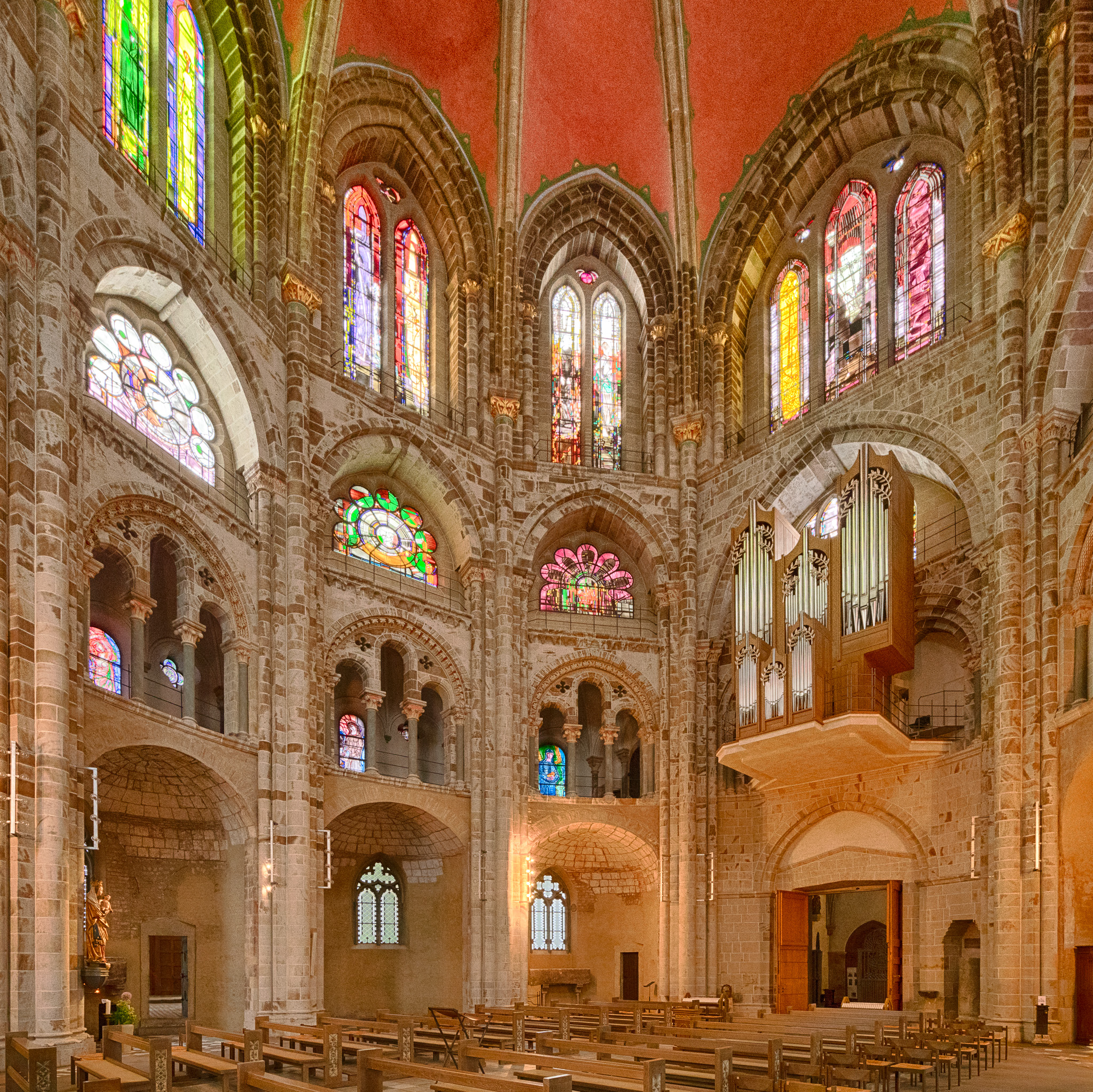 St. Gereon Kirche is unique north of the Alps. The lower levels date to about 350-65. The central structure is oval with semicircular niches that may have once held memorials to early noble families. Some of the stone in the vaults of these niches was recycled from Roman structures. The upper portions of this structure were renovated and extended several times during the past millennium. The visual splendor can only be approximated in photos, but this view of the ceiling gives some idea of what it is like to stand in the center of this remarkable church.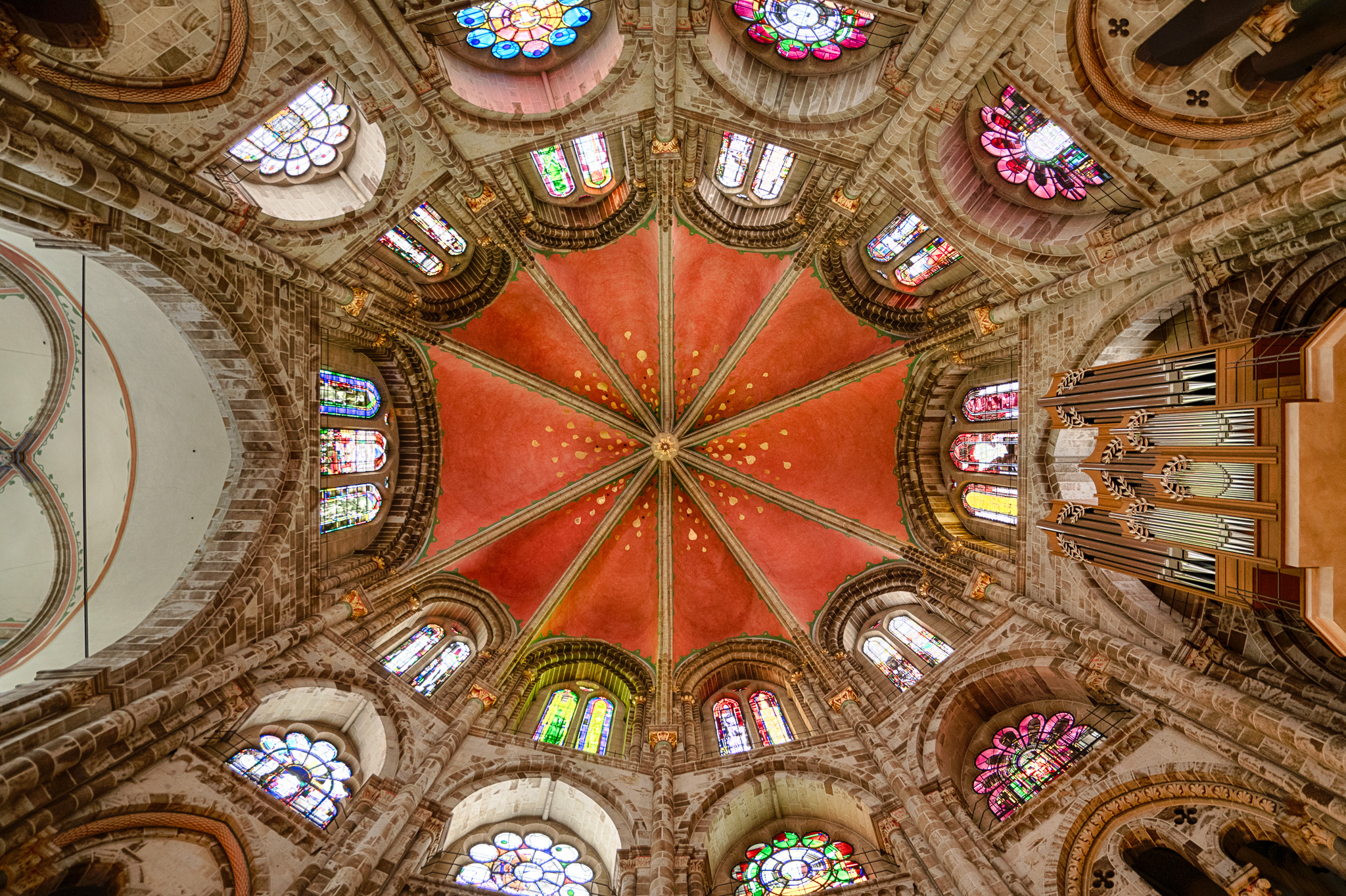


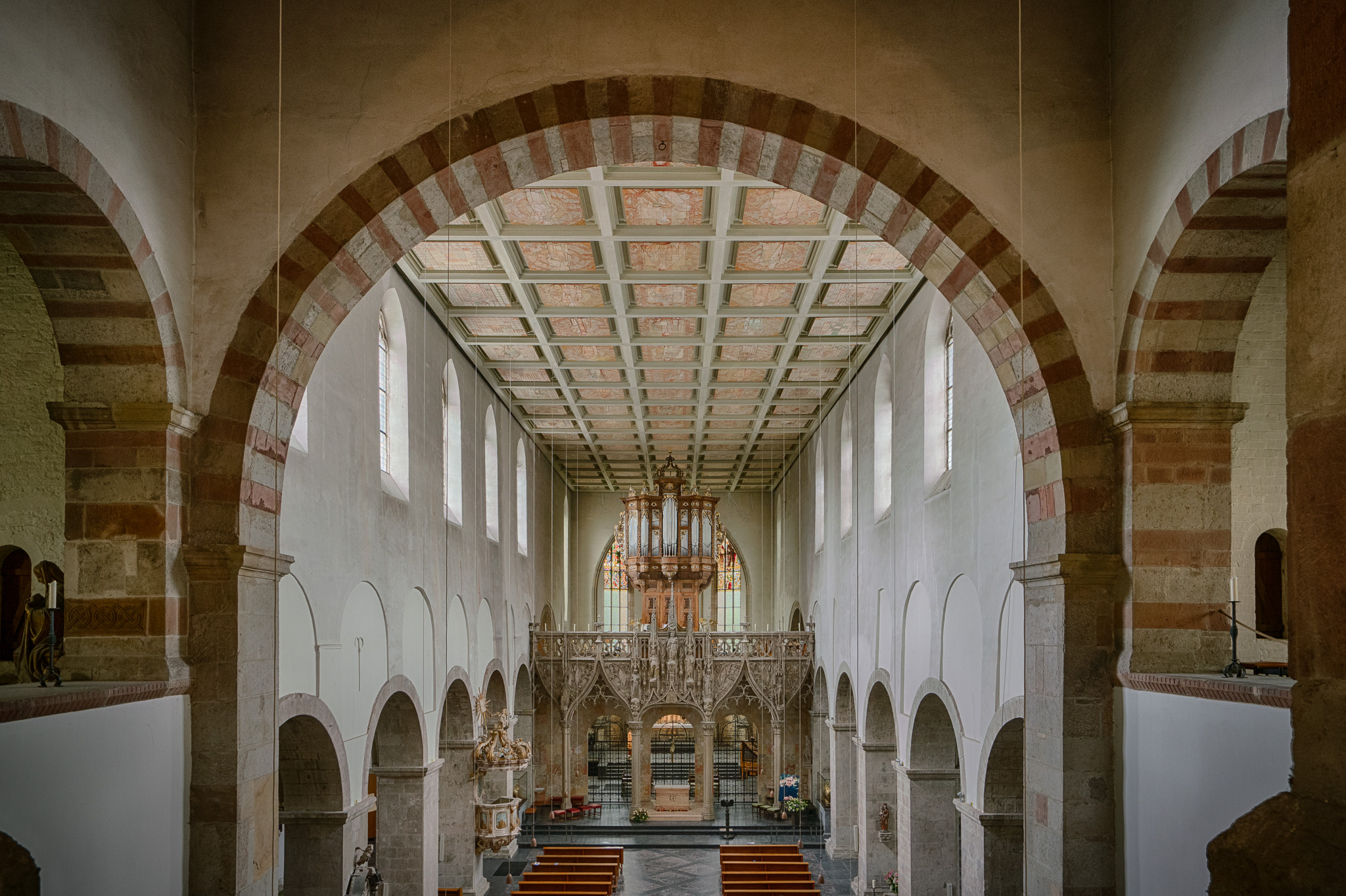 Holy Roman Emperor Otto I, who is entombed at











 Craig's Places