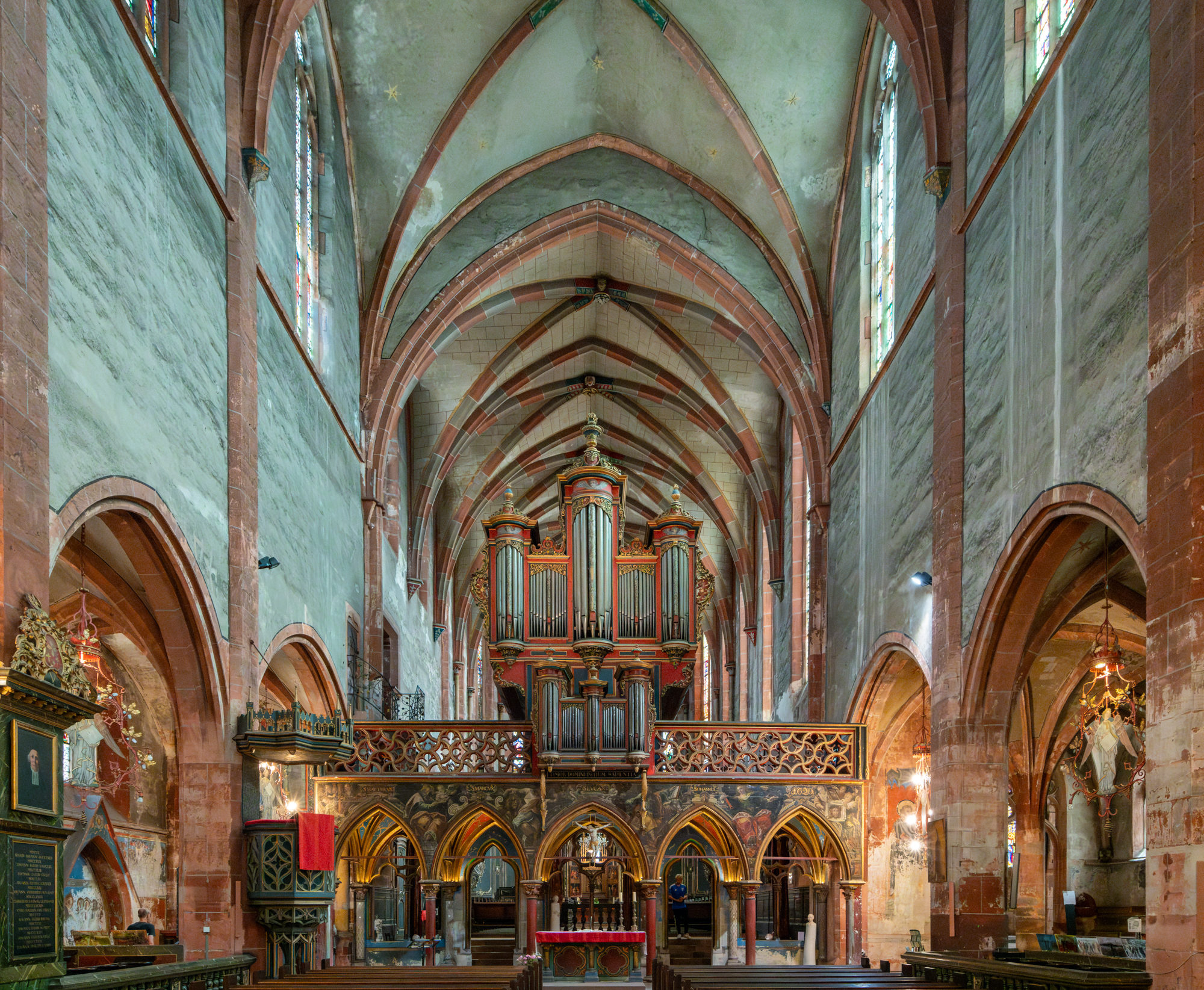
In a quiet corner one block from the north branch of the River Ill is the late 13th/early 14th century “New” Church of St. Peter. The church replaced an earlier romanesque structure and served as a collegiate church until the reformation. In the 17th century a wall was built on the choir side of the rood screen to completely isolate the choir. During the French revolution, the church was vacated for several years and used for storage by the army. During the Franco Prussian war, the roof was damaged and the original stained glass destroyed.
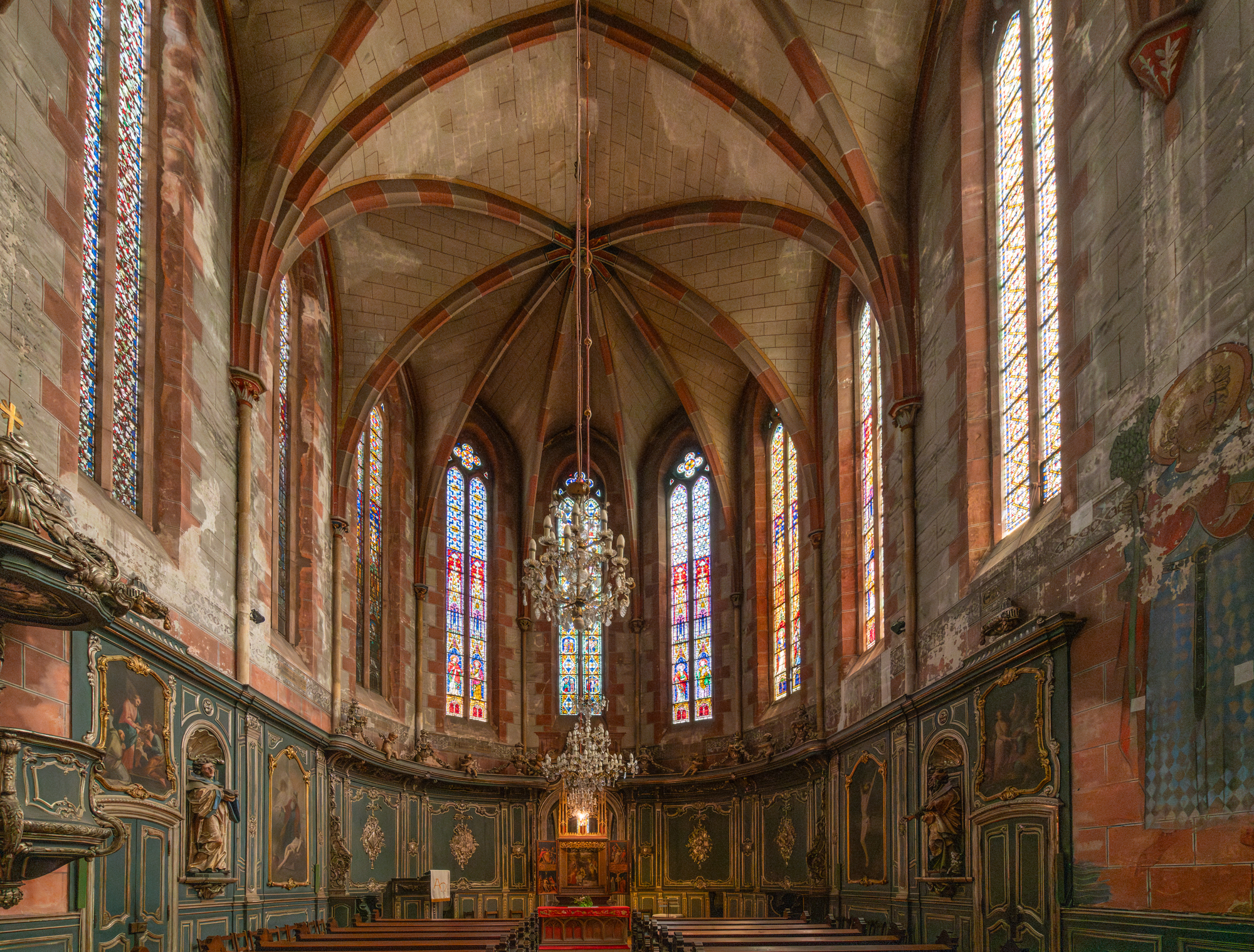
After the reformation, the Catholic, monastic chapter continued to use the choir (above) while the protestant congregation used the nave. This sharing agreement lasted until the end of the 19th century, when a new Catholic church was built across the river.

Many original 14th century frescos have been fully or partially restored. This shows Peter coming to Jesus, walking on the surface of Lake Gallilee. Underneath are 8 Angels holding banners with the text of the Beatitudes.
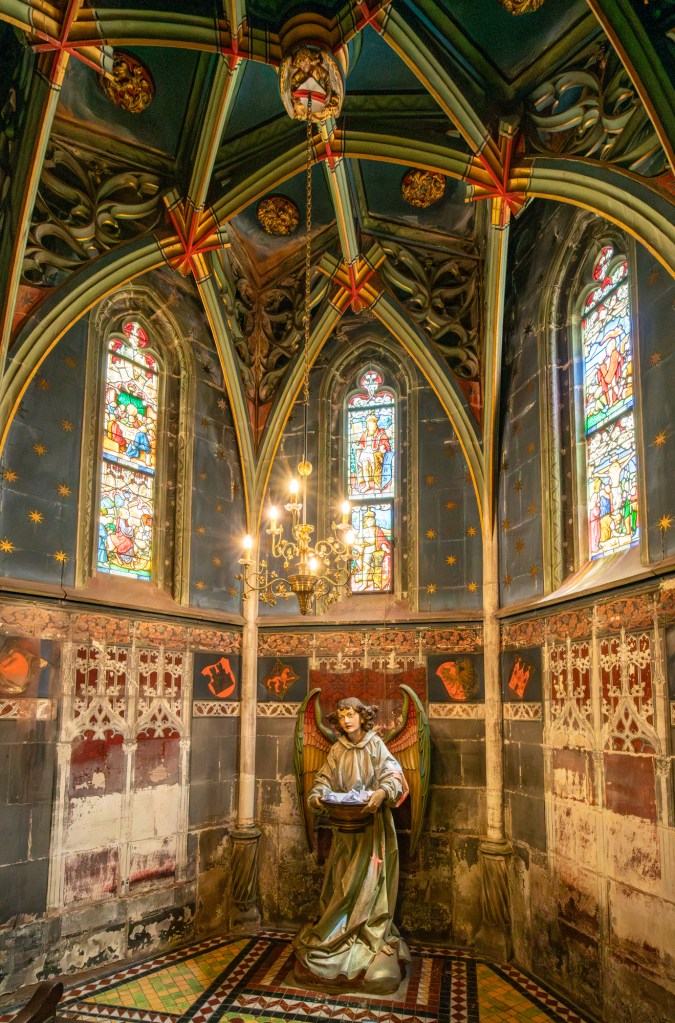
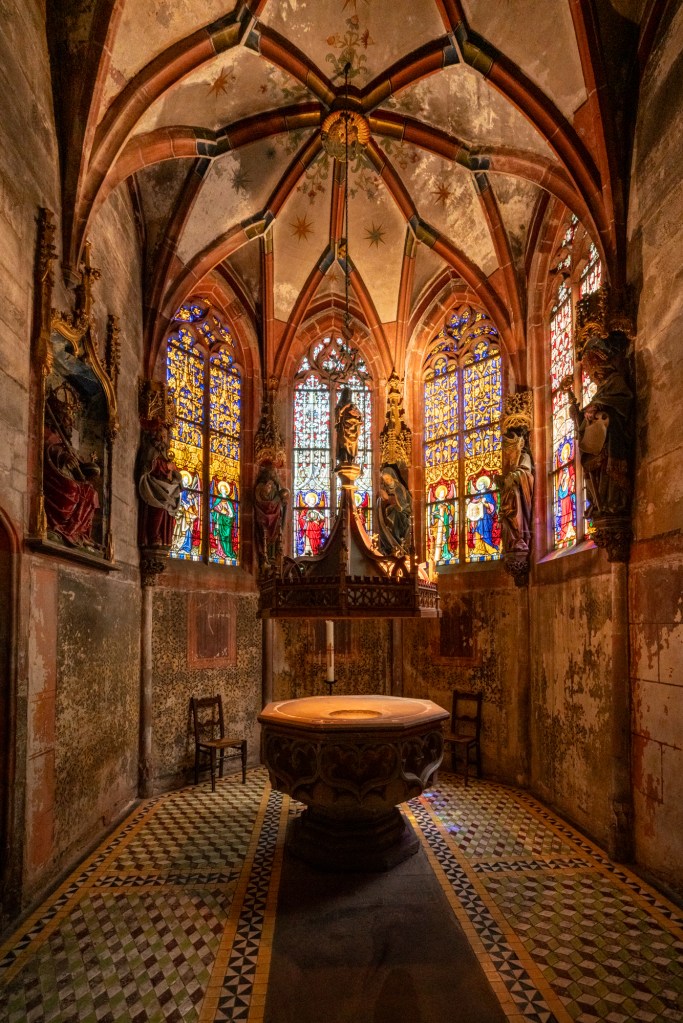
The Angel Chapel (above left) is off the choir, behind the altar. The wall paintings are ancient, the windows and angel are 19th century. The Chapel of the Trinity (above right) was added in 1491. The statues flanking the windows depict St. Peter, Christ, the Virgin Mary, St. Athanasius and St. Maternus (the first bishop of Strasbourg). Take note of the elaborate vaults in each chapel.
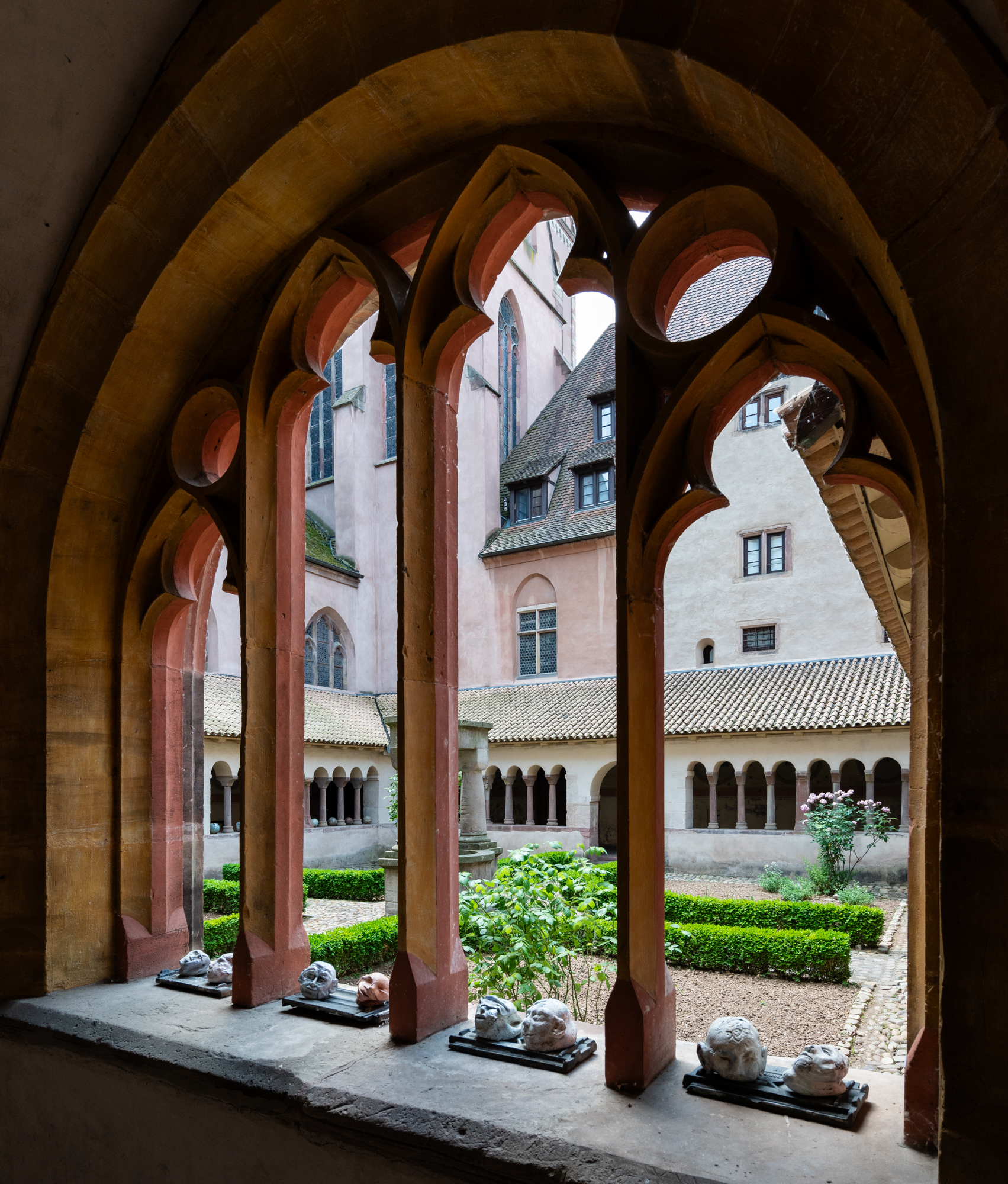
Below is a view of the cloister garden. The west and south aisles visible across the courtyard show the original romanesque arches. The ceramic heads on the sill of this gothic archway were created by students of the Lycée Heinrich Nessel de Haguenau as a memorial to the victims of genocide in the Holocaust, Armenia and Rwanda.
 Craig's Places