-
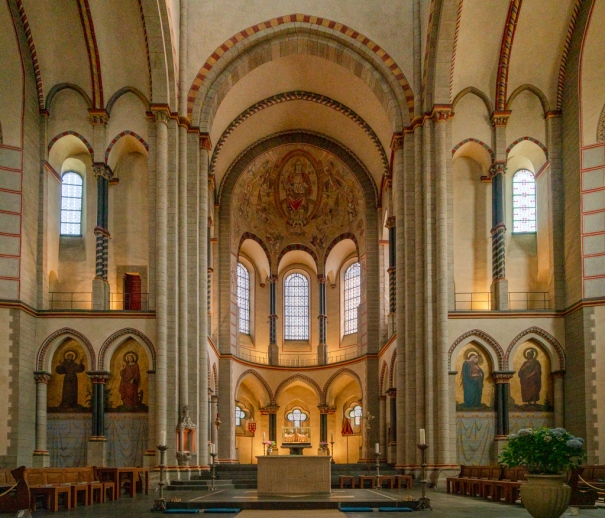
Across the Rhine from bustling Düsseldorf is the relatively quiet town of Neuss. A military camp was established near here in 16 B.C. by the Romans. The site of this church was originally a cemetery with a small chapel. Successive church buildings appeared on the site as the camp grew into a town. In time…
-
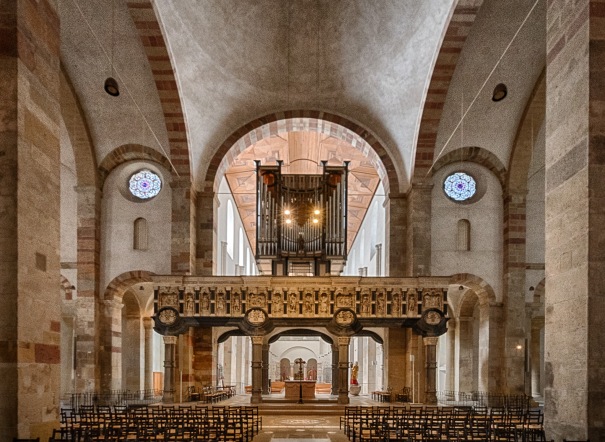
This 11th century church replaced a 7th century structure that in turn had replaced a roman temple. The courtyard (Lichhof) at the east end shown below covers an ancient burial ground. The statue on the right is a memorial to those who died in World War II. Like several other churches in Cologne, this church…
-

The cathedral at Aachen incorporates more than 1200 years of history into one building. The heart of the church is the octagonal Palatine chapel. It was built during the reign of Karl Der Große (Charlemagne ca A.D. 800) as a two story church. Many renovations, demolitions and expansions have produced the current structure. Thirty kings…
-
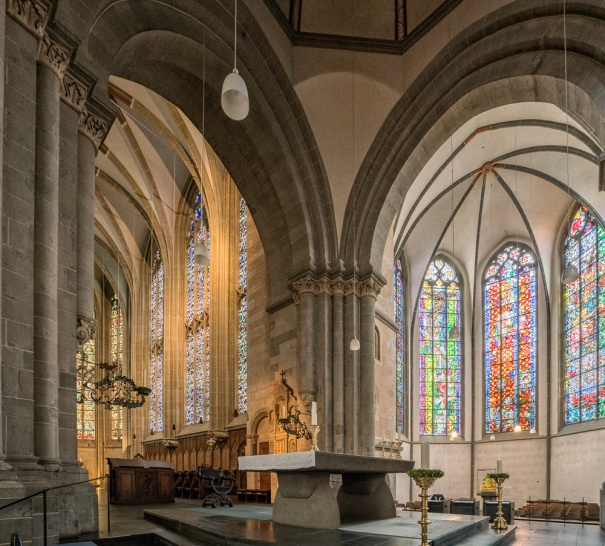
Dedicated to St. Andrew, this church lies a short block from the more famous Cathedral of Cologne. The nave, aisles and west end were built between 1180 and 1245 in the romanesque style. The choir and apsidal transepts were added in the 15th century in the high gothic style. The choir is longer than the…
-

The unique decagonal nave of this church opens to east into a choir which was completed about 1156. Much of the original furniture was destroyed in WWII and the structure required significant repairs. Yet the heavy, round-arch, romanesque design elements are evident. The apse retains most of the original wall paintings, including the enthroned Christ,…
-
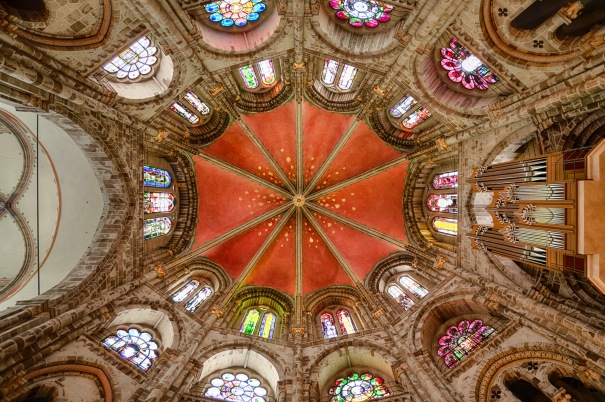
St. Gereon Kirche is unique north of the Alps. The lower levels date to about 350-65. The central structure is oval with semicircular niches that may have once held memorials to early noble families. Some of the stone in the vaults of these niches was recycled from Roman structures. The upper portions of this structure were…
-
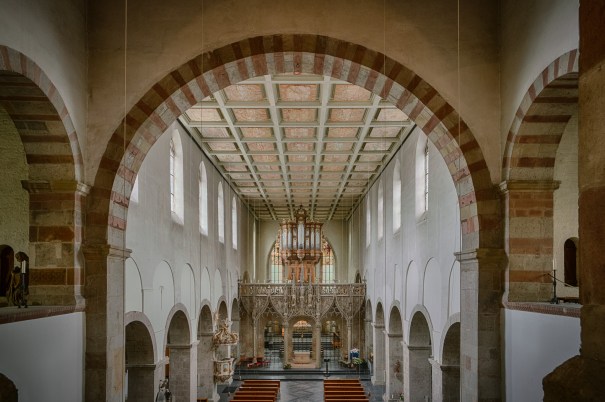
Holy Roman Emperor Otto I, who is entombed at Magdeburg, appointed his brother Bruno as Archbishop of Cologne. Bruno found St.Pantaleon in need of repair and began a massive renovation. He died in A.D. 965 and is buried in the crypt. In 972, Otto arranged the marriage of his son, Otto II, with Theophanu, a princess of…
-
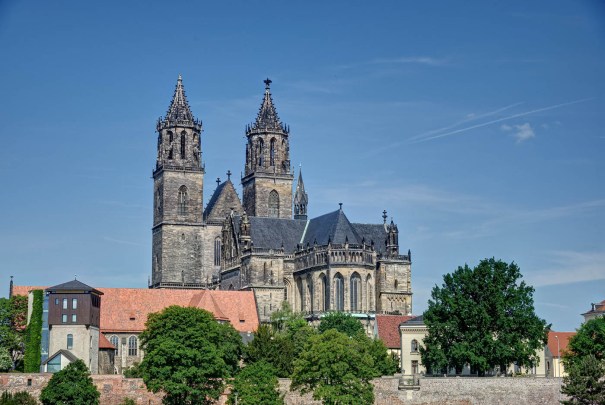
The gothic style first appeared in France at St. Denis in A.D. 1147. The style came to Germany 60 years later. I’ve often wondered why it took so long. How the style came to Magdeburg is clear however. Archbishop Albrecht II von Kefernburg (in office 1205-1232) had studied in Paris and seen the building of…
-
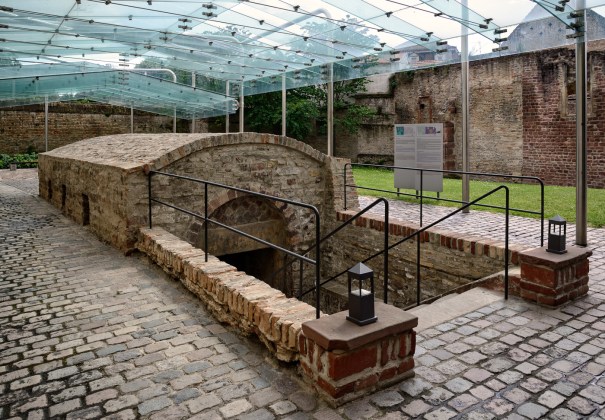
In the 11th century, jewish merchants and bankers from Italy and France migrated to the city of Speyer on the River Rhine. Under the protection of the bishop, they established a community that thrived for 400 years. Talmudic Scholars from Mainz also arrived and Speyer to became an internationally recognized center of jewish learning by the…
-
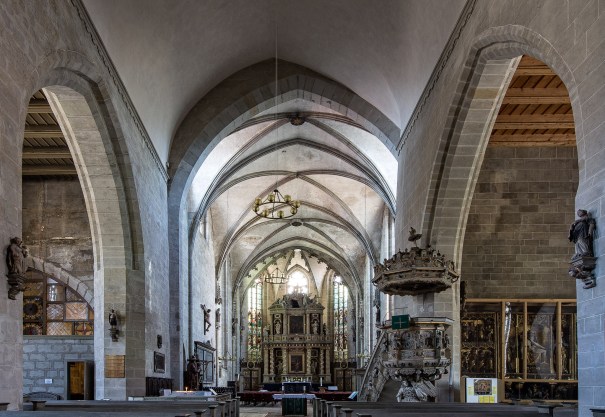
Consecrated by a woman, rebuilt and repaired with dramatic asymmetry, this church stands in the center of a World Heritage town of narrow crooked streets.
-
Subscribe
Subscribed
Have a WordPress.com account? Log in now.

